News|Articles|May 15, 2017

Thermo Fisher Scientific to Acquire Patheon

Thermo Fisher will acquire Patheon for approximately $7.2 billion, including the assumption of approximately $2 billion of net debt.

On May 15, 2017, Thermo Fisher Scientific announced plans to purchase Patheon for $35 per share in cash. The transaction totals approximately $7.2 billion, which includes the assumption of approximately $2 billion of net debt.

Patheon has a network of facilities, primarily in North America and Europe, and approximately 9000 professionals worldwide. In 2016, Patheon generated approximately $1.9 billion in revenue and will become part of Thermo Fisher's Laboratory Products and Services Segment, the companies said in a press release about the acquisition. The transaction is expected to be completed by the end of 2017.

“The combined company's extensive and deep relationships in the biopharma industry will enable significant cross-selling opportunities,” the companies noted in a statement. “For example, having biologics development and manufacturing capabilities as well as bioproduction technologies in one company will allow Thermo Fisher to offer a more comprehensive portfolio to gain share with these customers.”

Source: Thermo Fisher Scientific


Related to this article

Are Your Supplier Selection and Oversight Processes Robust Enough?
Despite best efforts to ensure a contract organization is following GMPs, a warning letter is issued by the FDA. Susan J. Schniepp, distinguished fellow at Nelson Labs, and Siegfried Schmitt, PhD, vice president, Technical at Parexel, provide advice for create a robust supplier selection and oversight system.
white pill capsule isolated on white background | Image Credit: ©F16-ISO100 -stock.adobe.com
PharmTech spoke with Chiara Bergerone, deputy CEO of Roquette’s Health & Pharma Solutions Business, about the company’s hydroxypropyl methylcellulose (HPMC) capsule, which was previewed at CPHI Milan 2026 in October.
Transitioning mRNA from R&D to GMP
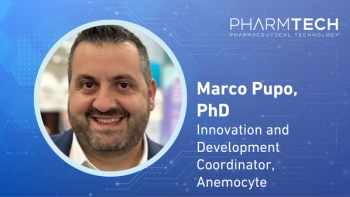
Marco Pupo, PhD, innovation and development coordinator at Anemocyte, discusses the R&D-to-GMP transition and the changing shape of mRNA manufacturing facilities.