

Sponsored
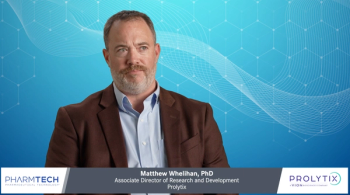
Matt Whelihan, associate director of research and development at Prolytix, discusses industry trends—from data-driven approaches built on artificial intelligence (AI) to increasingly complex therapeutic modalities.
Sponsored
Matt Whelihan, associate director of research and development at Prolytix, discusses industry trends—from data-driven approaches built on artificial intelligence (AI) to increasingly complex therapeutic modalities.
From AI validation to microstructure imaging, AAPS PharmSci 360 speakers pushed toward faster drug development backed by stronger evidence. Here are PharmTech's biggest takeaways.
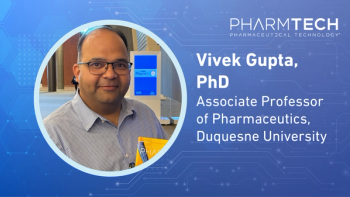
Vivek Gupta of Duquesne University explains at AAPS PharmSci 360 why device decisions can't wait and why excipient makers must test beyond drug molecules.
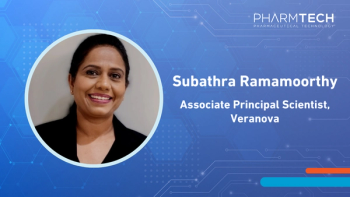
Impurity deficiencies in submissions are remarkably consistent. Subathra Ramamoorthy, Veranova, explains how to catch them before agency filing.
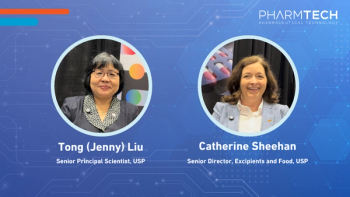
USP’s Sheehan and Liu talk at AAPS PharmSci 360 abou getting novel excipients past the monograph hurdle through early engagement with FDA.
Subathra Ramamoorthy, Veranova, on how forced degradation and trace impurity profiling in potent APIs shape regulator-ready analytical methods.
Subathra Ramamoorthy, Veranova, on when to escalate to structural elucidation and pair orthogonal techniques when characterizing an impurity.
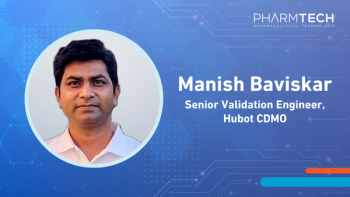
Manish Baviskar, Hubot CDMO, on ALCOA++ data integrity, model version change control, continuous monitoring, and human sign-off.
Manish Baviskar, Hubot CDMO, explains which AI skills validation engineers need first and why AI model updates must go through GMP change control.
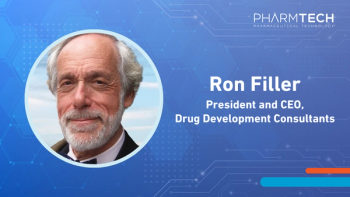
Ron Filler, Drug Development Consultants, explains how USP's 1074 revision brings human-relevant safety science to formulators and excipient makers.
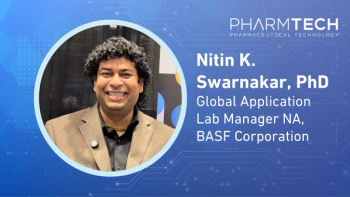
Nitin Kumar Swarnakar, PhD, global application lab manager at BASF, talks about spray drying for drying amorphous solid dispersions and Raman spectroscopy’s role as a quantitative analytical tool.
Ron Filler, Drug Development Consultants, explains how USP's 1074 revision brings human-relevant safety science to formulators and excipient makers.
Nitin Kumar Swarnakar, PhD, global application lab manager at BASF in Tarrytown, spoke with PharmTech at AAPS PharmSci 360 about formulation and characterization challenges for amorphous solid dispersions.
Bill Williams, AAPS, compares KinetiSol and spray drying for amorphous solid dispersions, covering 75% drug loading, pill burden, weakly basic drug release, and process limits.

Vibha Jawa, PhD, chief scientific officer at EpiVax, discusses the limitations of current preclinical testing approaches and how new approach methodologies can strengthen drug development.
Pauric Bannigan, Intrepid Labs, explains how physics-informed machine learning aids formulation and why regulators still want experimental data.
Vibha Jawa, PhD, chief scientific officer at EpiVax, explains why the need for animal studies varies by modality and what it takes for organ-on-chip and other human-relevant models to replace these studies in IND-enabling toxicology work.
Sanjay Konagurthu, PhD, senior director of Science and Innovation at Thermo Fisher Scientific, explains what teams need to do to ensure the usefulness of AI and what strides have been made with AI in regulatory submissions.
Pauric Bannigan, Intrepid Labs, explains where AI speeds formulation decisions, why data is the bottleneck, and how active learning trains models with far less data.
The new initiative aims to apply traceable AI and science to expand care worldwide by translating discovery into tools that accelerate drug development.
Sanjay Konagurthu, PhD, senior director, Science and Innovation at Thermo Fisher Scientific, provides an update on the progress of AI and machine learning used in drug delivery.
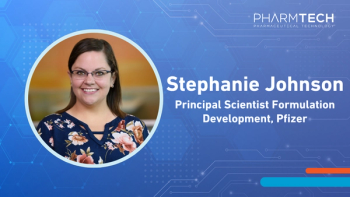
Stephanie Johnson, Pfizer, explains how off-platform triggers, single-owner risk registers, and traceable prior knowledge keep protein formulation programs on track.
Stephanie Johnson, Pfizer, discusses how platform formulations moved 2 Pfizer protein programs to IND in 8 months by redistributing, not removing risk.

Shubhajit Paul, a senior research fellow in Boehringer Ingelheim’s Department of Material Analytical Sciences, spoke with PharmTech at AAPS PharmSci 360 to explain how tabletability prediction can be improved for roller-compacted formulations.
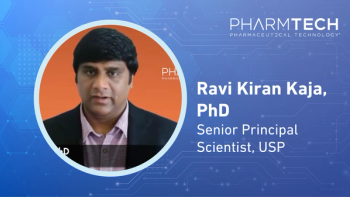
Ravi Kiran Kaja, PhD, USP, explains what harmonization of extractables and leachables standards looks like in practice.
Ravi Kiran Kaja, PhD, explains how USP’s industry-wide initiative aims to build confidence in trace-level extractables and leachables results.
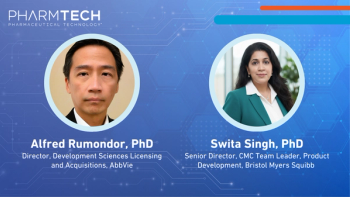
In a preview of their panel discussion at AAPS PharmSci 360 2026, Alfred Rumondor, PhD, AbbVie, and Swita Singh, PhD, Bristol Myers Squibb, discuss the implementation of risk-based approaches for CMC.
In a preview of their panel discussion at AAPS PharmSci 360 2026, Alfred Rumondor, PhD, AbbVie, and Swita Singh, PhD, Bristol Myers Squibb, discuss navigating CMC requirements for new modalities and AI’s involvement in CMC.
In a preview of their panel discussion at AAPS PharmSci 360 2026, Alfred Rumondor, PhD, AbbVie, and Swita Singh, PhD, Bristol Myers Squibb, discussed how CMC review practices are evolving and what that means for manufacturing strategy.
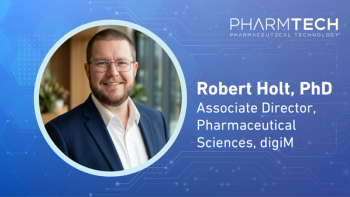
Robert Holt, PhD, associate director, Pharmaceutical Science, digiM Solution, discusses microstructure intelligence in more detail in part 2 of this preview of the company’s keynote presentation at AAPS PharmSci 360.