


Quality Systems
Latest News
Advertisement
Latest Videos





Shorts

0:19
The Data Integrity Problem in Drug Testing
2 days ago
by
Ravi Kiran Kaja(+1 more)
0:20
Building Confidence in Pharma Data
2 days ago
by
Ravi Kiran Kaja(+1 more)

0:33
Is the US Lagging in Biotech Innovation?
2 days ago
by
Boyang Wang(+1 more)
0:17
The Secret Strategy for Blockbuster Drugs
6 days ago
by
Elisabeth Gardiner, PhD(+2 more)

0:19
Don't Rush Drug Development Just for the PRV
7 days ago
by
Donny Xu
0:14
The Hidden Reason Drug Filings Fail CMC Deficiencies
7 days ago
by
Elisabeth Gardiner, PhD(+1 more)

0:16
The Explosive Growth of PRV Market Values
7 days ago
by
Nathan Edwards, PhD(+1 more)
0:11
Why Rare Disease Developers Rely on PRVs
16 days ago
by
Elisabeth Gardiner, PhD(+1 more)

0:28
Does the FDA trust new NAM technology?
16 days ago
by
Richard Jaenisch(+2 more)

0:14
The 'Zero Nitrite' Myth in Pharma
17 days ago
by
Bram Baert(+1 more)
Advertisement
More News
The FDA approves oral pritelivir for drug-resistant herpes sores in immunocompromised patients; what it means for antiviral development and manufacturing.

FDA approves Teva’s Weltruza, a once-monthly subcutaneous olanzapine for schizophrenia whose copolymer depot eliminates post-injection monitoring.

Equivalence test using two one-sided tests are widely used for demonstrating the comparability of treatment effects in different research fields. The method described in the manuscript aims to use simulations in Microsoft Excel to compute power for 2 one-sided tests for two groups with unequal variances.

Susan J. Schniepp, distinguished fellow with Nelson Labs, and Siegfried Schmitt, PhD, vice president, Technical, with Parexel, clear up some of the confusion about what does and does not need to be complied with regarding standards set by international pharmacopoeias.

The FDA has approved remibrutinib for symptomatic dermographism, the first such therapy, extending an oral BTK inhibitor label via the Phase III RemIND trial.
The FDA opened an expedited IND pilot, tightened scrutiny of foreign trial data, and finalized a rule recognizing non-animal testing methods. In Europe, the EMA advanced pharmaceutical legislation reform, restricted 2 legacy products, and opened an injectable-iron safety review.

Pharma manufacturing spent 90 years learning that producing correct outputs isn't the same as catching your own errors. AI has only learned the first.
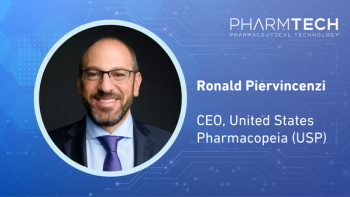
Ronald Piervincenzi, USP, explains why drug supply resilience needs a system approach, from procurement benchmarks to regulatory capacity building.
Ronald Piervincenzi, USP, explains why drug supply resilience needs a system approach, from procurement benchmarks to regulatory capacity building.

Michael Levy, senior vice president, Digital & Innovation, USP, explains the digital supply chain in a preview of his upcoming CPHI Milan panel presentation, The Next Phase of Pharma Supply Chains.

FDA approves tavapadon, first D1/D5 agonist, validating AbbVie's $8.7B Cerevel deal and an October five-strength oral tablet launch.
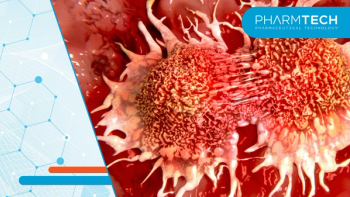
Merck licenses SciBrunch's preclinical KRAS G12D inhibitor for $2.13B, raising tech transfer and scale-up questions for oral cancer drug development.
Ronald Piervincenzi, USP, urges drugmakers and purchasers to act on supply chain resilience to curb drug shortages and shape better policy.

Content on PharmTech.com this week ranged from fundamentals on the use of digital pathology in drug development, discussions on the use of AI in pharma, and regulatory actions impacting the industry.

This article discusses risk-based lifecycle governance, system implementation considerations, and the progression of batch record control from paper-based to fully electronic systems.
Ronald Piervincenzi, USP, explains why manufacturers should act now and how benchmarking could reward reliable generic drug suppliers.

The FDA approves Lilly's once-weekly insulin efsitora for type 2 diabetes, raising Fc-fusion manufacturing, high-concentration pen, and capacity questions.
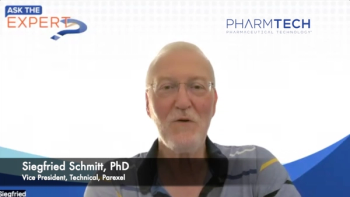
In this episode of Ask the Expert, Siegfried Schmitt, PhD, vice president, Technical at Parexel, and Susan J. Schniepp, distinguished fellow at Nelson Labs, discuss how companies should approach post-approval changes to their CMC regulatory filings.
In this episode of Pharma Fundamentals, Dr. Aleksandra Zuraw, senior veterinary pathologist at Charles River, provides an introduction to the use of digital pathology in drug development.
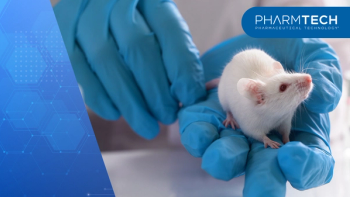
The agency issued a direct final rule that supports the use of innovative testing methods to limit the use of animals and maintain existing safety standards.

The FDA approves Inluriyo-Verzenio combo for ESR1-mutated breast cancer; EMBER-3 data double PFS, with supply chain and diagnostics implications for manufacturers.

This week, the FDA opened applications for its Expedited IND Pilot, quality experts presented at the PDA/FDA Joint Regulatory Conference, and Hovione expanded its spray drying capacity.

Andrea K. Kerrigan, FDA, outlines how validation, data integrity, and QRM determine whether digital tools and AI strengthen or undermine CGMP compliance.

PDA/FDA 2026 session maps the GMP audit lifecycle, root cause to CAPA closure, plus a local vs. above-site decision framework and two case studies.

Lori Dingledine, QC Director Microbiological Control and GTIC Operations at Genentech, provided input on the regulations surrounding raw material manufacturing and use for ATMPs in a presentation at the 2026 PDA/FDA Joint Regulatory Conference.
Advertisement
Advertisement
Trending on Pharmaceutical Technology
1
FDA Approves Bepirovirsen: Why Oligonucleotide CDMOs Should Take Note
2
Nitrosamine Problems and Industry Solutions: PharmTech Explained
3
OpenAI Bets on Accelerating Drug Development Timelines With Orchestra Bio
4
Sustainability in Healthcare Packaging: The Journey From Yesterday to Tomorrow
5