
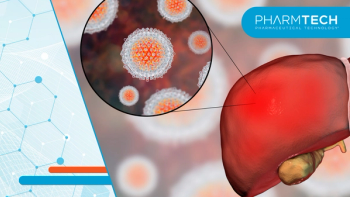
FDA approves GSK's bepirovirsen for chronic hepatitis B after a 19% functional cure rate, raising oligonucleotide scale-up stakes for manufacturers.
FDA approves GSK's bepirovirsen for chronic hepatitis B after a 19% functional cure rate, raising oligonucleotide scale-up stakes for manufacturers.
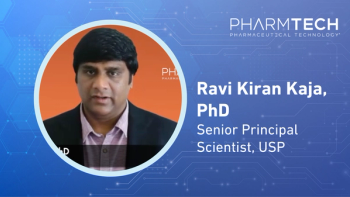
Ravi Kiran Kaja, PhD, USP, explains what harmonization of extractables and leachables standards looks like in practice.

Jaenisch, Muraru, and Pandey discuss new skills for QC and regulatory teams, plus patient trust, as new approach methodologies reshape pharma.

Nine duloxetine recalls since 2024 show why generic drug manufacturers need route-level nitrosamine risk assessment, not end-product testing alone.

OpenAI acquired Orchestra Bio to pair AI agents that track drug development timelines with its Rosalind life sciences tools, raising oversight questions for pharma teams.
Ravi Kiran Kaja, PhD, explains how USP’s industry-wide initiative aims to build confidence in trace-level extractables and leachables results.
FDA final guidance defines when companion app output counts as drug labeling and when device-connected or standalone apps belong in prescribing information.

Science, circularity, regulation, and technology are reshaping how the industry develops packaging for medicines.
Panelists on PharmTech AI Pulse Check debate SURPASS, a new digital-twin trial program, regulatory acceptance, and the data-cleanup burden it will create.

Roche-Hansoh, Merck KGaA-Silence, and Lilly-METiS deals show how ADCs, siRNA, and lipid nanoparticles reshape demands on CMC and manufacturing teams.

Germany is home to several prominent pharma companies and more than 1000 innovative biotechs.
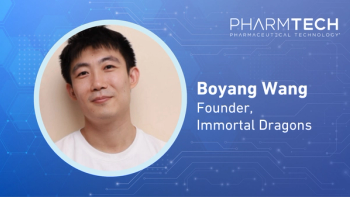
Boyang Wang of Immortal Dragons explains how FDA's Expedited IND Pilot and QRIs could compress sequential first-in-human steps as China's Decree 818 raises the pace.
The deadline to comment on FDA's generative AI paper is Oct 19, 2026. We explain why professionals in pharma manufacturing should weigh in.

The FDA expanded Anktiva to BCG-unresponsive papillary-only NMIBC using existing CIS trial data, a precedent with implications for development timelines and supply planning.

AI accountability, faster FDA pathways, rare disease CMC review, and next-gen GLP-1 formulation lead this week’s PharmTech roundup.
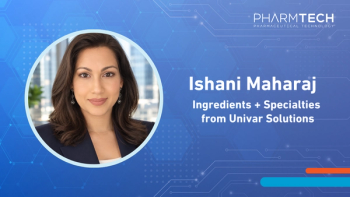
Ishani Maharaj of Ingredients + Specialties from Univar Solutions explains how to stabilize GLP-1 multi-agonists, weigh delivery formats, and qualify novel excipients and suppliers.

MASH and cardiomyopathy AI collaboration: AstraZeneca pays insitro $40M upfront for target discovery, then leads clinical development and CMC planning.
Boyang Wang, Immortal Dragons, discusses how the FDA’s Expedited IND Pilot must prove efficiency as sponsors chase the fastest route to valid first-in-human data.
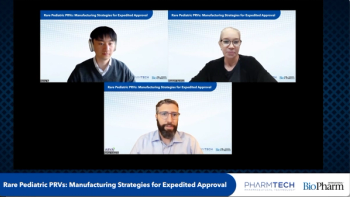
Nate Edwards of Arya Consulting moderates a discussion with Elisabeth Gardiner of Tevard Biosciences and Donny Xu of the RTW Institute about rare disease treatment development and navigating the FDA’s Rare Pediatric Disease Priority Review Voucher Program.
The FDA’s Rare Disease Framework Initiative brings risk-based CMC review and pre-approval inspections into scope for sponsors, CDMOs, and quality teams.

NVIDIA’s $250M, five-year compute donation funds UK agentic AI safety research, with implications for how GMP teams validate and govern autonomous AI.
Jaenisch, Muraru, and Pandey join PharmTech's Cole to discuss FDA's generative AI paper, ARPA-H's SURPASS trials, and AI accountability.

Richard Jaenisch explains what FDA's real-world use case database means for CMC and quality teams navigating NAMs.
Boyang Wang, Immortal Dragons, explains how FDA’s Expedited IND Pilot and research partners could speed serial steps to first-in-human trials compared to China’s 818 Decree.

This article examines how modern automation platforms create the digital foundation required for Pharma 4.0 by integrating manufacturing systems, centralized data management, Industrial Internet of Things connectivity, electronic batch production records, and AI-driven analytics.
PharmTech AI Pulse Check panelists explain why attribution, audit trails, and sign-off matter more than AI watermark detection for GxP quality teams.

Ron Scarboro, Azurity Pharmaceuticals, explains how cross-functional development, disciplined reformulation, and post-approval metrics can help proven medicines work in everyday use.
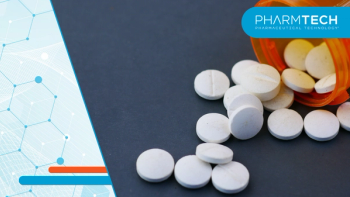
The FDA approves oral pritelivir for drug-resistant herpes sores in immunocompromised patients; what it means for antiviral development and manufacturing.

This week, drug formulation and manufacturing experts showcased their knowledge, and companies exhibited their products, at CPHI Milan.

FDA approves Teva’s Weltruza, a once-monthly subcutaneous olanzapine for schizophrenia whose copolymer depot eliminates post-injection monitoring.