




Quality Systems
Latest News
Advertisement
Latest Videos




Shorts

0:11
Why Rare Disease Developers Rely on PRVs
9 days ago
by
Elisabeth Gardiner, PhD(+1 more)
0:28
Does the FDA trust new NAM technology?
9 days ago
by
Richard Jaenisch(+2 more)

0:14
The 'Zero Nitrite' Myth in Pharma
9 days ago
by
Bram Baert(+1 more)

0:14
New Parkinson's Breakthrough
10 days ago
by
Susan Haigney
0:50
Why One Good Supplier Isn't Enough to Fix Drug Shortages
10 days ago
by
Ronald T. Piervincenzi(+2 more)
0:48
Is Bio-Printing Organs Still a Fantasy?
13 days ago
by
Richard Jaenisch(+2 more)
0:29
Why We Have Drug Shortages and How to Fix Them
14 days ago
by
Ronald T. Piervincenzi(+2 more)
0:53
Can Organoids Replace Animal Testing?
15 days ago
by
Richard Jaenisch(+2 more)
0:39
Building Resilience in the Global Supply Chain
16 days ago
by
Ronald T. Piervincenzi(+2 more)
0:18
Is Your Company Risk-averse or Risk-tolerant
20 days ago
by
Susan J. Schniepp(+1 more)
Advertisement
More News
Susan J. Schniepp, distinguished fellow with Nelson Labs, and Siegfried Schmitt, PhD, vice president, Technical, with Parexel, clear up some of the confusion about what does and does not need to be complied with regarding standards set by international pharmacopoeias.

The FDA has approved remibrutinib for symptomatic dermographism, the first such therapy, extending an oral BTK inhibitor label via the Phase III RemIND trial.

Pharma manufacturing spent 90 years learning that producing correct outputs isn't the same as catching your own errors. AI has only learned the first.
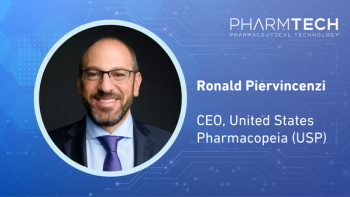
Ronald Piervincenzi, USP, explains why drug supply resilience needs a system approach, from procurement benchmarks to regulatory capacity building.

Michael Levy, senior vice president, Digital & Innovation, USP, explains the digital supply chain in a preview of his upcoming CPHI Milan panel presentation, The Next Phase of Pharma Supply Chains.

FDA approves tavapadon, first D1/D5 agonist, validating AbbVie's $8.7B Cerevel deal and an October five-strength oral tablet launch.
Merck licenses SciBrunch's preclinical KRAS G12D inhibitor for $2.13B, raising tech transfer and scale-up questions for oral cancer drug development.

This article discusses risk-based lifecycle governance, system implementation considerations, and the progression of batch record control from paper-based to fully electronic systems.
Ronald Piervincenzi, USP, explains why manufacturers should act now and how benchmarking could reward reliable generic drug suppliers.

The FDA approves Lilly's once-weekly insulin efsitora for type 2 diabetes, raising Fc-fusion manufacturing, high-concentration pen, and capacity questions.
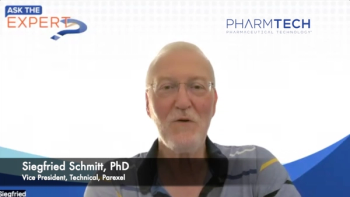
In this episode of Ask the Expert, Siegfried Schmitt, PhD, vice president, Technical at Parexel, and Susan J. Schniepp, distinguished fellow at Nelson Labs, discuss how companies should approach post-approval changes to their CMC regulatory filings.
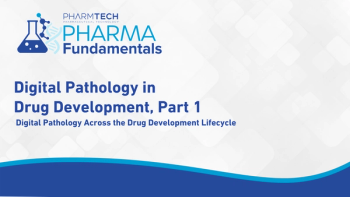
In this episode of Pharma Fundamentals, Dr. Aleksandra Zuraw, senior veterinary pathologist at Charles River, provides an introduction to the use of digital pathology in drug development.
The agency issued a direct final rule that supports the use of innovative testing methods to limit the use of animals and maintain existing safety standards.

The FDA approves Inluriyo-Verzenio combo for ESR1-mutated breast cancer; EMBER-3 data double PFS, with supply chain and diagnostics implications for manufacturers.

This week, the FDA opened applications for its Expedited IND Pilot, quality experts presented at the PDA/FDA Joint Regulatory Conference, and Hovione expanded its spray drying capacity.

Andrea K. Kerrigan, FDA, outlines how validation, data integrity, and QRM determine whether digital tools and AI strengthen or undermine CGMP compliance.

PDA/FDA 2026 session maps the GMP audit lifecycle, root cause to CAPA closure, plus a local vs. above-site decision framework and two case studies.

Lori Dingledine, QC Director Microbiological Control and GTIC Operations at Genentech, provided input on the regulations surrounding raw material manufacturing and use for ATMPs in a presentation at the 2026 PDA/FDA Joint Regulatory Conference.

Karthik Iyer, Eli Lilly, detailed an AI system linking GMP findings, audits, and deviations for cited, inspection-ready regulatory intelligence.

At the PDA/FDA Joint Regulatory Conference 2026, Helen Motamen, MS global head, Sanofi Quality Audit, Inspection, Intelligence & Advocacy, at Sanofi, provided advice for creating a strong internal audit program.

AI can turn medical device risk management into a continuous signal.

On PharmTech.com this week, coverage of upcoming events continued, experts continued to discuss the use of AI in pharma, and validation in oral solid dosage product production was emphasized.

This article explores the historical use of silicone oil in the performance of primary drug product packaging; design of experiment test results for selection of the cleaning agent and CCPs; assessment of visible residue limits and Fourier-transform infrared spectroscopy surface analysis; and setting health-based exposure limits for silicone oil using a non-uniform distribution model, and a previously published permitted daily exposure.

The EU is focused on strengthening supply-chain resilience, avoiding medicine shortages, simplifying regulations, and implementing new approach methodologies.
In commercial tablet or capsule operations, validation helps protect the site’s ability to produce, release, and supply product without repeated disruption. This article discusses validation as a technical control system that supports manufacturing continuity.
Advertisement
Advertisement
Trending on Pharmaceutical Technology
1
FDA Rare Disease Framework Puts CMC Review in Scope
2
Clinical Trial Delays: FDA’s Expedited IND Pilot vs China’s 818 Decree
3
PharmTech AI Pulse Check: AI Watermark Vulnerability
4
Manufacturing Intelligence: What FDA's Real-World Use Case Database Means for CMC
5