




Drug Development
Latest News

Advertisement
Research into Cold Cancers Heating Up
Accurately targeted immunotherapies through reliable neoantigen recognition enable personalized medicine development.

Development of Gamma-Delta T-Cell Therapies
Activation and expansion are essential for success in both autologous and allogeneic therapies.

QbD for Small-Molecule Continuous Process Development
Continuous manufacturing and a quality-by-design development approach are a natural fit.

Latest Videos





Shorts
0:11
Why Rare Disease Developers Rely on PRVs
a day ago
by
Elisabeth Gardiner, PhD(+1 more)
0:28
Does the FDA trust new NAM technology?
a day ago
by
Richard Jaenisch(+2 more)

0:14
New Parkinson's Breakthrough
2 days ago
by
Susan Haigney
0:48
Is Bio-Printing Organs Still a Fantasy?
5 days ago
by
Richard Jaenisch(+2 more)
0:53
Can Organoids Replace Animal Testing?
7 days ago
by
Richard Jaenisch(+2 more)

0:20
Why You Need New Experts for AI Validation
13 days ago
by
Aleksandra Zuraw(+1 more)
0:20
Why Scanning Slides Isn't Enough
14 days ago
by
Aleksandra Zuraw(+1 more)
0:27
The Hidden Risks of Scale-Up Manufacturing
22 days ago
by
Andrew Parker(+1 more)

0:22
Why Clinical Trial Strategy Needs Early Planning
23 days ago
by
Christy Owings(+1 more)
0:16
Your AI Strategy is Your Data Strategy
a month ago
by
Christy Owings(+1 more)
Advertisement
More News

FDA approves tavapadon, first D1/D5 agonist, validating AbbVie's $8.7B Cerevel deal and an October five-strength oral tablet launch.
Merck licenses SciBrunch's preclinical KRAS G12D inhibitor for $2.13B, raising tech transfer and scale-up questions for oral cancer drug development.

The FDA approves Lilly's once-weekly insulin efsitora for type 2 diabetes, raising Fc-fusion manufacturing, high-concentration pen, and capacity questions.
The EC has approved AstraZeneca's Trixeo Aerosphere as the first single-inhaler triple-combination therapy for asthma in the EU, based on phase e data showing improved lung function and fewer severe exacerbations in patients uncontrolled on standard ICS/LABA treatment.

Swedish biotech companies have a broad and varied product pipeline that is attracting attention from venture capitalists and pharmaceutical companies.
The agency issued a direct final rule that supports the use of innovative testing methods to limit the use of animals and maintain existing safety standards.
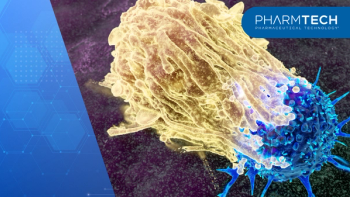
The FDA approves Inluriyo-Verzenio combo for ESR1-mutated breast cancer; EMBER-3 data double PFS, with supply chain and diagnostics implications for manufacturers.
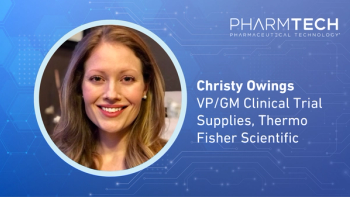
Christy Owings, Thermo Fisher, explains clinical trial supply chain risks in Latin America, importer-of-record strategy, AI, and eCOA delays.
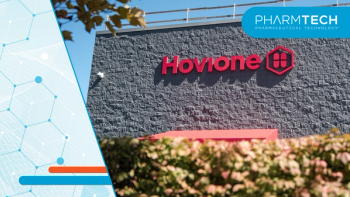
The recently opened NJ spray drying facility doubles capacity for amorphous solid dispersions, addressing solubility limits in roughly 70% of small-molecule pipelines.

FDA opens applications for its Expedited IND Pilot, pairing sponsors with qualified research institutions to test rolling CMC review ahead of first-in-human trials.

2026 approvals, clinical data, and licensing deals are advancing subcutaneous biologics, reducing patient burden, and reshaping biopharma drug strategy.

Sanofi will transfer 20 mature medicines and three manufacturing sites to Cheplapharm for a 26.4% equity stake, closing by Q3 2027.

On PharmTech.com this week, coverage of upcoming events continued, experts continued to discuss the use of AI in pharma, and validation in oral solid dosage product production was emphasized.
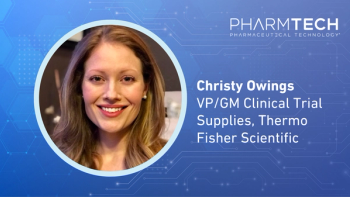
Christy Owings, Thermo Fisher, on why early supply chain partnership and site visits prevent costly eCOA and clinical trial delays.
Christy Owings, Thermo Fisher, on how AI complements clinical supply chain expertise, streamlines site logistics, and tracks shifting biotech markets.
Christy Owings, Thermo Fisher, speaks on why importer of record strategy and vetted local partners are key to reliable clinical trial supply chains.
Christy Owings, Thermo Fisher, discusses how customs delays and import complexity risk clinical trial supply chains in Latin America.

This week saw predictive modeling, microstructure intelligence, a CAR T-cell safety pause, and major licensing deals reshape pharma manufacturing.

The FDA approves zilganersen, the first disease-modifying Alexander disease therapy, offering rare disease developers a trial design and RNA delivery model.

PharmTech spoke with Tara Dougal, event director for pharma at Informa Markets, about what’s new for CPHI Milan this year, including 4 new zones and a Sustainability Summit.

Effective modeling and simulation can reduce physical experimental requirements, ASD development risks, and time to market.

Novartis paused 8 CAR T-cell trials after 3 deaths. Bristol Myers also paused a rival program. What it means for cell therapy developers.
Novartis licenses Alteogen's ALT-B4 enzyme for subcutaneous drug conversion in a deal worth up to $3.2B, signaling formulation industry shift.
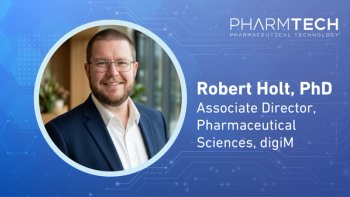
Robert Holt, PhD, associate director, Pharmaceutical Science, digiM Solution, discusses microstructure intelligence in more detail in part 2 of this preview of the company’s keynote presentation at AAPS PharmSci 360.

The finalists for the 2026 CPHI Pharma Awards span 15 categories including API development, digital transformation, manufacturing, supply chain, sustainability, and leadership, with winners revealed October 6 at CPHI Milan.
Advertisement
Advertisement