Do you want to develop an oral controlled release (OCR) product? If so, you’ll quickly realize there are a lot of questions to answer. What do you want the final dosage form to do? What formulation and process approach are you going to use? What traps and roadblocks might you encounter? Understanding the options and their ramifications is the first step toward devising a plan.
Ron Scarboro, Azurity Pharmaceuticals, explains how cross-functional development, disciplined reformulation, and post-approval metrics can help proven medicines work in everyday use.
The FDA approves oral pritelivir for drug-resistant herpes sores in immunocompromised patients; what it means for antiviral development and manufacturing.
Equivalence test using two one-sided tests are widely used for demonstrating the comparability of treatment effects in different research fields. The method described in the manuscript aims to use simulations in Microsoft Excel to compute power for 2 one-sided tests for two groups with unequal variances.
Susan J. Schniepp, distinguished fellow with Nelson Labs, and Siegfried Schmitt, PhD, vice president, Technical, with Parexel, clear up some of the confusion about what does and does not need to be complied with regarding standards set by international pharmacopoeias.
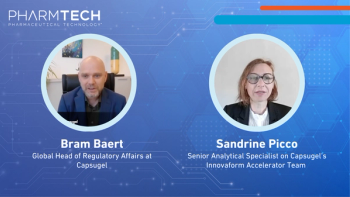
Mitigating nitrosamine risk requires assessing each product individually, says Bram Baert, Global Head of Regulatory Affairs at Capsugel, and Sandrine Picco, Senior Analytical Specialist on Capsugel's Innovaform Accelerator Team, in this interview with PharmTech.