Energy Markets Volatility: The Rocky Road to Net Zero
According to the International Energy Agency, COVID-19 initially lead to a “staggering” decline in energy demand and depressed energy prices. Less than two years later, we are now faced with the cost of energy at an all-time high. Rapidly growing demand and, more recently, the Russian invasion of Ukraine, are driving energy prices to unprecedented highs and challenging security of supply. It is against this backdrop of uncertainty that we are simultaneously attempting to avert climate disaster through how we generate, store, use and manage energy. Should renewable or net zero carbon targets be postponed or is this all part of the rocky road to net zero?
Vibha Jawa, PhD, chief scientific officer at EpiVax, explains why the need for animal studies varies by modality and what it takes for organ-on-chip and other human-relevant models to replace these studies in IND-enabling toxicology work.
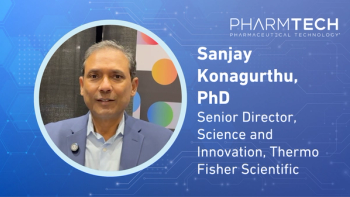
Sanjay Konagurthu, PhD, senior director of Science and Innovation at Thermo Fisher Scientific, explains what teams need to do to ensure the usefulness of AI and what strides have been made with AI in regulatory submissions.
Pauric Bannigan, Intrepid Labs, explains where AI speeds formulation decisions, why data is the bottleneck, and how active learning trains models with far less data.
The new initiative aims to apply traceable AI and science to expand care worldwide by translating discovery into tools that accelerate drug development.
Sanjay Konagurthu, PhD, senior director, Science and Innovation at Thermo Fisher Scientific, provides an update on the progress of AI and machine learning used in drug delivery.
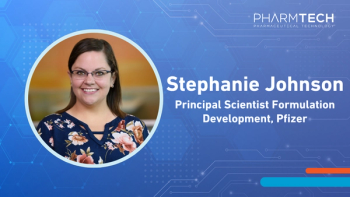
Stephanie Johnson, Pfizer, explains how off-platform triggers, single-owner risk registers, and traceable prior knowledge keep protein formulation programs on track.
Stephanie Johnson, Pfizer, discusses how platform formulations moved 2 Pfizer protein programs to IND in 8 months by redistributing, not removing risk.
Shubhajit Paul, a senior research fellow in Boehringer Ingelheim’s Department of Material Analytical Sciences, spoke with PharmTech at AAPS PharmSci 360 to explain how tabletability prediction can be improved for roller-compacted formulations.