
News|Articles|June 16, 2016

FDA Publishes Guidance on Chewable Tablets

The agency provides quality, development, manufacturing, and labeling recommendations.

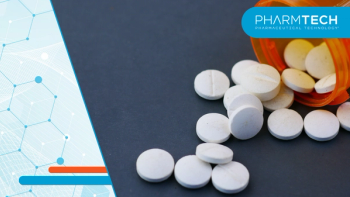
On June 16, 2016, FDA published guidance on the Center for Drug Evaluation and Research’s (CDER) thinking in regards to the assessment of critical quality attributes in the development of chewable tablets. The guidance also addresses the submission of developmental, manufacturing, and labeling information in new drug applications (NDAs) and abbreviated NDAs (ANDA) for CDER approval. The guidance also applies to certain chemistry, manufacturing, and controls (CMC) supplements to NDAs and ANDAs.

Critical quality attributes that should be established during early development include hardness, dissolution, and disintegration of the chewable tablet. FDA also recommends the following when developing chewable tablets:

  • Potential product design and development considerations: disintegrant(s) to facilitate release of the active ingredient, and sweeteners and flavoring agents for taste-masking. Interaction of excipients with each other and/or the drug substance(s) and their likely impact on the manufacturing process.

  • Clinical trial information: The following questions should be asked and answered. Were the chewable tablets swallowed intact (i.e., without breaking) or after being thoroughly chewed? If swallowed intact, does the shape and size of chewable tablet pose a choking or bowel obstruction risk? If water was used to aid swallowing, what was the volume? What was the subject’s sensory experience (e.g., taste, mouth feel, and aftertaste)?

The guidance provides labeling information, a chewing difficulty index, and a simulated salivary fluid composition appendix.

Source: FDA

Related to this article

Glass vial, pipette and woman scientist in laboratory for medical study, research or experiment. Test tube, dropper and professional female person with chemical liquid for pharmaceutical innovation. | Image Credit: ©HockleyMedia24/peopleimages.com -stock.adobe.com
Equivalence test using two one-sided tests are widely used for demonstrating the comparability of treatment effects in different research fields. The method described in the manuscript aims to use simulations in Microsoft Excel to compute power for 2 one-sided tests for two groups with unequal variances.
Complying with International Pharmacopoeias
Susan J. Schniepp, distinguished fellow with Nelson Labs, and Siegfried Schmitt, PhD, vice president, Technical, with Parexel, clear up some of the confusion about what does and does not need to be complied with regarding standards set by international pharmacopoeias.
CPHI Milan 2026: Nitrosamine Risk Mitigation, Part 2
Mitigating nitrosamine risk requires assessing each product individually, says Bram Baert, Global Head of Regulatory Affairs at Capsugel, and Sandrine Picco, Senior Analytical Specialist on Capsugel's Innovaform Accelerator Team, in this interview with PharmTech.