News|Articles|October 13, 2016

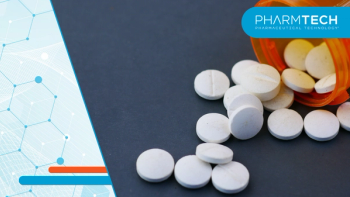
Pfizer Comes Up Short in Lyrica Patent Battle

A UK appeals court ruled against Pfizer, saying generic-drug makers did not infringe on Lyrica’s pain patent.

Pfizer said it was disappointed by the Oct. 13, 2016 decision of the Court of Appeal in London regarding Lyrica’s (pregabalin) pain patent. The court affirmed a 2015 decision from the High Court of Justice, stating that generic-makers did not infringe on the patent.

According to court documents, after Pfizer’s original patent for the drug expired, the company acquired a secondary patent for pain, which extended protection of pregabalin until 2017. Generic-drug maker Actavis, now Allergan, launched a generic version of the drug. The Actavis generic was approved with a “skinny label,” Reuters reports, meaning that it could only be used for the treatment of general anxiety disorder and epilepsy. Mylan also challenged the validity of Pfizer’s Lyrica patent.

Although generic versions of Lyrica were not approved to treat pain, Pfizer said that patent infringement could still occur. The company argued pharmacists could commit infringement unknowingly, by prescribing a generic version of Lyrica to treat pain. But the high court didn’t agree and said that the best solution “lies with prescribing doctors ensuring that only Lyrica is prescribed for pain.” After reviewing the high court's decision, an appeals court judge said that patent claims directed to pain and neuropathic pain are invalid, affirming the original decision. 

In a statement, Pfizer said it plans to appeal this decision to the Supreme Court. The company wrote, “Pfizer has always made clear that it has not sought to prevent the use of generic pregabalin to treat generalized anxiety disorder or epilepsy. Following the Court of Appeal’s judgment, and pending the outcome of its appeal to the Supreme Court, Pfizer will now seek to have the NHS England Pregabalin Guidance on prescribing and dispensing by brand name, Lyrica, limited to prescribing and dispensing for the types of pain in those patent claims upheld as valid by the Court of Appeal.”

Source: Pfizer, Reuters, High Court of Justice


Related to this article

Glass vial, pipette and woman scientist in laboratory for medical study, research or experiment. Test tube, dropper and professional female person with chemical liquid for pharmaceutical innovation. | Image Credit: ©HockleyMedia24/peopleimages.com -stock.adobe.com
Equivalence test using two one-sided tests are widely used for demonstrating the comparability of treatment effects in different research fields. The method described in the manuscript aims to use simulations in Microsoft Excel to compute power for 2 one-sided tests for two groups with unequal variances.
Complying with International Pharmacopoeias
Susan J. Schniepp, distinguished fellow with Nelson Labs, and Siegfried Schmitt, PhD, vice president, Technical, with Parexel, clear up some of the confusion about what does and does not need to be complied with regarding standards set by international pharmacopoeias.
CPHI Milan 2026: Nitrosamine Risk Mitigation, Part 2
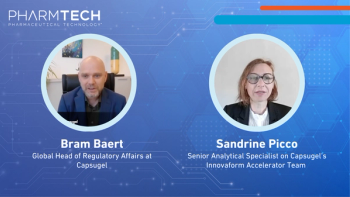
Mitigating nitrosamine risk requires assessing each product individually, says Bram Baert, Global Head of Regulatory Affairs at Capsugel, and Sandrine Picco, Senior Analytical Specialist on Capsugel's Innovaform Accelerator Team, in this interview with PharmTech.