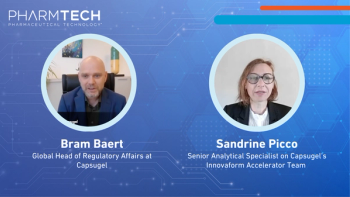
Capsugel's Bram Baert and Sandrine Picco argue that chasing zero nitrite in pharmaceutical excipients is often impractical and costly. They recommend setting scientifically justified, risk-based limits and consistently staying below them.
A new study by the Business Research Company reveals prominent contract research organization outsourcing trends.
While pharma industry growth has slowed from double to single digit levels recently, demand for contract research organization (CRO) services is growing rapidly, according to the
Performing services that are crucial during clinical phases of drug development, such as drug discovery, toxicology studies, bioanalytical services, and data management, CROs allow pharmaceutical companies to outsource critical operations to reduce costs.
After seven years of 10% annual growth, the global CRO market reached $44.4 billion in 2017, the report found. Growth should increase, exceeding 12% per year through 2021, according to BRC. Drug discovery accounted for about a third of the total market. Within that segment, oncology therapies made up about 25% of that investment.
Cost reduction programs are making outsourcing more attractive, the study found, while the strategy is also being used to help increase R&D productivity.
According to BRC, more pharmaceutical companies are forming strategic partnerships with their CROs, which is also having an impact on the market.
Dominating the market are IQVIA, which holds 12.4% of the total, according to BRC; followed by Laboratory Corporation of America Holdings, ICON, PAREXEL, and Pharmaceutical Product Development, the study found.
CROs in North America produce $18.8 billion, or 42.3% of the global market, while they consume $20.8 billion worth of goods, or about 46.8% of the total, according to the report. BRC analysts attribute the difference to increased use of offshoring for production. However, BRC’s research found that most CRO production activity is still going on within the United States.
Source: