


This week, drug formulation and manufacturing experts showcased their knowledge, and companies exhibited their products, at CPHI Milan.
Susan Haigney is lead editor of BioPharm International®.
This week, drug formulation and manufacturing experts showcased their knowledge, and companies exhibited their products, at CPHI Milan.

Susan J. Schniepp, distinguished fellow with Nelson Labs, and Siegfried Schmitt, PhD, vice president, Technical, with Parexel, clear up some of the confusion about what does and does not need to be complied with regarding standards set by international pharmacopoeias.
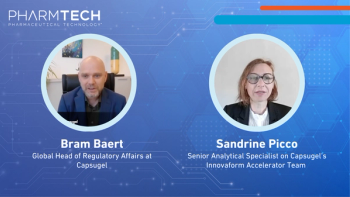
Mitigating nitrosamine risk requires assessing each product individually, says Bram Baert, Global Head of Regulatory Affairs at Capsugel, and Sandrine Picco, Senior Analytical Specialist on Capsugel's Innovaform Accelerator Team, in this interview with PharmTech.
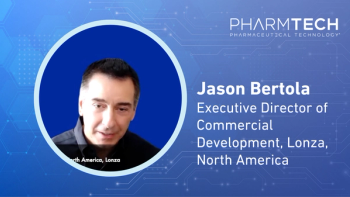
Jason Bertola, executive director of Commercial Development for the Advanced Synthesis Platform at Lonza in North America, explains the demand for spray drying and the hurdles involved with scale up, in an interview with PharmTech.

The company is showcasing new development solutions and advanced digital technologies including its new OSD Express and Steriles Express solutions for drug development.

The winners of the CPHI Pharma Awards 2026 include a neurodegeneration platform, a track-and-trace packaging innovation, a enzymatic mRNA manufacturing technology, and a cell-free enzymatic biomanufacturing platform.

This week on PharmTech, Merck diversified its pipeline, USP emphasizes supply chain security, AI systems are examined, and speakers preview their presentations at CPHI Milan and AAPS PharmSci 360.
Capsugel's Bram Baert and Sandrine Picco argue that chasing zero nitrite in pharmaceutical excipients is often impractical and costly. They recommend setting scientifically justified, risk-based limits and consistently staying below them.
The FDA opened an expedited IND pilot, tightened scrutiny of foreign trial data, and finalized a rule recognizing non-animal testing methods. In Europe, the EMA advanced pharmaceutical legislation reform, restricted 2 legacy products, and opened an injectable-iron safety review.

Gene manufacturing platforms, patient-centric formulations, contract services, packaging innovations, and sterile filling lines are in the spotlight at CPHI Milan 2026.

Michael Levy, senior vice president, Digital & Innovation, USP, explains the digital supply chain in a preview of his upcoming CPHI Milan panel presentation, The Next Phase of Pharma Supply Chains.
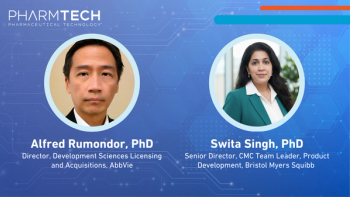
In a preview of their panel discussion at AAPS PharmSci 360 2026, Alfred Rumondor, PhD, AbbVie, and Swita Singh, PhD, Bristol Myers Squibb, discuss the implementation of risk-based approaches for CMC.

Content on PharmTech.com this week ranged from fundamentals on the use of digital pathology in drug development, discussions on the use of AI in pharma, and regulatory actions impacting the industry.
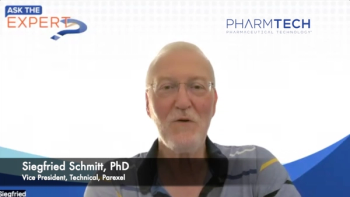
In this episode of Ask the Expert, Siegfried Schmitt, PhD, vice president, Technical at Parexel, and Susan J. Schniepp, distinguished fellow at Nelson Labs, discuss how companies should approach post-approval changes to their CMC regulatory filings.
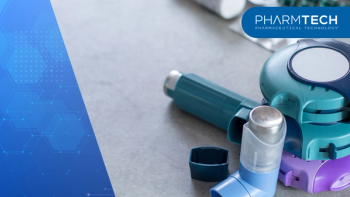
The EC has approved AstraZeneca's Trixeo Aerosphere as the first single-inhaler triple-combination therapy for asthma in the EU, based on phase e data showing improved lung function and fewer severe exacerbations in patients uncontrolled on standard ICS/LABA treatment.
In this episode of Pharma Fundamentals, Dr. Aleksandra Zuraw, senior veterinary pathologist at Charles River, provides an introduction to the use of digital pathology in drug development.
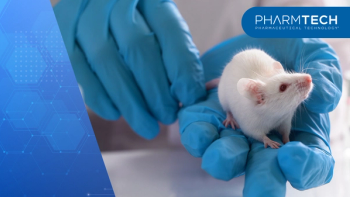
The agency issued a direct final rule that supports the use of innovative testing methods to limit the use of animals and maintain existing safety standards.

The Leadership Summit will bring senior pharma executives together to discuss supply chain resilience, medicine security, and manufacturing capacity amid growing geopolitical fragmentation.

This week, the FDA opened applications for its Expedited IND Pilot, quality experts presented at the PDA/FDA Joint Regulatory Conference, and Hovione expanded its spray drying capacity.

PharmTech spoke with Tara Dougal, event director for pharma at Informa Markets, about trends impacting the pharmaceutical industry and how CPHI Milan is addressing these areas this year.
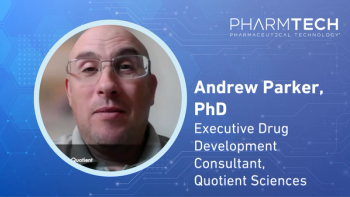
Andrew Parker, PhD, executive drug development consultant, Quotient Sciences, explains how AI is integrated into pharmaceutical development.

Lori Dingledine, QC Director Microbiological Control and GTIC Operations at Genentech, provided input on the regulations surrounding raw material manufacturing and use for ATMPs in a presentation at the 2026 PDA/FDA Joint Regulatory Conference.

At the PDA/FDA Joint Regulatory Conference 2026, Helen Motamen, MS global head, Sanofi Quality Audit, Inspection, Intelligence & Advocacy, at Sanofi, provided advice for creating a strong internal audit program.
Andrew Parker, PhD, executive drug development consultant, Quotient Sciences, explains that developing a molecule requires a holistic view of its chemical, physical, and biological properties.

On PharmTech.com this week, coverage of upcoming events continued, experts continued to discuss the use of AI in pharma, and validation in oral solid dosage product production was emphasized.

Shilpa Pharma Lifesciences Limited will launch a new small-molecule CDMO at CPHI Milan in October.
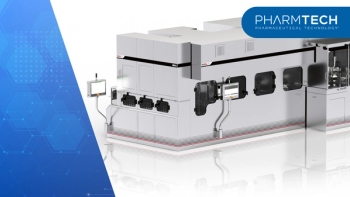
The IMA Pharmaceutical and MedTech divisions will be highlighting the TILE-X fill-finish line, a new VPHP BioIndicator, X-PEN autoinjector platform, and a range of machines from its IMA Active, IMA Life, IMA Safe, and IMA BFB divisions at the CPHI Milan event.

Silvia Forroova, director of Partnerships & Sustainability at CPHI, and founder of the CPHI Sustainability Collective, provides a preview of the new Sustainability Summit at CPHI Milan 2026.
In a preview of their panel discussion at AAPS PharmSci 360 2026, Alfred Rumondor, PhD, AbbVie, and Swita Singh, PhD, Bristol Myers Squibb, discuss navigating CMC requirements for new modalities and AI’s involvement in CMC.

This week saw predictive modeling, microstructure intelligence, a CAR T-cell safety pause, and major licensing deals reshape pharma manufacturing.
Published: July 21st 2026 | Updated: July 24th 2026

Published: January 10th 2025 | Updated: January 13th 2025

September 18th 2025

February 2nd 2024
July 6th 2023