Richard Jaenisch explains what FDA's real-world use case database means for CMC and quality teams navigating NAMs.

Associate Editorial Director
Richard Jaenisch explains what FDA's real-world use case database means for CMC and quality teams navigating NAMs.

PharmTech AI Pulse Check panelists explain why attribution, audit trails, and sign-off matter more than AI watermark detection for GxP quality teams.
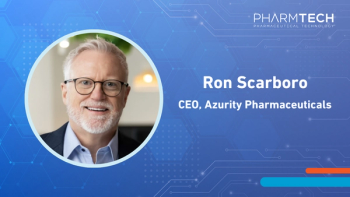
Ron Scarboro, Azurity Pharmaceuticals, explains how cross-functional development, disciplined reformulation, and post-approval metrics can help proven medicines work in everyday use.
Richard Jaenisch examines whether FDA's NAM pathway truly shortens drug pipelines or just shifts the evidentiary burden elsewhere.
API-gated journals may skew pharma regulatory research as AI agents favor accessible sources, raising citation integrity and pharmacovigilance risks.
Ron Scarboro, Azurity Pharmaceuticals, explains when formulation robustness justifies added cost and which post-approval quality and supply metrics teams can track.
Richard Jaenisch explains why NAMs are compressing drug development faster than AI and what FDA's new nonclinical testing rule means for sponsors.
Shadow AI and vendor data retention put GMP records and trade secrets at risk. AI Pulse Check panelists outline what pharma AI policies require.
Ron Scarboro, Azurity Pharmaceuticals, claims drug reformulation that removes patient barriers must preserve efficacy, urging early cross-functional team alignment.
PharmTech AI Pulse Check episode 2 covers AI data governance, API-gated journals, watermarking limits, and why attribution beats detection in GxP.
Ron Scarboro, Azurity Pharmaceuticals, explains why real-world usability belongs at product definition and how post-launch feedback should guide drug formulation.
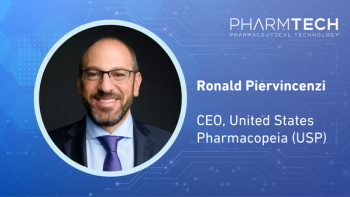
Ronald Piervincenzi, USP, explains why drug supply resilience needs a system approach, from procurement benchmarks to regulatory capacity building.
Ronald Piervincenzi, USP, explains why drug supply resilience needs a system approach, from procurement benchmarks to regulatory capacity building.
Episode 1, Part 3 of PharmTech AI Pulse Check covers why INTerpath-001's AI isn't ChatGPT and names pharma manufacturing's biggest AI governance gaps.
Richard Jaenisch weighs how FDA's new NAM rule could reshape preclinical testing and what CMC teams should do now, on Manufacturing Intelligence.
Ronald Piervincenzi, USP, urges drugmakers and purchasers to act on supply chain resilience to curb drug shortages and shape better policy.
Ronald Piervincenzi, USP, explains why manufacturers should act now and how benchmarking could reward reliable generic drug suppliers.
Florin Muraru, Gourav Pandey, and Richard Jaenisch explain where human sign-off belongs as multi-agent AI and document-parsing models reach GxP.
Jaenisch, Muraru, and Pandey debate whether AI "slop" is infiltrating pharma SOPs and deviation reports and who should catch it first.
PharmTech AI Pulse Check debuts: pharma experts tackle GxP 'slop,' multi-agent validation risk, OCR document mining, personalized mRNA cancer therapy.
FDA opens applications for its Expedited IND Pilot, pairing sponsors with qualified research institutions to test rolling CMC review ahead of first-in-human trials.

At PDA/FDA Joint Regulatory Conference 2026, PCI Pharma's Bassler details how a QMS overhaul turned an FDA 483 into stronger quality culture.
Richard Jaenisch, Open Biopharma breaks down AI's real limits in drug discovery, agent security risks, and what workforce readiness looks like by 2028.
In this episode, we discuss AI drug discovery hype, agent security risks, and why pharma's AI workforce bets remain unproven.
FDA approves Moderna's mFlusiva, the first mRNA flu vaccine, testing the platform's manufacturing case amid federal funding cuts.
OSTP's July 2026 report to Trump diagnoses U.S. science slowdown and pushes deregulation, new funding models, reshoring, and AI-driven "Genesis Mission."

Pharma manufacturing and development experts reassess their 2026 predictions for the industry and look ahead to the second half of the year.
Six months in, pharma manufacturing and development experts reassess their 2026 outlooks and predict what comes next.
Richard Jaenisch surveys pharma's biggest recent AI deals with Chris Cole in part one of a two-part breakdown of the major moves.
Arcana Life Sciences' Remco Munnik revisits his 2026 predictions on EU regulatory reform, AI adoption, and data governance, and previews pharma's biggest challenges for H2 2026.
September 30th 2026
August 25th 2025