Topical semi-solids, like creams, lotions and ointments are comprised of a complex mixture of microstructures or colloidal phases, frequently referred to as the Q3. These microstructures may include micelles, lamellar phases, polymer matrices, liquid crystalline and crystalline states of wax excipients, as well as the solid states of active pharmaceutical ingredients. Different topical medicated semi-solid formulations, spanning a range of treatment indications, reveal a variety of different microstructures.
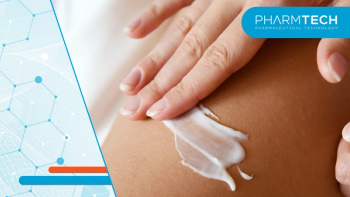
Univar Solutions scientists developed a lidocaine cream built on starch, sorbitol, coconut oil, and beeswax that matched a commercial benchmark on viscosity, assay, and hydration.
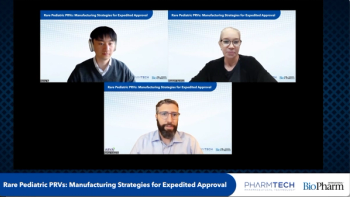
Nate Edwards of Arya Consulting moderates a discussion with Elisabeth Gardiner of Tevard Biosciences and Donny Xu of the RTW Institute about the regulatory and manufacturing hurdles facing rare disease drug developers.
OpenAI acquired Orchestra Bio to pair AI agents that track drug development timelines with its Rosalind life sciences tools, raising oversight questions for pharma teams.
FDA final guidance defines when companion app output counts as drug labeling and when device-connected or standalone apps belong in prescribing information.