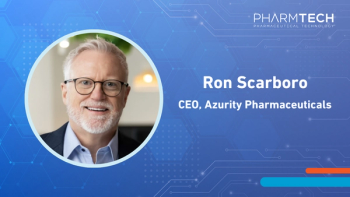
Ron Scarboro, Azurity Pharmaceuticals, explains how cross-functional development, disciplined reformulation, and post-approval metrics can help proven medicines work in everyday use.
The Public-Private Partnership for Rare Neurodegenerative Diseases will work to enhance understanding and develop treatments for rare neurodegenerative diseases.
FDA and the National Institutes of Health (NIH) announced the launch of the Critical Path for Rare Neurodegenerative Diseases (CP-RND), a public-private partnership, on Sept. 14, 2022. The goal of this partnership is to advance the understanding and develop treatments for amyotrophic lateral sclerosis (ALS) and other rare degenerative diseases.
The Critical Path Institute (C-Path) will convene the partnership, bringing together rare neurodegenerative disease experts, including patient communities, advocacy organizations, private entities, and more. According to an agency press release, areas of focus will include patient-focused drug development, characterization of neurodegenerative diseases and their natural history, the identification of molecular targets for neurodegenerative disease, and increased efficiency, predictability, and productivity of clinical development of therapies.
“There is a crucial need to develop new treatments that can improve and extend the lives of people diagnosed with rare neurodegenerative diseases, including ALS. Collaboration across public and private sectors can accelerate the progress to address this urgent need,” said Hilary Marston, chief medical officer, FDA, in the release. “The partnership we are announcing today will leverage the shared expertise of all participants to create a path towards new breakthroughs in treating these diseases. We look forward to working with NIH, C-Path, and other public and private partners to carry out this important effort.”
“This public-private partnership will convene the entire ALS community to develop novel strategies and approaches to therapy development and clinical testing with the goal to finally produce a treatment that stops the tragic progression of ALS,” said Walter Koroshetz, director of the National Institute of Neurological Disorders and Stroke, part of the NIH, in the release.
Source:
about 4 years ago
Environmental Monitoring Advancesabout 4 years ago
Testing for Adventitious Agents in Viral Vector Productionabout 4 years ago
Novel Imaging Approach Reveals Key Details About Rare Eye Diseaseabout 4 years ago
Civica to Invest $27.8 Million in New Testing Facilityabout 4 years ago
Avance Clinical Acquires C3 Research Associates