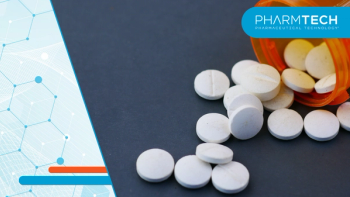
Ron Scarboro, Azurity Pharmaceuticals, explains how cross-functional development, disciplined reformulation, and post-approval metrics can help proven medicines work in everyday use.
Dr. Thomas Hein, Director Business Development and Regulatory Affairs at Hermes Pharma, discusses the difference between user-friendly dosage forms and conventional tablets and capsules.
Dr. Thomas Hein, Director Business Development and Regulatory Affairs at Hermes Pharma
PharmTech: How are user-friendly dosage forms different from conventional tablets and capsules?
Hein: User-friendly dosage forms are designed with the patient’s medical and personal needs in mind. They include instant drinks, orally dissolving granules, effervescent tablets, chewable tablets, and lozenges.
They’re easy for everyone to swallow, taste and smell great, and can be integrated easily into a patient’s daily activities, especially those that do not need to be taken with water.
Unlike traditional solid tablets, they’re not confined by size, so they can include larger amounts of APIs or even combinations of APIs. This can reduce dosing frequency and complexity, which can help to boost compliance.
PharmTech: What advantages do these dosage forms offer and do you see the industry moving towards these alternatives?
Hein: I think the industry will move towards user-friendly dosage forms as they offer many benefits for everyone involved, including patients, care-givers, healthcare providers, and manufacturers. They are simple and pleasant to ingest, boost patient compliance, and reduce healthcare costs. User-friendly dosage forms can also be formulated to offer both fast and delayed release and can also reduce dosing frequency as larger amounts of API can be incorporated.
Specific dosage forms also bring their own unique benefits-for example, effervescent dosage forms release COâ as they dissolve, enhancing API transport and improving bioavailability. Efficacy is also often more reliable and predictable than with conventional tablets, as dissolved agents are evenly distributed in the liquid, so the dangers of incomplete tablet disintegration and dissolution are side-stepped.
Given these advantages, I believe that user-friendly dosage forms offer an excellent opportunity for pharmaceutical companies to better meet patient needs. Reformulation also provides a way to extend product life cycles, provide additional IP protection and breed brand loyalty by differentiating products in the marketplace, for example by making specific formulations for distinct patient groups such as children or the elderly. Ultimately, this can contribute to increasing brand value and market share, while providing value to every stakeholder, from patients through to healthcare providers.
almost 12 years ago
VIDEOJET Thermal Ink Printer Offers Increased Resolutionalmost 12 years ago
Sartorius Bioreactor and Microbial Fermenter Increases Efficiencyalmost 12 years ago
Ross Planetary Mixers Increase Mixing Optionsalmost 12 years ago
The Bio/Pharma Working Lifealmost 12 years ago
FDA Realigns Drug Inspection and Manufacturing Oversightalmost 12 years ago
Fitzpatrick Roll Compaction Series Improves Accuracyalmost 12 years ago
Drug Scandals Impact Industry in Japanalmost 12 years ago
Securing the Single-Use Supply Chainalmost 12 years ago
Improving Job Market Creates Opportunity for Changealmost 12 years ago
FDA Approves Novel Treatments in 2014