Cole and Jaenisch dig into AI poisoning in pharma manufacturing, how it hides in plain sight, and who should be accountable for catching it.
A multi-pronged approach to raw materials testing can help mitigate the risk of future contamination events.
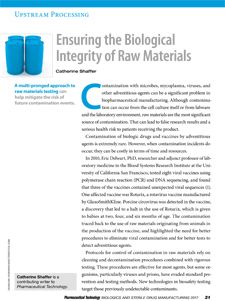
Contamination with microbes, mycoplasma, viruses, and adventitious agents can be a significant problem in biopharmaceutical manufacturing. Although contamination can occur from many sources, raw materials are the most significant source of contamination.
Strategies for preventing contamination including upfront testing of materials, barrier disinfection methods, and adhering to best practices in processing and sanitation are explored.
Avoidance of animal-based raw materials, as well as careful sourcing of any materials used, are discussed.
Download
.
over 9 years ago
Clean, Disinfect, and Validateover 9 years ago
Kill the Bioburden, Not the Biological Indicatorover 9 years ago
Getting Biopharmaceutical Tech Transfer Right the First Timeover 9 years ago
Case Study: Retrofitting Two New High-Purity Water Systemsover 9 years ago
Single-Use Bioreactors Have Reached the Big Timeover 9 years ago
Parallel Processingover 9 years ago
Cost Considerations Drive Lean Technology in Biomanufacturing