
The pharmaceutical industry is adopting Industry 4.0 and emerging technologies to improve product quality and manufacturing efficiency.
The pharmaceutical industry is adopting Industry 4.0 and emerging technologies to improve product quality and manufacturing efficiency.

Pharma 4.0 envisions highly efficient automated processes, which could be continuous, batch, or a hybrid of these, driven by an integrated manufacturing control strategy.
New therapies and tighter budgets challenge bio/pharma to think outside the industry.

Particle engineering using jet milling or spray drying can be used to obtain appropriate particle characteristics for inhalation drug products.

Access to multiple analytical techniques is essential for fully characterizing complex protein formulations.
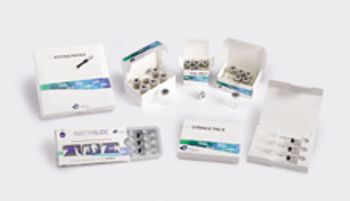
Keystone Folding Box has added a new line of secondary packaging systems for injectable pharmaceutical products.
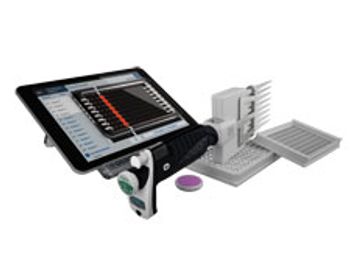
Gilson has added Gilson Connect, a cloud-connected platform that powers a product line of Bluetooth-enabled, smart liquid-handling devices that enable scientists to achieve verifiable science.
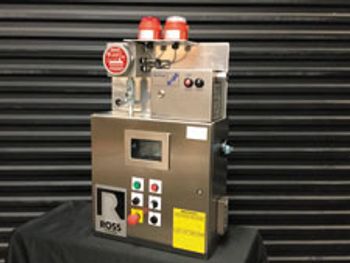
Ross Systems and Controls (SysCon) touchscreen purged panels have been certified under the standards of Underwriters Laboratories’ (UL)-698A Code and the National Fire Protection Association’s (NFPA)-496 Code.
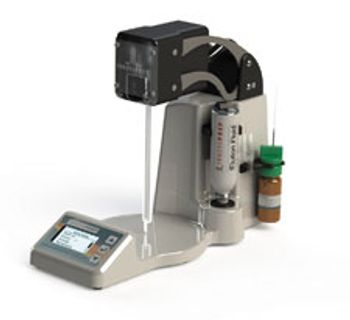
The Concentrating Pipette Select from InnovaPrep is a small automated benchtop instrument that can concentrate contaminates from large volumes of liquids for improved detection.

CMOs/CDMOs that are easy to work with, have demonstrated performance track records, and plan for the future are preferred.
Certificates of analysis can be used to monitor the reliability of products and their suppliers, says Susan Schniepp, distinguished fellow at Regulatory Compliance Associates.
Accelerated development of new preventives raises challenges for efficient CMC evaluation and production.

Implementing electronic batch records can offer a means of compliance, reduction in errors, streamlined ability to trace actions, and simultaneous generation of documentation.
The flexibility and incompatibility of ICH Q12 guidelines with current EU legislations raise complications.

The high viscosity of highly concentrated monoclonal antibody formulations not only presents processing and storage difficulties, but also formulation and delivery challenges.
Formulation expertise can smooth the transition of a prospective therapy from medicinal chemistry to drug dosage form.
Researchers at MIT have discovered a new set of compounds that do not elicit a foreign body response when implanted. These biomaterials permit the development of a new category of treatment with the ability to deliver therapeutics either at a constant rate or under programmable conditions by using implantable cells as protein factories.

Research suggests that radiation can have a significant impact on the composition and rheology of hydroxyethyl cellulose-based medicinal gels.

Taking vendor product data at face value puts pharmaceutical manufacturers and their supply chain partners at risk.

Equipment and product innovations improve pharmaceutical manufacturing tasks.
Click the title above to open the Pharmaceutical Technology April 2018 issue in an interactive PDF format.