



APIs and Excipients
Latest News
Advertisement
Latest Videos



Shorts

0:46
Navigating Novel Excipients -The Safety Guide
5 days ago
by
Ron Filler
0:31
New Solutions to the Drug Recall Crisis
12 days ago
by
Zachary Zubulake(+2 more)
1:01
How to Stop the Next Nitrosamine Drug Recall
14 days ago
by
Zachary Zubulake(+2 more)
0:42
The Hidden Danger in Generic Antidepressants
17 days ago
by
Zachary Zubulake
Advertisement
More News

With pharmaceutical tariffs fundamentally impacting costs, global supply chains, and more, it’s important for industry professionals to understand the basics.

In the latest of a series of warning letters to India-based API manufacturers, FDA issued a warning letter to Aspen for deviations in CGMP in the production of APIs.

Exosomes, polymeric nanoparticles, and DNA nanostructures offer many potential advantages.

The value of outsourcing partnerships for next-gen biotherapeutics rests in the expertise and technologies that service providers bring to the table.
This site was previously the beneficiary of a €7.3 million (US$7.6 million) investment, made in 2022, earmarked for the production of HPAPIs to treat cancer.

Christian Morello, vice president and head of the Bioconjugates Business Unit at Lonza, looks at what is involved in developing modern ADCs.

Increasing API and formulation complexity and new delivery strategies are driving innovations in taste-masking.

Process consistency and robustness, analytical excellence, and regulatory compliance are essential in the scale-up of biosimilars.
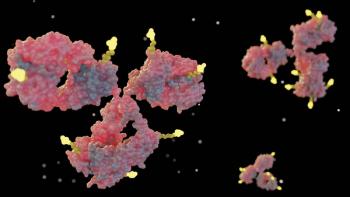
CDMOs who have integrated technologies can help further the advancement of ADC development.

Posdinemab is the second tau-directed investigational therapy by J&J that has received fast track designation from FDA this year for Alzheimer’s disease.
Using splicing technology, the new company aims to innovate safer and more effective RNA therapies for severe genetic diseases.
Under the agreement, the companies will advance development of IBI3009, Innovent’s ADC candidate, which has received IND approvals in the US, China, and Australia.
Results from a Phase IIb study missed the primary endpoint by failing to achieve statistical significance.
CHMP has granted Eisai Europe and Biogen a positive opinion for the use of their monoclonal antibody therapy in treating early Alzheimer’s disease.
The new Institute for Cell Therapy Discovery and Innovation will utilize expertise to develop cell therapies for cancer, autoimmune diseases, and infections.
In the collaboration, the new company, Oblenio Bio, has been granted an exclusive option to license LBL-051, a tri-specific T-cell engager antibody, from Leads Biolabs.

Automation, miniaturization, and new software algorithms are improving throughput and accuracy.

The collaboration aims to advance clinical development of a Phase I drug candidate, MRT-6160, and to explore other therapeutic opportunities across multiple indications.
Merck will deploy Mestag’s proprietary RAFT platform to investigate the pathogenic role that fibroblasts play in inflammatory diseases.

Sustainability of small-molecule API manufacturing ensures continued success.
Pharmaceutical Technology® Europe sat down with Vinod Tuliani, Head of Pharmaceutical Sciences at Roquette, to talk about new developments in the use of excipients in dosage forms and methods of delivery.
In this exclusive Drug Digest video interview, Felicity Thomas, Associate Editorial Director, Pharmaceutical Technology Group, interviews experts about key trends impacting small-molecule APIs and excipients, the importance of supply chain resilience, ways in which advanced manufacturing approaches can prove beneficial, and potential hurdles facing companies seeking to secure their small-molecule API and excipient supply chains.

The company will be introducing its new low-substituted hydroxypropyl cellulose and its improved polyplasdone LN superdisintegrant at the October 2024 events.
The critical APIs that this funding will contribute to are used in the treatment of asthma, diabetes, and anxiety disorders.

Greater collaboration and understanding are needed to ensure the correct grade of excipient is used in drug products.
Advertisement
Advertisement
Trending on Pharmaceutical Technology
1
CDMOs, OEMs, and Used Equipment Resellers are Joining Forces to Onshore Pharmaceutical Manufacturing
2
Meeting Tomorrow's Market Requirements: Vetter's Perspective on the Future of Fill & Finish
3
Why Drug Shortages Average 5+ Years: PharmTech Explained
4
ADCs, Degraders, Agonists: 4 Deals CMC Teams Should Track
5