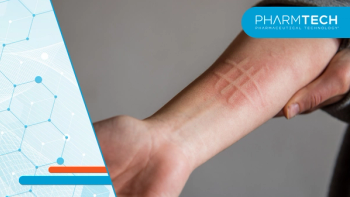
The FDA approves remibrutinib for symptomatic dermographism, the first such therapy, extending an oral BTK inhibitor label via the Phase III RemIND trial.
Containment is defined as the isolation of substances from the operator, from the environment and from other substances. Containment systems have to manage emissions and exposure, both generated by air displacement. This fundamental principle underpins pharmaceutical manufacturing safety, where protecting both people and products from cross-contamination is paramount.
Containment systems must consider equipment, procedures and an operational mindset as a combined strategy to prevent the emission of materials or their migration to unwanted locations. This 360-degree approach limits exposure and potential contamination of individuals or other materials, safeguarding both human health and manufacturing quality. Equipment manufacturers have developed increasingly effective solutions to eliminate or mitigate cross-contamination and safeguard operators by completely separating the product from the surrounding environment.
Pharmaceutical manufacturers are obliged to implement containment solutions to avoid the dramatic consequences arising from any form of contamination. Solutions are most effective when containment is implemented at the source of the process rather than relying solely on personal protective equipment. As the industry evolves, further benefits are emerging wherever equipment containment solutions are adopted. Cleaning procedures are less time-consuming, consumables are used less, and cross-contamination is minimised. This enhances safety whilst favouring sustainability by reducing waste, energy consumption and environmental impact.
THEORETICAL AND REGULATORY FRAMEWORK
Before examining or illustrating the strategic approach to containment, which can in part be accomplished through appropriate design criteria, it is important to understand the theoretical aspects as well as putting the entire topic within the broad regulatory framework.
To begin with, the potency of pharmaceuticals, including active pharmaceutical ingredients (APIs), is on the increase. A highly potent active pharmaceutical ingredient (HPAPI) can be defined by parameters of pharmacological activity, based on its characteristics. Equally important is the novel nature of a compound whose potency and toxicity are not yet fully known, presenting unique challenges for safe handling and processing. Every production stage presents different levels of risk and must be carefully assessed in advance. Containment measures include management of storage warehouses for raw materials, processing equipment, cleaning and maintenance operations, product handling, residue to waste, and operator protection, ensuring that hazardous substances are controlled throughout their entire lifecycle within the manufacturing facility. In terms of occupational exposure limits and banding, determining the necessary level of containment should begin with a comprehensive hazard assessment. Exposure limits are classified in relation to a Permitted or Acceptable Daily Exposure (PDE or ADE) dose at which no negative effects occur. PDEs are defined for different uptake routes which include inhalation, oral, parenteral and dermal, and are subsequently used to calculate Occupational Exposure Limits (OELs). OEL ratings are fundamental in controlling and managing exposure to hazardous substances during pharmaceutical manufacturing. The industry uses control banding to assign a compound to a hazard band, with OEB categories helping determine appropriate safety measures and containment controls. The six levels range from OEB 1 (low risk substances with minimal adverse health effects) through to OEB 6 and higher (extremely high-risk substances with the most severe health effects and highest potency levels), with each level demanding progressively more stringent control measures.
Understanding the regulatory landscape is a key step towards establishing effective occupational safety and health (OSH) management systems. The employer must implement measures based on prevention, avoidance where possible, risk assessment and adaptation to technical progress. Collective protection measures such as containment equipment must take precedence over individual measures. Underpinning these regulatory requirements, the hierarchy of controls serves as a fundamental model for implementing reliable protection for operators. Engineering controls are particularly effective for managing workplace risks by creating physical barriers that isolate operators from hazards. Although these controls do not completely eliminate hazards, they significantly reduce exposure and enhance workplace safety when properly implemented and maintained.
CONTAINMENT STRATEGIES AND DESIGN CRITERIA
Approaching containment requires a strategy and undeniably includes the need to consider design as a fundamental ally. However, the first steps should always comprise an in-depth analysis of several factors, a stage which ideally involves not only the equipment manufacturer but also the end user of the containment systems.
Risk analysis and management are central to this process: risk assessment is crucial for safe manufacturing of potent compounds. A comprehensive risk assessment for HPAPIs must consider process operations, product characteristics, process scale, human activities and equipment design, ensuring that all potential exposure pathways are identified and appropriately controlled. Qualitative assessment forms the first design approach in defining appropriate equipment configuration. The containment strategy involves identifying potential exposure interfaces, assessing risks for each interface, and evaluating containment options. This approach considers exposure from all perspectives during production, post-production activities, contingency situations and device reliability under fault conditions. Different operational sequences must be considered including maintenance activities. Filter systems, dust recovery procedures, air management systems, room layouts and cleaning methods must all be evaluated to ensure containment is maintained during routine production and equipment maintenance. The quantitative Containment Performance Assessment (CPA) represents the most comprehensive approach for evaluating technological controls and containment performance. CPA creates a comprehensive simulation of actual production processes, with operators performing genuine operational steps whilst using surrogate materials that closely mimic the behaviour of real pharmaceutical substances. Testing occurs at the final site during customer process validation and forms part of routine maintenance verification plans.
From a design perspective, the most successful approach is to work together with end users to design and deliver custom-built solutions for projects of all sizes. Considering the diversity of potential risks and hazards, it is advisable to adopt a strategy involving several technologies that contribute synergically to ensuring maximum safety. Materials for containment equipment must be chemically inert, non-toxic, non-absorbent and easy to clean. Permanent enclosures typically use 304 and 316 grade stainless steel or appropriate plastics. All materials must be Generally Recognised As Safe (GRAS) and suitable for pharmaceutical applications. In the initial design phase of a Total High Containment (THC) system, mock-ups are commonly employed to verify component positioning and operator interaction points. This collaborative process between suppliers and end users ensures that containment solutions are technically robust, ergonomically sound and operationally practical.
CONTAINMENT TECHNOLOGIES
After examining key criteria relating to the product, the process and the manufacturing environment, and having established the levels of containment required, various technologies can be implemented to ensure correct and effective containment. Equipment manufacturers in the pharmaceutical industry have developed several innovative solutions which address containment issues from every possible angle. The ultimate objective is to implement an all-encompassing approach that provides a solution ensuring total process containment whenever required.
Among the most critical elements are process interfaces: well-engineered interfaces play a primary role in worker protection, based on risk assessments that consider the potency of processed materials. Solutions must combine GMP aspects with occupational safety, with interfaces evaluated for both function and protective mechanisms. The industry has developed numerous interface technologies to maintain containment integrity during material transfers and system access. Mechanical film closure systems for sealing continuous liners trap powder in the folds. Rapid Transfer Ports (RTPs) transfer materials in and out of closed systems, creating high-containment areas with locking devices that prevent operating errors. Containment valves enable highly potent powder transfers through active and passive lenses designed to form self-contained units when docked. Systems for contained filter changes minimise exposure risk during replacement operations.
Complementing these interface solutions, sealing and access technologies further safeguard containment integrity: inflatable seal systems create tight seals between equipment parts, preventing escape of dust or fumes. Glove ports allow operators access inside equipment without compromising containment.
In-process control enables sampling and analysis by automatic testing units without operator intervention. For capsules, statistical weight control systems or 100% net gravimetric systems feature control capabilities and self-adjustment. For tablets, compression force control systems with sample rejection and self-adjustment are standard. Process monitoring and cleaning are equally essential dimensions of effective containment. Near-infrared (NIR) systems and other Process Analytical Technology (PAT) tools determine process blending end-points and content uniformity, eliminating the need for physical sampling. Integrated safety interlocks ensure coating pans operate only when containment measures are properly in place. Clean-in-Place (CIP) and Wash-in-Place (WIP) systems enable washing in various modes—fully manual, semi-automatic or fully automatic with validated cleaning. CIP systems minimise cross-contamination risks between batches and can be activated immediately after unloading.
CONTAINMENT SOLUTIONS ACROSS PHARMACEUTICAL MANUFACTURING PROCESSES
The pharmaceutical manufacturing process requires containment solutions at every stage, from raw material handling through to final packaging. Equipment manufacturers such as IMA, with extensive industry knowledge, have developed comprehensive portfolios of solutions that address containment requirements across all unit operations, combining mechanical design, process expertise and regulatory compliance.
In the area of handling and mixing, IMA Active’s handling systems encompass dispensing and feeding systems, bins and drums, tumblers, lifting columns and high containment valves. Material verification via PAT sensors eliminates direct contact with powders and liquids. Hermetically closed intermediate bulk containers enable blending whilst maintaining containment integrity. Patented high containment valves retrofit onto existing plants, managing transfers of powders, granules, tablets and capsules. Bag-dumping stations and gravity transfer systems ensure dust-tight handling throughout material movement.
For the granulation stage that precedes tableting or capsule filing, equipment designed from OEB 3 upwards features through-the-wall installations, inflatable seals and compact designs with vertical product flow. Air displacement management employs rational ventilation, filtration and negative pressure systems, with particular attention to HEPA filtration for HPAPIs. Single-pot technology combines high-shear granulating and vacuum drying in one vessel, minimising transfers to just two: loading raw powders and unloading finished granules. High-shear mixer granulators, cone mills and fluid bed processors in through-the-wall versions ensure dust-free, high-containment processing.
Tableting solutions range from classic force-fed to innovative centrifugal-fed systems supporting production from R&D through high-volume manufacturing. Features ensuring dust-tight set-ups include gravity loading, glove ports, aspiration lances and automatic WIP systems. Machines designed for total high containment feature limited contact surfaces, sealed doors and negative pressure. Innovative compression systems using turret rotation and centrifugal force are available for high containment up to OEB5.
For capsule filling, IMA Active develops equipment incorporating powder bowls, adjustable dosator chambers and compression capabilities built to achieve outputs up to 200,000 capsules per hour with fully integrated gravimetric weight control. For OEB 4 standards, meticulous pressure control, gravitational powder charging, glove port access and suction lances for machine cleaning are all important features, while OEB 5 machines, handling production rates from 1,500 to 70,000 capsules per hour, are equipped with inflatable sealed doors and work under negative pressure. Automated WIP systems are also essential for machines working in total high containment. Advanced fillers provide 100% net weight control with multi-product dosing capabilities for powders, pellets, tablets, minitablets and liquids.
Weight checking is an integral part of the containment line: automatic weight control machines for capsules convey products from feeding hoppers to weighing cells, with onboard computers elaborating values and discarding out-of-weight products. Transfer systems minimise vibrations whilst maintaining extreme reliability at high speeds, suitably adapted for containment integration into production lines.
In coating operations, drum coaters provide OEB 3 containment during processing through negative pressure creating inward airflow. Integration into isolator systems extends protection to all process steps. Optional features include glove and RTP ports, automatic tablet-feeding systems, and containment sampling devices. Solutions ensure maximum operator protection up to OEB 5 with fully automatic process management. Versatile perforated coating pans feature automatic loading/discharging, totally isolated machine parts and through-the-wall installation with validated automatic CIP. Continuous coating approaches offer modularity for throughputs from 20 to 1,000 kg per hour.
Washing operations are equally central to the containment strategy: containment system cleaning addresses cross-contamination prevention and operator safety. Many machines include front-mounted isolators allowing contained disassembly of wetted components and bagged removal for Cleaning-out-of-Place. Equipment follows European Hygienic Engineering and Design Group guidelines. Integrated automated cleaning employs strategically positioned spray nozzles connected to CIP or WIP skids operating automatically. Automatic industrial parts washers ensure excellent performance and are suitable for through-the-wall installation separating clean and non-clean areas.
Aseptic processing presents specific demands, as manufacturing in aseptic environments addresses chemical, cytotoxic or biologically hazardous risks beyond GMP regulatory compliance, focusing on operator and environmental protection. Technologies reconcile stringent aseptic standards with highest containment levels for substances classified up to OEB 5 or 6, or requiring biosafety level 2 or 3 conditions.
Isolators represent the most robust solution, featuring sealed physical barriers, unidirectional HEPA-filtered airflow, integrated vapour phase hydrogen peroxide decontamination and dedicated ventilation units. Effectiveness derives from H14 HEPA filters with BIBO systems, high leak-tightness chambers, automated Wash-in-Place, modular chamber configurations and flexible pressure control. These technologies, pioneered by IMA Life, serve production of antibody-drug conjugates, chemotherapeutics, hormones, blood-derived products, viral vector-based cell and gene therapies and radiopharmaceuticals.
Closed Restricted Access Barrier Systems (cRABS) provide less stringent physical barriers applicable in medium-toxicity or moderate biological-risk productions. Modern fill-finish lines often integrate isolators and cRABS, with filling and freeze-drying in positive-pressure isolators and unloading or crimping in cRABS potentially under negative pressure.
For blister packaging, scalable solutions up to total isolation ensure complete integration between containment technology and IMA Safe blister packaging machines. Highly versatile patented universal feeding systems simultaneously handle different-shaped products and all forming materials, ideal for containment applications by minimising access to potentially hazardous areas.
Across all these processes, process control and automation play an equally important role: both control over the process and automation of phases contribute to containment effectiveness. In fully automatic processes eliminating human intervention, high containment is achieved with minimal operator risks. Cutting-edge human-machine interfaces built on SCADA architecture with IoT compatibility enable seamless integration whilst maintaining compliance with FDA CFR 21 Part 11 and GAMP regulations.
CONCLUSION
The pharmaceutical manufacturing industry faces increasing challenges as active pharmaceutical ingredients grow more potent and novel therapeutic compounds enter production. Effective containment represents a comprehensive approach integrating regulatory compliance, engineering innovation, process understanding and operational discipline, ensuring protection for operators, patients and the environment.
Properly designed and maintained equipment ensuring containment significantly reduces exposure risks whilst enhancing workplace safety. Integration of qualitative risk assessment with quantitative validation through Containment Performance Assessment ensures systems meet specific containment standards throughout their lifecycle.
An all-encompassing approach requires technical capability, extensive knowledge of drug manufacturing processes, industry needs and regulatory landscapes. This addresses containment at every stage, from raw material handling to final packaging. The breadth of technologies available today enables manufacturers to tailor containment strategies to specific needs, however hazardous the compounds and substances being handled are.
As the pharmaceutical industry continues advancing with more complex and sophisticated drug products, the importance of robust containment solutions grows. Combining proven methodologies with groundbreaking technologies, pharmaceutical manufacturers ensure that containment not only calls for innovation, but also enables safer, more efficient and sustainable drug production.