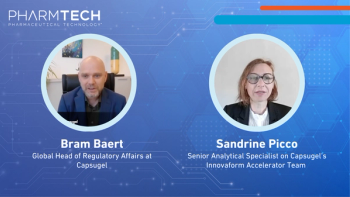
Capsugel's Bram Baert and Sandrine Picco argue that chasing zero nitrite in pharmaceutical excipients is often impractical and costly. They recommend setting scientifically justified, risk-based limits and consistently staying below them.
Neuland's Saharsh Davuluri checks in on Chinese out-licensing, peptide capacity, and CDMO agility six months after his December 2025 predictions.
In this second half of a two-part midyear 2026 follow-up with Saharsh Davuluri, Vice Chairman and Managing Director of Neuland Labs, he continues checking his December 2025 predictions—covering
Davuluri confirms that the surge in Chinese out-licensing deals he flagged in December has only accelerated, and he expects this year's volume to exceed last year's already record-setting pace. That growth raises a question he says Neuland has spent considerable time trying to answer: when big pharma in-licenses a Chinese-originated drug, who ultimately controls the manufacturing decision? The Chinese originator or the Western licensee? He notes the picture varies by deal and that opportunities for non-Chinese CDMOs to work directly with Chinese out-licensors remain murky, though the broader push for manufacturing capacity outside China continues, particularly for peptides now expanding beyond metabolic/GLP-1 uses into cardiovascular, dermatology, and central nervous system indications.
Samsung Biologics' acquisition of PolyPeptide came as a surprise to Davuluri, who expected more organic capacity expansions and new US investment announcements from CDMOs given surging peptide demand, rather than consolidation via acquisition. He also notes that the flurry of "Make-in-USA" investment commitments he anticipated hasn't materialized to the degree he expected, calling this the one area where reality has lagged his December outlook.
On operational pressure, Davuluri says shrinking development timelines and the rise of new modalities are forcing CDMOs like Neuland to become more agile, with faster turnarounds, more flexible manufacturing lines, and smarter use of AI to manage fluctuating batch sizes. He also points to the structural shift of innovators increasingly license out regional commercialization rights rather than retaining global rights, requiring CDMOs to coordinate across multiple licensees for a single molecule, adding complexity to already tight timelines.
Finally, Davuluri addresses capital allocation strategy, noting that while small-molecule pipelines remain robust, the pressure to invest in newer modalities like peptides and oligonucleotides is intensifying. Finding the right balance between doubling down on core small-molecule strengths and expanding into these emerging areas, he says, is the central strategic challenge Neuland faces going forward.