



Quality Assurance/Quality Control
Latest News

Digital Standards Aim to Modernize Quality Assurance Without Compromising Confidence
By Michael Levy
Advertisement
Latest Videos





Advertisement
More News

Malav Parikh, director, Quality Risk Management, Global Quality Compliance and Systems, Takeda, spoke with PharmTech about efforts in anticounterfeiting and the use of predictive modeling to validate transport conditions.
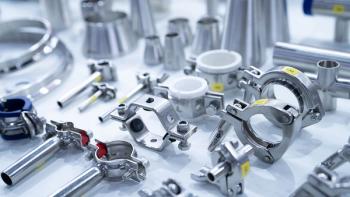
This article reviews the use of Raman spectroscopy in a series of case studies to quickly identify the iron oxide compound(s), including magnetite and hematite, on the surface of representative endcaps or piping spool pieces. The article also provides a strategy using a detergent additive to remove magnetite without performing costly electro- or mechanical polishing.
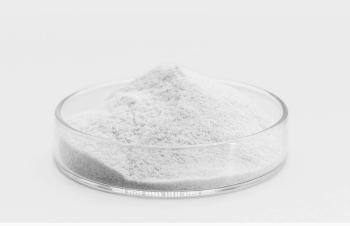
The authors detail a practical application of specification equivalence to excipients testing to achieve in-house harmonization.

The FDA draft guidance "Considerations for Complying with 21 CFR 211.110" raises points to consider regarding drug products made using advanced manufacturing, batch uniformity, drug product integrity, and how manufacturers can incorporate process models into control strategies.

Michelle Heiter, laboratory and quality control specialist, and Susan J. Schniepp, distinguished fellow, Regulatory Compliance Associates, a Nelson Labs Company, discuss how to effectively use contamination control strategies in your operations.

EMA and WHO have collaborated for a decade, with WHO utilizing EMA’s scientific expertise to fulfill its mandate to improve access to safe and effective medicines.
Unichem Pharmaceuticals has issued a voluntary recall of Cyclobenzaprine Hydrochloride Tablets USP 10 mg after the incorrect label was placed on the wrong product.

The authors examine common FDA 483 findings and outline strategies to address and prevent regulatory non-compliance.

The authors propose a streamlined, efficient approach to determining specification equivalence that starts with a paper-based assessment of the methods and progresses to a data assessment for the methods under evaluation.

The deadline for stakeholder consultation submissions on the new and updated regulations is Oct. 7, 2025.
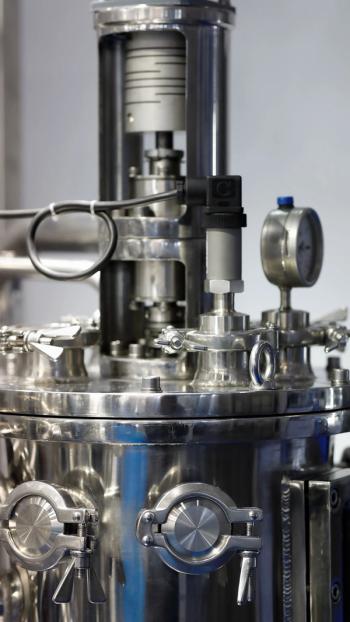
The authors performed interference and enhancement testing using a formulated alkaline and acid cleaner, as well as common biopharmaceutical process residues.

George Francis Tidmarsh, MD, PhD, founding co-director of Stanford’s Master of Translational Research and Applied Medicine program, has been appointed as the new director of the Center for Drug Evaluation and Research.

An ordered pharmaceutical compounding process for use in 503A pharmacies, 503B outsourcing facilities, pharmaceutical industry, and other applications.

Bulk drug calculations for different types of active moieties and drugs require different calculations and labeling.

Amit Chivate, senior market manager, Greater Asia and China, Roquette, provides his perspective on FDA’s recommendations regarding nitrosamines.
The European Union is discussing ways to reduce Europe’s over-reliance on imports of APIs.
While global harmonization exists, there are still differences between the US and European GMP requirements that manufacturers should know, says Siegfried Schmitt, PhD, vice president, Technical at Parexel.

Calculating the amount of drug needed for compounding requires different considerations for respective drug types and forms.

Josh Hoerner, general manager of Purisys, provides his perspective on FDA’s recommendations for acceptable intake limits for N-nitrosamine impurities.
Susan J. Schniepp, distinguished fellow at Regulatory Compliance Associates, and Rona LeBlanc-Rivera, PhD, principal consultant, Regulatory Affairs at Regulatory Compliance Associates, answer some questions about FDA’s January 2025 21 CFR 211.110 guidance document.
The Act is the European Union’s plan to avert drug shortages.

William Wainwright, business development manager at Iwata Label USA, discusses the practical security benefits of functional labels at INTERPHEX 2025.

The Omni ASCENT, officially launched at INTERPHEX 2025, is a next-generation off-site manufactured vertical utility solution aimed at optimizing the flexibility and efficiency of cleanrooms.
Sherwin-Williams’ advanced coating systems are designed to ensure safety, sterility, and efficiency in pharma manufacturing environments.

Being fully versed on the ins and outs of design quality can improve the project design phase life cycle.
Advertisement
Advertisement