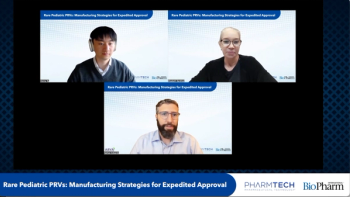
EU GMP Annex 22: AI Pulse Check panelists say most manufacturers aren’t ready, static AI models likely stay central, and local AI deployment grows.
Amgen submitted a market authorization application to EMA for ABP 501, a biosimilar candidate to Humira.
On Dec. 4, 2015, Amgen announced the submission of a marketing authorization application (MAA) to the European Medicines Agency (EMA) for ABP 501, a biosimilar candidate to Humira (adalimumab). This is Amgen’s first biosimilar submission to the European Union (EU).
ABP 501 is a biosimilar candidate to adalimumab, an anti-TNF-α monoclonal antibody, which is approved in many countries for the treatment of various inflammatory diseases. Phase III comparative efficacy and safety studies were conducted in moderate-to-severe plaque psoriasis and moderate-to-severe rheumatoid arthritis. According to the company, the results showed clinical equivalence to adalimumab.
The company submitted a biologics license application (BLA) for ABP 501 to FDA in late November 2015. CEO Bob Bradway, said the company expects legal pushback from AbbVie, the original developer of Humira. AbbVie CEO, Richard Gonzalez, said they plan to aggressively defend patents for Humira, which he says will protect the product until 2022.
Source: