


News|Videos|November 17, 2026
Manufacturing Intelligence: Where Pharma Should Slow AI
Author(s)Richard Jaenisch, Christopher Cole
Cole and Jaenisch explain where pharma should keep manual checks, how to vet AI skills in hires, and why self-taught AI risks GMP.
Advertisement


In the latest episode of Manufacturing Intelligence, PharmTech Associate Editorial Director Chris Cole and cohost Richard Jaenisch, senior director of Education, Outreach, and Digital Experience at Open Biopharma, ask a question that applies to any AI deployment in a regulated environment: where should life sciences companies slow down and keep manual checks?
Jaenisch answers through what he calls his “Luddite Compass.” History has plenty of examples of technology displacing work. Scribes gave way to typesetters after the Gutenberg press, and hand drafting gave way to Computer-Aided Design (CAD) and now to tools that turn images into CAD designs. Biology complicates that pattern, he argues. Models can only be trained on what already exists, but much of drug development works at the edge of what is known. People’s attitudes are just as uneven. Most sit in an ambivalent middle, distrusting AI while still using it for personal tasks. A new group of hires may include people who won’t touch the tools alongside a smaller group that feels a near-compulsion to use them.
That last group concerns Jaenisch. Heavy reliance can lead to employees who can’t work without the tool. Worse, he says, is using AI to train yourself on AI when you can’t verify the information and no expert is guiding you. Jaenisch calls that “unequivocally not really a good idea.” He compares proper AI training to a driver’s license: a credential showing that specific benchmarks have been met, much like the SOPs that govern GMP work.
For hiring managers, the lesson is to look closely at what “AI skills” means. Someone who is good at producing content won’t necessarily be useful for validation work. Job descriptions for applied AI roles also remain inconsistent across the industry. His advice is to plan first and “let your brain do some work” before reaching for the tool. Otherwise, when every process runs on AI, the remaining manual checks become bottlenecks. That’s why companies need to design the whole system with human review deliberately built in.
Advertisement
Related to this article
Cole and Jaenisch explain why defending against AI poisoning in pharma manufacturing calls for a data steward role, immutable instruction ledgers, and automation.
No operator touches a CAR-T batch before demonstrating proficiency. Generative AI users should meet the same standard, and a higher one, because an AI error does not stay inside one batch.

USP data show fewer US drug shortages but longer ones, averaging 5+ years. Drug shortages are an incentive problem, not a manufacturing mystery.

Jaenisch, Muraru, and Pandey discuss how regulators will audit pharma against its own AI policies and ways QA and regulatory teams can build defensible, inspection-ready AI practices.

This week addressed AI accountability, CPHI award winners, NFC anticounterfeiting, first-in-class FDA approvals, and a shelved FDA voucher pilot lead this week’s roundup.
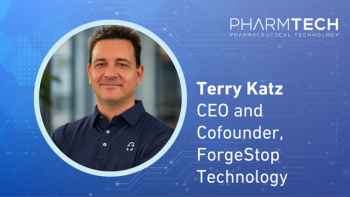
Terry Katz, CEO and co-founder of ForgeStop Technology Corporation, explains how the company’s product is worth the investment by protecting products and patients.

Regulators will test pharma companies against their own internal AI policies. Jaenisch, Muraru, and Pandey explain how to build defensible, inspection-ready AI practices.
Terry Katz, CEO and co-founder of ForgeStop Technology Corporation, explains how its connected technology can enhance anticounterfeiting and how data are handled within the product.
Advertisement
Advertisement
Trending on Pharmaceutical Technology
1
AstraZeneca Secures 2 FDA Approvals in Bladder Cancer, Myasthenia Gravis
2
Signs Point to FDA Shelving Priority Voucher Pilot, Stalling Fast-Track Drug Reviews
3
New Proposals and Legislation Strengthen Europe’s Position in the Pharmaceutical Arena
4
Manufacturing Intelligence: AI Poisoning Demands Pharma Data Stewards
5