Throughout drug development, it is important to characterize and quantify pharmaceutical compounds and any associated metabolites to ensure proper drug safety and efficacy. LC-MS/MS techniques are predominantly used for such analyses because they provide a comprehensive outlook and can offer a sensitive and selective approach for the quantification of compounds. However, limited deep fragment coverage and sensitivity challenge the confident identification and quantification of metabolites and drug products. Here, alternative fragmentation paired with a highly sensitive QTOF system was employed for comprehensive data collection to properly identify metabolites and quantify complex peptide therapeutics.
The PharmTech team focused on its coverage of AAPS PharmSci 360 this week, conducting interviews with experts on a range of topics including formulation platforms, AI, amorphous solid dispersions, and animal studies.
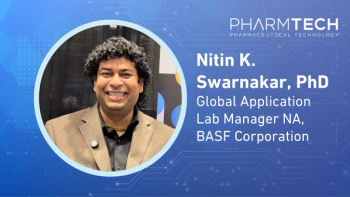
Nitin Kumar Swarnakar, PhD, global application lab manager at BASF, talks about spray drying for drying amorphous solid dispersions and Raman spectroscopy’s role as a quantitative analytical tool.
Aleksandra Zuraw, senior veterinary pathologist at Charles River, discusses how chain of custody, good laboratory practice, quality control, and validation are applied to digital pathology data used in drug development.