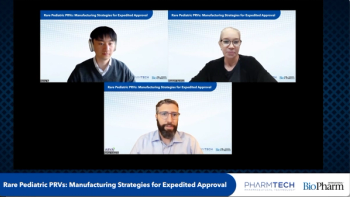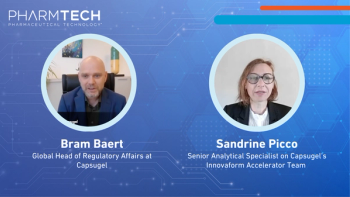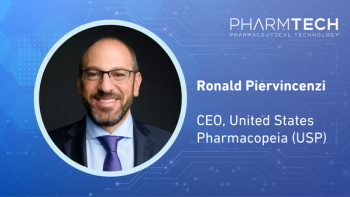
AI accountability, faster FDA pathways, rare disease CMC review, and next-gen GLP-1 formulation lead this week’s PharmTech roundup.
Jason Bock, founder and CEO of CTMC, provides his perspective on the FDA’s proposed rule to streamline registration for single distributed manufacturing establishments, and what the change may mean for personalized medicines.
On July 10, 2026, the FDA proposed a rule to streamline registration for distributed manufacturing networks operating under a “hub-and-spoke” model, allowing them to register as a single establishment rather than registering each production unit separately.1 The change would let networks add, relocate, or remove units with less administrative friction. Companies would, however, have to provide the FDA with advanced notice. This rule may be especially relevant to cell and gene therapies, where personalized, patient-specific manufacturing doesn't fit the centralized, linear supply chains built for traditional small molecules and monoclonal antibodies.
Jason Bock, founder and CEO of CTMC—a joint venture with MD Anderson located adjacent to the Texas Medical Center—welcomed the proposal. Because autologous cell therapies start with a patient's own blood or tumor tissue and return a single dose to that same patient, Bock argues the supply chain needs to be built around proximity to patients rather than centralized scale, which is why CTMC located itself inside the world's largest medical center.
Bock noted that unit-by-unit registration hasn't been a major bottleneck so far, because Big Pharma has largely relied on centralized hubs—shipping starting materials to sites like New Jersey, Maryland, or Boston for manufacturing before redistributing globally. But he sees the FDA's move as forward-looking: distributed networks take years to plan and build, and having regulatory clarity now gives manufacturers confidence to design fit-for-purpose networks before demand requires them.
Bock's broader point is that as advanced therapies mature, moving away from independently regulated, autonomous sites toward integrated distributed networks will become increasingly important for making personalized medicine practical and scalable, and the FDA's proposed rule lays important groundwork for that shift.
Click the video above to watch part 1 of the interview.
1. FDA proposes rule to modernize drug manufacturing registration. FDA. Press release. July 10, 2026.