This week, drug formulation and manufacturing experts showcased their knowledge, and companies exhibited their products, at CPHI Milan.
The agency issued a direct final rule that supports the use of innovative testing methods to limit the use of animals and maintain existing safety standards.
On September 21, 2026, the FDA announced it has issued its direct final rule to clarify that non-animal methods can be used where appropriate for testing the safety of drugs and biological products, marking the latest step in a multi-year effort to modernize preclinical drug testing.1The direct final rule replaces regulatory language such as “animal tests” and “animal studies” with “nonclinical tests” and “nonclinical studies” throughout FDA's regulations, along with related updates to terms including “preclinical” and “in vitro.” This aligns terminology with theFood and Drug Omnibus Reform Act of 2022, which allowed for the use of validated alternative methods to animal testing to support investigational new drug (IND) applications.
The rule covers new approach methodologies (NAMs), which are testing platforms built on human cell cultures, organ-on-chip systems, computational and artificial intelligence (AI)-driven models, and other technologies that developers argue can more accurately predict how a drug will behave in people than traditional animal models. The FDA created a database cataloging 25 specific use cases where NAMs have already appeared in review materials, giving sponsors real examples of how the agency has evaluated alternative data in practice.1
“This new rule supports the Trump Administration’s push to explore ways to complement, or where appropriate, replace animal studies with methods that may better predict how medicines will actually affect people,” said Acting FDA Commissioner, Kyle Diamantas, in the press release.1 “It gives scientists and drug developers greater flexibility to use the testing approach that best addresses their scientific question. Our goal is not to replace one rigid approach with another. It is to support rigorous, modern science—including animal studies when they remain appropriate and validated alternatives when they can provide the evidence needed to protect patients.”
The update is tied to Operation TrialBlazer, a Department of Health and Human Services modernization initiative aimed at accelerating development of life-saving treatments. The FDA’s push traces to the April 2025 Roadmap to Reducing Animal Testing in Preclinical Safety Studies. A year later, the
Then-Commissioner Marty Makary noted that roughly 90% of drugs that pass animal studies go on to fail in humans on safety or efficacy grounds. Nelson Labs’ Susan Schniepp recalled that horseshoe-crab-based endotoxin testing itself replaced the rabbit pyrogen test decades ago, framing the current shift as a continuation of a long-running trend rather than a break from it.2
The
In Europe, the European Medicines Agency
With the FDA’s rule in place, sponsors now have clearer regulatory footing to submit nonclinical data generated through validated alternative methods as part of IND and marketing applications, though the FDA continues to recommend early consultation with review divisions before relying on a non-animal method for a given program.
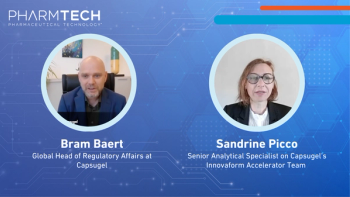
In an episode of PharmTech’s