News|Videos|May 28, 2026

Pharma Fundamentals: Utilizing AI in Drug Development

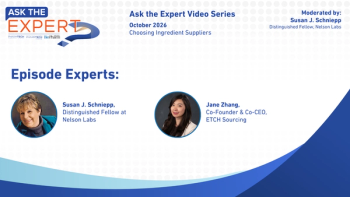
Dr. Christine Allen, Co-Founder and CEO of Intrepid Labs, and Dr. Andrew Lewis, Chief Scientific Officer of Quotient Sciences, explain how AI can be used in drug development to shorten development timelines.

The utilization of artificial intelligence (AI) in the pharmaceutical industry is developing quickly. In drug development, the use of AI in formulation is a shift from traditional trial-and-error methods to a more data-driven, accelerated approach. AI is being utilized to bridge the gap between drug discovery and clinical trials, optimizing how a molecule is turned into a viable drug product.1
AI is helping to compress drug development timelines by enabling faster data analysis and predictive modeling. Researchers can now design new molecules in weeks rather than months.1 AI-driven workflows for target identification have yielded an average time savings of 28%.

What Role Have Regulators Played?

The FDA and the European Medicines Agency have jointly established 10 guiding principles for good AI practice to ensure patient safety and regulatory excellence.1-3 Manufacturers should align their AI strategies with the following core concepts:

  • Human-centric by design: AI should be an augmentative tool, with human experts remaining central to decision-making. 1,3
  • Risk-based approach: The level of oversight should be proportional to the potential risk of the AI application.3
  • Data governance and documentation: Maintaining data governance is essential for reliability and compliance. 1,3
  • Clear context of use: Credibility assessments of AI models must be established for their specific intended use in regulatory decision-making.3,4
  • Multidisciplinary expertise: Successful implementation requires a combination of technical AI skills and deep domain knowledge in biology and chemistry.3
  • Life cycle management: AI models require ongoing monitoring and maintenance throughout their entire operational life.3

The FDA encourages sponsors to engage early with the Center for Drug Evaluation and Research’s Center for Clinical Trial Innovation for AI used in the design or conduct of late-stage trials. To ensure safety, FDA’s Emerging Drug Safety Technology Program focuses on AI use in post-marketing pharmacovigilance.5

Real-World Example

In December 2025, Quotient Sciences and Intrepid Labs announced a multi-year strategic partnership to advance AI-guided formulation development in early drug development. The partnership builds on the companies’ existing collaboration, in which Intrepid’s machine learning model, ANDROMEDA, was incorporated into Quotient’s Translational Pharmaceutics platform to help accelerate formulation selection, reduce experimental burden, and support data-driven decision-making.6

As part of its Pharma Fundamentals series, PharmTech asked Dr. Christine Allen, co-founder and CEO of Intrepid Labs, and Dr. Andrew Lewis, chief scientific officer of Quotient Sciences, to explain some of the basics of how AI is being used in drug development and some pitfalls developers should avoid when incorporating this tool.

A Broader Design Space

According to Allen and Lewis, traditional formulation often relies on a design-of-experiment (DoE) approach to develop new molecules. In contrast, AI—specifically machine learning techniques like active learning with Bayesian optimization—allows developers to navigate a broader design space. This results in the following advantages:

  • API efficiency: Using AI can spare API, allowing for informative experiments even when drug substance is limited.
  • Speed and innovation: AI accelerates timelines while uncovering non-obvious, innovative formulations that might have been missed, which can provide intellectual property (IP) advantages.
  • Predictive modeling: AI builds an in silico model of the drug product that improves as it advances through development, informing scale-up manufacturing and helping to avoid late-stage chemistry, manufacturing, and controls (CMC) failures.

To successfully implement AI into workflows, drug developers should do the following:

  • Prioritize data quality over quantity: High-quality, robust data are essential. AI models learn from both positive and negative data (successes and failures), and many historical or published datasets lack these crucial negative results.
  • Select the specific tool for the task: AI is not a magic solution for all problems; it is a tool that must be chosen carefully based on the specific question being asked. A model used for identifying patients in a clinical trial is not the same as one designed for formulation optimization.
  • Maintain human involvement: AI should be viewed as a way to augment human intelligence, not replace it. Experts are required to define the right questions, set boundaries, and provide oversight to ensure the AI remains on the correct path.
  • Demand explainability and validation: To build confidence and meet regulatory expectations, developers must avoid models where the learning process is opaque. Key in silico predictions must be experimentally validated to ensure accuracy and certainty.
  • Engage regulators early: Because the regulatory landscape for AI is still evolving, developers are encouraged to consult with regulatory bodies early in the process to discuss their intended use of AI tools.

Watch the video above to learn more about how AI can be incorporated into drug development.

References

  1. Zubulake Z, Mello L, Wood B. How AI is transforming the biopharmaceutical value chain from discovery to manufacturing. PharmTech.com. March 4, 2026. https://www.pharmtech.com/view/how-ai-is-transforming-the-biopharmaceutical-value-chain-from-discovery-to-manufacturing
  2. EMA and FDA set common principles for AI in medicine development. EMA. News release. January 14, 2026. https://www.ema.europa.eu/en/news/ema-fda-set-common-principles-ai-medicine-development-0
  3. FDA’s Guiding Principles of Good AI Practice in Drug Development. FDA.gov. January 14, 2026. https://www.fda.gov/about-fda/artificial-intelligence-drug-development/guiding-principles-good-ai-practice-drug-development
  4. Considerations for the Use of Artificial Intelligence to Support Regulatory Decision-Making for Drug and Biological Products. Draft Guidance. FDA. January 2025. https://www.fda.gov/regulatory-information/search-fda-guidance-documents/considerations-use-artificial-intelligence-support-regulatory-decision-making-drug-and-biological
  5. External Engagements with FDA for Artificial Intelligence in Drug Development. FDA.gov. May 1, 2026. https://www.fda.gov/about-fda/artificial-intelligence-drug-development/external-engagements-fda-artificial-intelligence-drug-development
  6. Quotient Sciences and Intrepid Labs form strategic partnership to accelerate AI-guided formulation development. News release. December 4, 2025. https://www.quotientsciences.com/news/quotient-sciences-and-intrepid-labs-form-strategic-partnership-accelerate-ai-guided

About the Speakers

Dr. Christine Allen is Co-Founder and CEO of Intrepid Labs. Dr. Allen is an internationally recognized expert in drug formulation and development, with over 200 peer-reviewed publications. She is a Professor at the University of Toronto and a Fellow of both the American Institute for Medical and Biological Engineering and the Canadian Academy of Health Sciences. She has held numerous leadership roles across academia and industry, including President of the Controlled Release Society and Editor-in-Chief of the Journal of Controlled Release.

Dr. Andrew Lewis is Chief Scientific Officer of Quotient Sciences. As the leader of Quotient Sciences' scientific teams and drug development consultants, Dr. Lewis is responsible for driving efficiency and innovation within our scientific organization, both to better serve our customers and drive growth for the Company.

Andy has over 25 years of experience in the pharmaceutical and drug delivery industry and is a member of the Academy of Pharmaceutical Scientists of Great Britain. Additionally, Andy has served on the board of directors of the Controlled Release Society, most recently as secretary.

Prior to joining Quotient Sciences, Andy was Director of Novel Drug Delivery Technologies at Ipsen. He holds a Ph.D. in Tissue Engineering and a Bachelor of Pharmacy, both from the University of Nottingham.