
News|Videos|September 22, 2026
PharmTech AI Pulse Check: Fixing AI Slop at the Source
Jaenisch, Muraru, and Pandey debate whether AI "slop" is infiltrating pharma SOPs and deviation reports and who should catch it first.
Advertisement
AI-generated "slop" has become a fixture of daily inboxes, but is it creeping into pharmaceutical manufacturing and quality documentation? That's the question at the center of Part 1 of the
Jaenisch argues that deviations have become generative AI's most common entry point in manufacturing, largely because form filling is low effort and tempting to automate. But he cautions that speed can come at the expense of accuracy: "Well, you just made a slop factory." The real risk, he says, isn't the technology itself but whether operators, especially newer, less-seasoned staff, are trained to recognize which content is fit for an SOP and which isn't.
Muraru reframes the problem as one of authorship rather than tooling. In his view, AI slop isn't about the model but the person behind it, and the danger emerges when documentation is generated faster than it can be meaningfully reviewed, shifting the real bottleneck from review capacity to the presence of an engaged human in the loop. He notes that polished, fluent AI output can actually be harder to audit than an obviously rough draft, since errors are easier to spot in something that already looks imperfect. He also points to the FDA's April warning letter involving Purolea as an early real-world example of the stakes.
Jaenisch pushes the discussion further upstream, distinguishing between what he calls first-degree slop—content a human directly reads, edits, and signs off on—and second-degree slop, where a person trusts an AI tool's advice without independently verifying it, and that flawed judgment quietly propagates through decisions and conversations. Pandey argues the fix isn't more scrutiny at the review stage but better-structured source documents that clearly separate deterministic rules from areas requiring human judgment: "You don't fix the slop by reading harder or putting on more reviewers." Doing so, he says, lets AI genuinely help rather than generate polished documentation that still requires heavier reviewer and approver attention.
Across the conversation, the panel converges on a shared concern: GxP-regulated environments can't rely on AI-generated content "looking right" as a proxy for being right, and that training, sourcing discipline, and a habit of asking "where did you verify that from?" will matter more as generative tools become embedded in manufacturing and quality workflows.
Advertisement
Related to this article
Jaenisch, Muraru, and Pandey discuss new skills for QC and regulatory teams, plus patient trust, as new approach methodologies reshape pharma.
In October, FDA reorganized rare disease development around a fit-for-purpose framework and a new pathway for individualized gene editing. Regulators in Europe and the UK set out long-term plans for clinical trials, AI, and moving away from animal testing.

Subathra Ramamoorthy, Veranova, on how forced degradation and trace impurity profiling in potent APIs shape regulator-ready analytical methods.

The PharmTech team focused on its coverage of AAPS PharmSci 360 this week, conducting interviews with experts on a range of topics including formulation platforms, AI, amorphous solid dispersions, and animal studies.
Subathra Ramamoorthy, Veranova, on when to escalate to structural elucidation and pair orthogonal techniques when characterizing an impurity.
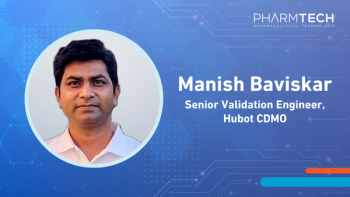
Manish Baviskar, Hubot CDMO, on ALCOA++ data integrity, model version change control, continuous monitoring, and human sign-off.
Manish Baviskar, Hubot CDMO, explains which AI skills validation engineers need first and why AI model updates must go through GMP change control.
Ron Filler, Drug Development Consultants, explains how USP's 1074 revision brings human-relevant safety science to formulators and excipient makers.
Advertisement
Advertisement
Trending on Pharmaceutical Technology
1
FDA’s New Inspection Playbook Counts Remote Assessments and MRA Reports Toward Facility Evaluations
2
Late-Phase Impurities Need Reference Standards: AAPS PharmSci 360 2026
3
AAPS PharmSci 360 2026: Spray Drying and ASD
4
1074 Revision Needs Formulator Feedback: AAPS PharmSci 360 2026
5