News|Articles|October 8, 2026

Pharmaceutical Technology

  • PharmTech September October 2026
  • Volume 50
  • Issue 5
  • Pages: 4

Proving Control, Not Assuming It

The articles in the September/October 2026 issue of PharmTech show that control must be designed in, verified, and documented at every step.

Across pharmaceutical manufacturing and development, the industry is being asked to demonstrate control rather than claim it. Whether the subject is a new modality, a formulation strategy, a cleaning process, or an artificial intelligence (AI) tool, regulators and partners increasingly expect evidence. This issue’s contributors show what that looks like in practice.

Our cover story examines DNA synthesis as it shifts from research reagent to industrial discipline. As messenger RNA, cell, and gene therapies mature, DNA must be produced with the fidelity, reproducibility, and traceability expected of any good manufacturing practice (GMP) input. Biofoundries and cell-free enzymatic approaches are emerging alongside established plasmid manufacturing to meet that demand. Our development feature explores how predictive modeling can replace much of the trial and error in amorphous solid dispersion development, from choosing a preparation method to selecting polymers and drug loading.

In our peer-reviewed article, the authors address silicone oil residue on indirect product contact surfaces in aseptic filling. They show why formulated alkaline detergents outperform water, sodium hydroxide, and alcohol, and how to set scientifically justified residue limits.


Our quality feature argues that AI governance in postmarketing change management must be evidenced across the full life cycle, because explainability alone won’t stop a missed safety signal. On the outsourcing front, Wilmington PharmaTech’s Harry Li explains that relationships between sponsors and contract manufacturing organizations more often falter over unclear communication and escalation than over quality agreement language. And in Ask the Expert, Susan Schniepp and Siegfried Schmitt make clear that citing a pharmacopeia is not the same as complying with it.

Taken together, these articles share one lesson: control cannot be assumed or delegated. It must be designed in, verified, and documented at every step.

Related to this article

Complying with International Pharmacopoeias
Susan J. Schniepp, distinguished fellow with Nelson Labs, and Siegfried Schmitt, PhD, vice president, Technical, with Parexel, clear up some of the confusion about what does and does not need to be complied with regarding standards set by international pharmacopoeias.
CPHI Milan 2026: Nitrosamine Risk Mitigation, Part 2
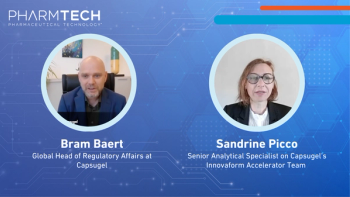
Mitigating nitrosamine risk requires assessing each product individually, says Bram Baert, Global Head of Regulatory Affairs at Capsugel, and Sandrine Picco, Senior Analytical Specialist on Capsugel's Innovaform Accelerator Team, in this interview with PharmTech.
Trophy and confetti on light background, top view with space for text. Victory concept | Image Credit: ©New Africa -stock.adobe.com
The winners of the CPHI Pharma Awards 2026 include a neurodegeneration platform, a track-and-trace packaging innovation, a enzymatic mRNA manufacturing technology, and a cell-free enzymatic biomanufacturing platform.