Feature|Videos|April 14, 2026

SK pharmteco’s Three-Business-Unit Strategy: Small Molecules, Peptides, and Viral Vectors

Key Takeaways

  • SK pharmteco is a global CDMO, with locations in the US, EU, and South Korea.
  • The company’s core capabilities center on small molecules, peptides, and viral vectors.
SHOW MORE

Joerg Ahlgrimm, CEO of SK pharmteco, outlines the company's strategic expansion into cell and gene therapy. He also details their commitment to global operational excellence and a culture of employee purpose.

SK pharmteco is doubling down on its growth by injecting $100 million into its cell and gene therapy division to complement its established strengths in small molecules and peptides. CEO Joerg Ahlgrimm stresses that the company’s competitive edge lies not just in its global manufacturing footprint across the US, Europe, and Asia, but in a decentralized culture that empowers frontline employees to connect their daily work directly to patient outcomes. Looking toward the next decade, the discussion explores how the integration of AI and a shift toward regionalized supply chains will redefine the CDMO landscape, positioning the firm as a multi-modal leader in an increasingly complex market.


Related to this article

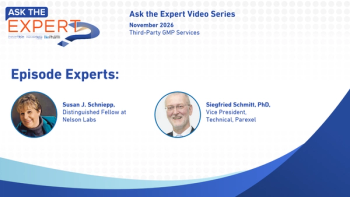
Are Your Supplier Selection and Oversight Processes Robust Enough?
Despite best efforts to ensure a contract organization is following GMPs, a warning letter is issued by the FDA. Susan J. Schniepp, distinguished fellow at Nelson Labs, and Siegfried Schmitt, PhD, vice president, Technical at Parexel, provide advice for create a robust supplier selection and oversight system.
white pill capsule isolated on white background | Image Credit: ©F16-ISO100 -stock.adobe.com
PharmTech spoke with Chiara Bergerone, deputy CEO of Roquette’s Health & Pharma Solutions Business, about the company’s hydroxypropyl methylcellulose (HPMC) capsule, which was previewed at CPHI Milan 2026 in October.
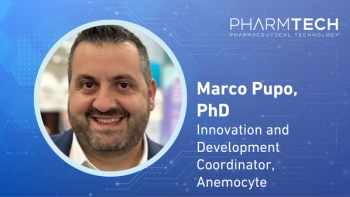
Transitioning mRNA from R&D to GMP
Marco Pupo, PhD, innovation and development coordinator at Anemocyte, discusses the R&D-to-GMP transition and the changing shape of mRNA manufacturing facilities.