





Quality Systems
Latest News
Advertisement
Latest Videos





Shorts
0:14
The 'Zero Nitrite' Myth in Pharma
13 hours ago
by
Bram Baert(+1 more)

0:14
New Parkinson's Breakthrough
16 hours ago
by
Susan Haigney

0:50
Why One Good Supplier Isn't Enough to Fix Drug Shortages
a day ago
by
Ronald T. Piervincenzi(+2 more)

0:48
Is Bio-Printing Organs Still a Fantasy?
4 days ago
by
Richard Jaenisch(+2 more)
0:29
Why We Have Drug Shortages and How to Fix Them
5 days ago
by
Ronald T. Piervincenzi(+2 more)
0:53
Can Organoids Replace Animal Testing?
6 days ago
by
Richard Jaenisch(+2 more)
0:39
Building Resilience in the Global Supply Chain
7 days ago
by
Ronald T. Piervincenzi(+2 more)
0:18
Is Your Company Risk-averse or Risk-tolerant
12 days ago
by
Susan J. Schniepp(+1 more)

0:23
Why You Should Consider Pre-approval Submissions
12 days ago
by
Siegfried Schmitt(+1 more)

0:20
Why You Need New Experts for AI Validation
12 days ago
by
Aleksandra Zuraw(+1 more)
Advertisement
More News

This article discusses risk-based lifecycle governance, system implementation considerations, and the progression of batch record control from paper-based to fully electronic systems.

The FDA approves Lilly's once-weekly insulin efsitora for type 2 diabetes, raising Fc-fusion manufacturing, high-concentration pen, and capacity questions.
The agency issued a direct final rule that supports the use of innovative testing methods to limit the use of animals and maintain existing safety standards.

The FDA approves Inluriyo-Verzenio combo for ESR1-mutated breast cancer; EMBER-3 data double PFS, with supply chain and diagnostics implications for manufacturers.

Andrea K. Kerrigan, FDA, outlines how validation, data integrity, and QRM determine whether digital tools and AI strengthen or undermine CGMP compliance.

PDA/FDA 2026 session maps the GMP audit lifecycle, root cause to CAPA closure, plus a local vs. above-site decision framework and two case studies.

Lori Dingledine, QC Director Microbiological Control and GTIC Operations at Genentech, provided input on the regulations surrounding raw material manufacturing and use for ATMPs in a presentation at the 2026 PDA/FDA Joint Regulatory Conference.

Karthik Iyer, Eli Lilly, detailed an AI system linking GMP findings, audits, and deviations for cited, inspection-ready regulatory intelligence.

At the PDA/FDA Joint Regulatory Conference 2026, Helen Motamen, MS global head, Sanofi Quality Audit, Inspection, Intelligence & Advocacy, at Sanofi, provided advice for creating a strong internal audit program.

AI can turn medical device risk management into a continuous signal.

On PharmTech.com this week, coverage of upcoming events continued, experts continued to discuss the use of AI in pharma, and validation in oral solid dosage product production was emphasized.

This article explores the historical use of silicone oil in the performance of primary drug product packaging; design of experiment test results for selection of the cleaning agent and CCPs; assessment of visible residue limits and Fourier-transform infrared spectroscopy surface analysis; and setting health-based exposure limits for silicone oil using a non-uniform distribution model, and a previously published permitted daily exposure.

The EU is focused on strengthening supply-chain resilience, avoiding medicine shortages, simplifying regulations, and implementing new approach methodologies.
In commercial tablet or capsule operations, validation helps protect the site’s ability to produce, release, and supply product without repeated disruption. This article discusses validation as a technical control system that supports manufacturing continuity.

This article explains the 4 shifts enabling faster, lower-risk, commercially successful biologics technology transfer.

Silvia Forroova, director of Partnerships & Sustainability at CPHI, and founder of the CPHI Sustainability Collective, provides a preview of the new Sustainability Summit at CPHI Milan 2026.
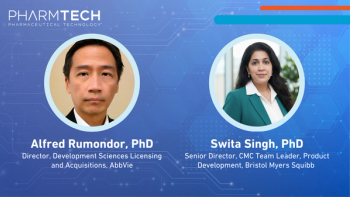
In a preview of their panel discussion at AAPS PharmSci 360 2026, Alfred Rumondor, PhD, AbbVie, and Swita Singh, PhD, Bristol Myers Squibb, discuss navigating CMC requirements for new modalities and AI’s involvement in CMC.

This week saw predictive modeling, microstructure intelligence, a CAR T-cell safety pause, and major licensing deals reshape pharma manufacturing.

The FDA approves zilganersen, the first disease-modifying Alexander disease therapy, offering rare disease developers a trial design and RNA delivery model.
In a preview of their panel discussion at AAPS PharmSci 360 2026, Alfred Rumondor, PhD, AbbVie, and Swita Singh, PhD, Bristol Myers Squibb, discussed how CMC review practices are evolving and what that means for manufacturing strategy.

Robert Holt, PhD, associate director, Pharmaceutical Science, digiM Solution, discusses microstructure intelligence in more detail in part 2 of this preview of the company’s keynote presentation at AAPS PharmSci 360.

The finalists for the 2026 CPHI Pharma Awards span 15 categories including API development, digital transformation, manufacturing, supply chain, sustainability, and leadership, with winners revealed October 6 at CPHI Milan.
In August 2026, Heidi Overton was nominated for FDA commission, and a wave of oncology and neuro drugs were approved.

Nitrosamine control is about understanding why nitrosamines form, where they may form, and how to prevent their formation.
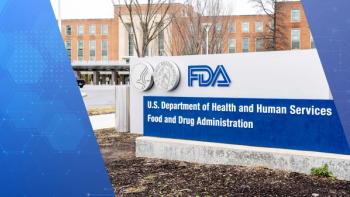
Four FDA approvals in the areas of HIV, diabetes, autoimmune disease, and COVID-19 vaccines came in a flurry in late August 2026.
Advertisement
Advertisement