


The potential for okra gum as a polymer candidate for new oral drug formulations was evaluated.
Accurately targeted immunotherapies through reliable neoantigen recognition enable personalized medicine development.
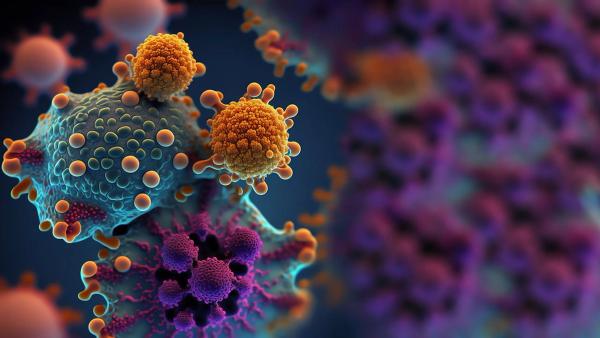
Activation and expansion are essential for success in both autologous and allogeneic therapies.
Continuous manufacturing and a quality-by-design development approach are a natural fit.

The potential for okra gum as a polymer candidate for new oral drug formulations was evaluated.

Immutep was granted a Chinese patent for LAG525, a LAG-3 antagonist antibody, under evaluation for cancer treatment.

While the players may change, pharma’s patients-first focus should not.
The European Commission has granted marketing authorization to Incyte and MorphoSys for Minjuvi (tafasitamab) in combination therapy with lenalidomide to treat relapsed or refractory DLBCL.
SpringWorks Therapeutics and the Dana-Farber Cancer Institute will conduct further research into the therapeutic potential of combination therapy with nirogacestat and anti-BCMA agents for multiple myeloma.
Aadi Bioscience has closed its previously announced merger with Aerpio Pharmaceuticals and a concurrent $155-million PIPE investment.
The pH effect encountered with oral oncology medication can be overcome with amorphous solid dispersions.
FSD Pharma has entered a definitive agreement to acquire all of the issued and outstanding shares of Lucid Psycheceuticals for approximately US$9 million (CAD$11.3 million) in FSD Pharma stock.
FDA has cleared QSAM Biosciences’s IND application for Samarium-153 DOTMP (CycloSam).
BioMed X has partnered with Janssen to start two new research programs for autoimmune diseases and drug delivery.
Signal Rx Pharmaceuticals, Crystec, and ADYA Consulting are collaborating on the development of an inhaled dry powder formulation of SF2523 to treat pulmonary fibrosis, lung cancer, and SARS-CoV-2 related illnesses.
NGM Biopharmaceuticals has disclosed a fourth antibody drug candidate, NGM831, for development into an oncology therapeutic.
Pfizer’s proposed $2.26-billion acquisition of Trillium Therapeutics will add next-generation hematology-targeted immuno-therapeutics to its oncology pipeline.
Curia plans to expand the site’s commercial capabilities with this move.
Merck KGaA has partnered with Telix Pharmaceuticals to conduct combination clinical studies for cancer therapy.
Corning’s new Ascent fixed bed reactor (FBR) system is an automated bioproduction platform designed to significantly improve yields and reduce bioproduction costs.
The collaboration will focus on the interactions between WTX-124 indukine and KEYTRUDA (pembrolizumab).
FDA approves Merck’s Welireg for the treatment of adult patients with von Hippel-Lindau disease who require therapy for tumor growth.
Cipla receives final approval from FDA for its abbreviated new drug application for difluprednate ophthalmic emulsion 0.05%.
BlueAllele has been granted a US patent for its advanced gene-editing technology, PALIDON, which is compatible with existing gene editing nucleases and delivery systems.

Mechanistic models provide process understanding for developing robust manufacturing processes and for scale up and tech transfer.
Terumo Blood and Cell Technologies and PhotonPharma announced a collaboration to develop a novel tumor-specific immunotherapy for solid tumors.
The companies announce the results of a research collaboration that applied machine learning to significantly advance the scalability of spirulina-based biologic drugs.
A research team at the Keck Graduate Institute will work to adapt its decade-long low-cost vaccine R&D for developing countries into a COVID-19 vaccine.
AGC Biologics has acquired Novartis’ Longmont, Colorado, manufacturing facility for the commercial production of cell and gene therapies.