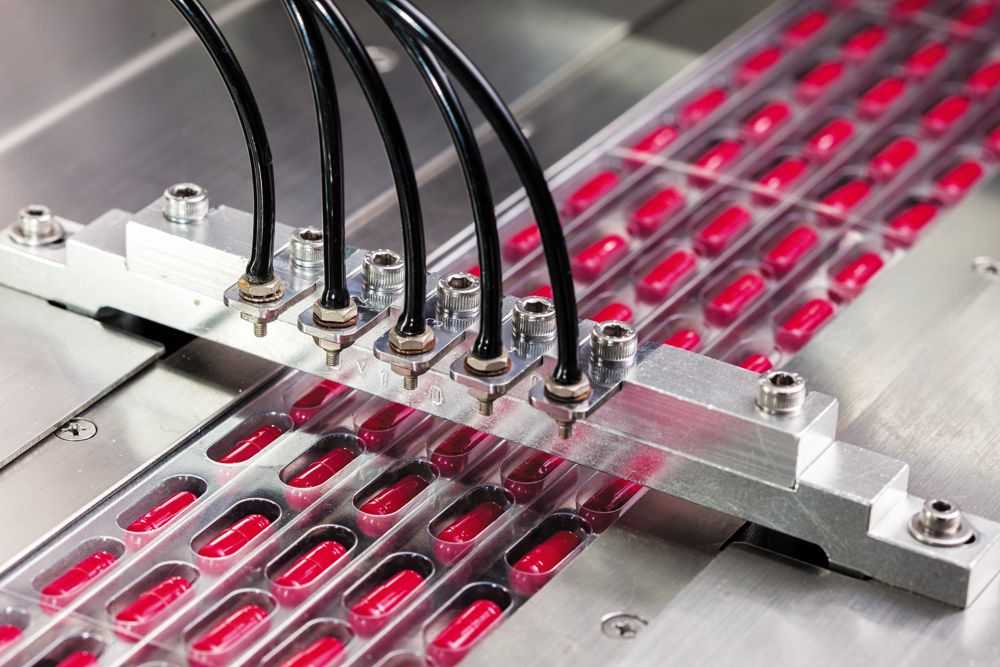

Chemical engineers and chemists each bring unique skills to API process development and optimization. Success depends on their close collaboration, at both sponsor and CDMO facilities.
Accurately targeted immunotherapies through reliable neoantigen recognition enable personalized medicine development.
Activation and expansion are essential for success in both autologous and allogeneic therapies.
Continuous manufacturing and a quality-by-design development approach are a natural fit.

Chemical engineers and chemists each bring unique skills to API process development and optimization. Success depends on their close collaboration, at both sponsor and CDMO facilities.
Successful outsourcing relationships in early phase drug-development analytics are driven by partnership.
This article describes how to improve the regulatory journey from classification to market clearance for sponsors of medical device combination products.

Particulate modelling has the potential to transform productivity within the pharmaceutical manufacturing industry, speeding up production cycles, reducing manufacturing costs, improving efficiency, and driving inward investment, with the potential to reinstate the UK as a global manufacturing powerhouse.
Pharmaceutical Technology's In the Lab eNewsletter
The new Acquity Arc Bio System by Waters is specifically engineered to enable efficient transfer and improvement of bioseparation analytical methods.
The acquisition will strengthen Sanofi's R&D strategy and expands its franchise for rare blood disorders.
Pharmaceutical Technology's In the Lab eNewsletter
Corning will feature its 3D bioprinting technology and tools to support 3D cell culture at booth #1029 during the SLAS 2018 conference on Feb. 3-7, 2018 in San Diego, CA.
Pharmaceutical Technology's In the Lab eNewsletter
Comecar will provide cell culture equipment for biopharmaceutical company CO.DON AG's new production site in Leipzig, Germany.
Hovione has installed a new MG2 Tekna Precision Capsule filler at its Portugal site.
Pharmaceutical Technology's In the Lab eNewsletter
Advances in analytical technology are making the screening of natural products and their substructures more viable.
The funding from the Walloon Region will enable Univercells to start developing a manufacturing platform aimed at driving down costs of biosimilars manufacturing.
GE Healthcare will equip Cellular Biomedicine Group's cell therapy manufacturing facility in Shanghai, China, with its FlexFactory single-use platform, designed to speed up cell therapy manufacturing timelines.
The company is developing a pipeline of combination therapies using its patented polymer-based matrix delivery system, known as TAOS (targeted orchestrated signalling matrix).
The acquisition strengthens Charles River Laboratories’ capabilities in the oncology and immunology therapeutic areas.
The two agencies have launched a program to develop safe and effective medical products to be used by American military personnel.
A ceremony was held at Cambrex’s Karlskoga facility to mark the commencement of a long-term manufacturing agreement with AstraZeneca for a key intermediate.
The acquisition, valued at EUR 520 million (US$631 million), would expand Takeda’s late-stage pipeline in gastroenterology and would extend an already existing collaboration between the two companies.
A Takeda and Denali collaboration includes three named programs for treating Alzheimer’s disease and other neurodegenerative diseases, using Denali’s antibody transport vehicle (ATV) technology to enhance blood-brain barrier penetration.
The company announced 15 new collaborations focused on addressing unmet medical needs, including using artificial intelligence in the early detection of Alzheimer’s disease, saliva testing for throat cancers, and using the microbiome to treat sleep disorders.
Graham Reynolds, vice-president and general manager, Global Biologics at West Pharmaceutical Services, Inc., shares insights on key considerations when developing a biologic drug product in a prefilled syringe.
The companies aim to develop a potential zinc finger protein transcription factor-based gene therapy for treating Lou Gehrig’s disease.
The companies aim to discover and develop locked nucleic acid oligonucleotides as orally available therapies for treating inflammatory bowel diseases.
A single-use DPI from Perlen Packaging, which offers lower-cost production and a more affordable device for emerging markets, won a 2017 CPhI Pharma Award.

Abuse-deterrent opioid formulations generally fall into two categories: the first is based on a physiochemical abuse-deterrent approach and the second combines the opioid with an antagonist.
The development of new packaging solutions that are fit for drugs of the future requires close collaboration between the pharmaceutical manufacturer and its packaging suppliers and machine vendors.