


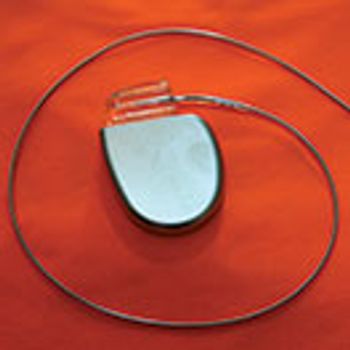
API can be mixed with silicone and other polymers to create drug-delivery combination products.
Accurately targeted immunotherapies through reliable neoantigen recognition enable personalized medicine development.

Activation and expansion are essential for success in both autologous and allogeneic therapies.

Continuous manufacturing and a quality-by-design development approach are a natural fit.

API can be mixed with silicone and other polymers to create drug-delivery combination products.

Pharmaceutical Technology's In the Lab eNewsletter
The National Science Foundation grant will be used to commercialize a synthetic biology platform for cancer drug development.
Pharmaceutical Technology's In the Lab eNewsletter
Waters’ acquisition of Prosolia’s DESI technology boosts its mass spectrometry imaging portfolio.
FDA and ICH seek comment on new exposure levels for cadmium in drug products.
AbbVie will grant Mylan license to launch a biosimilar to AbbVie’s Humira.
CPhI Korea to feature zone for finished dosage formulation drug products.
The agency is releasing six new draft guidances to provide a regulatory framework for handling gene therapies.
Sanofi will open a R&D operations hub in Chengdu, Sichuan province, China, with a focus on digitalization and big data analysis.
After 30 years of biologic-drug advances, the industry and patients still have a lot to learn.

Biopharma seeks alternatives that meet the needs for next-gen biologic drug production.

With the right excipients, formulators can control when, where, and how an API is released.
Minakem’s facility in Belgium enhances capacity to scale production of highly potent ingredients for small to full GMP batches.
The three-year collaboration will focus on developing vaccines for up to five infectious disease pathogens.
Pharmaceutical Technology's In the Lab eNewsletter
The extension provides four additional process development laboratories at its Nottingham site to improve output and efficiency in drug development and clinical trial manufacturing operations.
WuXi STA supported the development of hepatitis drug through marketing authorization holder pilot program.
Intelligent manufacturing and environmental policies are key trends at P-MEC 2018.
MilliporeSigma targets emerging biotechs with US development center and global grants.
The company will provide the first FlexFactory manufacturing platform for cell therapy manufacturing.
Vetter anounced the Open Innovation Challenge to examine the applicability of digital trends to injection systems.
Under the contract, AMRI will focus on the development and manufacture of APIs and drug product for Phase I clinical studies.
By minding knowledge gaps, bio/pharma companies can avoid development pitfalls.
From separation systems to reactor technology, new tools are increasing the feasibility of continuous API production.
Lonza has added four liver cell types to its hepatocytes portfolio for testing of in vitro drug models.
Catalent’s GPEx technology was used to develop antibody for anti-methamphetamine clinical study.
TxCell announces manufacturing agreement with Lonza for its HLA-A2 CAR-Treg cellular product.