


With some FDA inspections on hold, will the US drug supply maintain its quality standards?
With some FDA inspections on hold, will the US drug supply maintain its quality standards?
Monographs are developed based on the submission of information and materials from a company having regulatory approval for the product, and this submission feeds into the pharmacopoeia revision process.
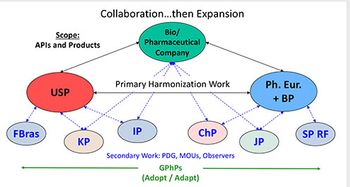

This final article in the series has two purposes: to summarize all the considerations that go into a company’s compendial affairs program and to look ahead at topics that will likely result in further evolution in the pharmacopoeias around the world.
This article returns to the topic of complying with pharmacopoeial requirements with a case study at the intersection of monograph development and compliance.
In January 2020, the agency finalized six clinical development and manufacturing guidance documents and drafted new guidance on what would qualify new gene therapies as orphan drugs.

Data supporting the quality and safety of product must meet the ALCOA+ elements in order to avoid regulatory citations for data integrity issues.

The National Institute for Health and Care Excellence (NICE) has issued a positive recommendation for Teva Pharmaceutical’s migraine therapy, Ajovy (fremanezumab).
EMA, along with its partners across the European medicines regulatory network, are keeping a close watch on the pharmaceutical supply chains in the European Union as a result of the potential impact of COVID-19.
The decision comes after results were received from a Phase 1, open-label study that evaluated the safety, pharmacokinetics, and preliminary efficacy of the monotherapy
The agency is postponing the inspection of most foreign facilities through April 2020.
European Union and national authorities are continuing to work on the prevention and management of nitrosamine impurities in medicines.
The global safety organization of Novartis is in the process of conducting a comprehensive review of a limited number of cases where patients treated with Beovu (brolucizumab) have experienced severe vision loss, inflammation, and potential retinal vasculitis.
The action involves allowing specific National Institute for Occupational Safety and Health-approved respirators not regulated by FDA to be used in healthcare settings to increase the number of respirators available in the United States.
FDA issued a notice to drug compounders regarding the transition of licensure of biologics to the Public Health Service Act.
A guidance document answers questions regarding the transition of biologics applications from under the FD&C Act to the PHS Act.

States, hospitals, and insurers support manufacturing arrangements to ensure access to affordable medicines.

Emergency action to protect patients and the drug supply may have long-term implications.

No matter why change may be needed, it is important to comply with all the relevant regulatory requirements, says Siegfried Schmitt, PhD, vice-president, technical, Parexel Consulting.

As compounds become more complex in nature and biological ingredients are more widely used, stability testing approaches must follow suit and provide flexibility for developers.
A brief overview of three notable cases of adverse drug reactions.
EU regulators have accelerated their efforts to use the mass of data emerging from the lifecycles of drugs as an effective basis for both the development and control of medicines.

While new industry guidance documents issued by FDA speak to the agency’s efforts to promote the development of new gene therapies, certain hurdles remain to challenge stakeholders.
With the first announced drug shortage tied to the coronavirus outbreak, FDA emphasizes urgency for monitoring drug supply chain.
If approved, the therapy may become the first-choice treatment for relapsing multiple sclerosis patients and will be the first B-cell therapy that can be self-administered using an autoinjector pen.