




Regulatory Oversight and Compliance
Latest News
Advertisement
Latest Videos






Advertisement
More News

At PDA/FDA Joint Regulatory Conference 2026, PCI Pharma's Bassler details how a QMS overhaul turned an FDA 483 into stronger quality culture.

Agentic AI changes the question from what a model can produce to what a system is allowed to decide.
Pharma's AI ROI gap isn't strategy or tech; it's the missing workforce qualification step every other regulated capability requires.

A phased playbook for moving life sciences data warehouses to a compliant, AI-ready cloud Lakehouse, balancing GxP rigor with faster insights.
Checking in at 2026's midyear mark, LGM Pharma's Mike Stenberg revisits his 2025 predictions on inspections, onshoring, GLP-1 delivery, and AI adoption.

The future of compliant AI is not better content generation. It is better control over what happens next.

Epista's Henrik Johanning revisits his 2026 predictions on QRM, Annex 1, AI governance, and regulatory convergence: What's tracking, what isn't.

A warning letter, a hard look at why “a human reviews it” doesn’t settle anything, and one company’s argument that accuracy was never the real problem.

FDA’s CNPV pilot aims to speed drug reviews but raises questions about safety trade-offs, resource strain, and unclear incentives for sponsors.
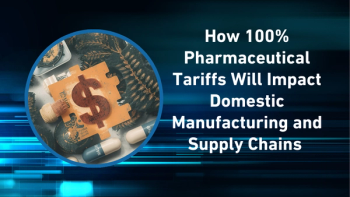
The 100% tariff on imported drugs will pressure pharma companies to build manufacturing sites in the US or face significant costs.

The FDA draft guidance "Considerations for Complying with 21 CFR 211.110" raises points to consider regarding drug products made using advanced manufacturing, batch uniformity, drug product integrity, and how manufacturers can incorporate process models into control strategies.

Following an overhaul at ACIP, the HHS secretary took the advice of the committee’s new members, saying he was acting on guidance that dated back to 1999.

Eli Lilly and Company developed an innovative and sustainable approach to audit trail review (ATR) aimed at reducing the ATR burden while adhering to regulatory expectations and data integrity (DI) principles. The process has transformed employees' understanding of ATR and complemented the DI by design approach, leading to better system designs that meet expected controls and reduce non-value-added data reviews.
The warning letters deal with a range of violations involving items from personal hygienic products to mismarketed analgesics.

A Phase III trial demonstrated mNEXSPIKE’s non-inferior efficacy compared with Moderna’s original COVID vaccine, Spikevax.

The concerns of industry experts expressed at INTERPHEX in April 2025 are still pertinent in an uncertain global political climate.

Bempikibart (ADX-914) is a human anti-IL-7Rα antibody that blocks the IL-7 and TSLP pathways, which have been implicated in driving T cell-mediated pathological processes in autoimmune diseases.
The company said that Vyvgart (efgartigimod alfa) is the first novel mechanism of action for CIDP treatment in more than 30 years.
The policy announced by Commissioner Martin A. Makary, MD, will not preclude employees of regulated companies from presenting their views to committees, and rare exceptions will be allowed.
The recombinant vaccine, under the brand name Vimkunya, is recommended for persons age 12 and older who are traveling to a country or territory where there is a chikungunya outbreak.
Vitrakvi (larotrectinib) was first granted accelerated approval by FDA in November 2018.
Development of the state-of-the-art facility was made possible by a £2 million (US$2.6 million) round of funding, and a successful inspection by MHRA was completed in March 2025.

3D printing of personalized medications is currently possible under existing compounding regulations, offering enhanced process control through automation. But new legislation coming in 2025 will allow 3D printing as part of a distributed manufacturing framework.

The authors examine the risks of extractables and leachables, and present solutions that emphasize the importance of a strategic, multi-prong approach.
Three of the five are biosimilars, and seven additional medicines received recommendations for indication extensions.
Advertisement
Advertisement
Trending on Pharmaceutical Technology
1
Germany’s Medical Biotechnology Sector is Flourishing
2
MASH and Cardiomyopathy Targets: Why AstraZeneca Chose insitro’s AI
3
First-in-Human Trial Speed: Why FDA Trails China
4
Formulation Strategies for Next-Generation Multiagonists
5