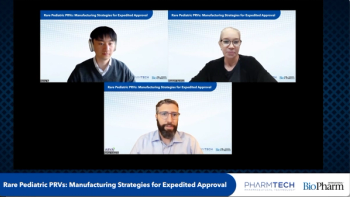
Nate Edwards of Arya Consulting moderates a discussion with Elisabeth Gardiner of Tevard Biosciences and Donny Xu of the RTW Institute about the regulatory and manufacturing hurdles facing rare disease drug developers.
European biotechs are utilizing AI to identify novel immunoinflammatory targets in respiratory diseases.
According to the World Health Organization, chronic non-communicable diseases remain the leading causes of death in Europe. Cardiovascular and cancer-related causes are by far the top causes of death, followed by respiratory diseases, including chronic obstructive pulmonary disease (COPD), pneumonia, and asthma, which together account for 7.8% of deaths.1 European biotechnology companies are reshaping the treatment landscape for chronic respiratory diseases by moving beyond broad immunosuppression towards precision medicines that target the molecular drivers of airway inflammation, tissue remodeling, and fibrosis.
In asthma and COPD, advances in human genetics, single-cell transcriptomics, and artificial intelligence (AI) are enabling the identification of novel therapeutic targets and biomarkers that support patient stratification. Earendil Labs (United Kingdom) and Relation Therapeutics (UK) are utilizing AI-driven platforms to accelerate the development of biologics and small molecules targeting immunoinflammatory and immunometabolic pathways.
Pharma developers are increasingly classifying patients into two main types: Type 2 (Th2/ILC2-mediated, eosinophilic) and the more challenging Type 1 (Th1-mediated, neutrophilic, steroid-resistant) asthma. For Type 2 asthma, a range of therapies are already available, including anti-IgE and anti-interleukin therapies (IL-5 and IL-4/IL-13). In contrast, Type 1 and mixed phenotypes tend to respond better to treatments such as anti-tumour necrosis factor (TNF)-α agents, CXCR2 antagonists, IL-17 blockers, and JAK-STAT inhibitors. Pharma companies are continuously seeking new targets and formulations to improve efficacy and dosing approaches. Verona Pharma (UK) gained approval for its dual PDE3/4 inhibitor, Ohtuvayre (ensifentrine), while Theravance Biopharma, part of Zymeworks, received approval for its inhaled JAK inhibitor, Yupelri (revefenacin).2
Companies are developing novel drugs that target cytokines, intracellular signalling, and gene-level mechanisms upstream. For instance, AstraZeneca’s anti-thymic stromal lymphopoietin (TSLP) monoclonal antibody (mAb) Tezspire (tezepelumab) and IL-33 blocker tozorakimab have shown robust reductions in exacerbations, often across biomarker subgroups, paving the way for biomarker-agnostic biologics.3,4 Long-acting anti-TSLP agents are now under development by Earendil Labs and Windward Bio (Basel) and may offer improved efficacy and reduce dosing.5
Small-molecule drugs targeting immunoinflammatory and fibrotic pathways are also in development for patients for whom biologics may not be suitable.6 For instance, Sitryx (UK) is developing a novel drug that mimics naturally occurring anti-inflammatory metabolites produced by activated macrophages, while Orbis Medicines (Denmark) is evaluating macrocyclic small molecules that target intracellular proteins typically inaccessible to biologics.7,8
Although cell and gene therapies are still in the concept phase, some European groups are exploring gene-editing or RNA-based approaches to correct rare monogenic causes of lung disease.9,10 To this end, Ethris GmbH (Germany) is developing inhaled messenger RNA therapeutics and vaccines for respiratory and genetic diseases utilizing its SNIM RNA and SNaP LNP platform.11
Idiopathic pulmonary fibrosis (IPF) has emerged as another major area of innovation, particularly following the approval of Boehringer Ingelheim’s Jascayd (nerandomilast) in May 2026.12 Many of the large pharma companies have products in clinical development, including AstraZeneca (AZD8965; Phase 1), Boehringer Ingelheim (BI 765423; Phase 2), Eli Lilly (MTX-463; Phase 2), and Bristol Myers Squibb (admilparant, Phase 3).13,14,15 Several European biotechs are developing therapies that intervene earlier in fibroblast activation and extracellular matrix (ECM) remodeling, including Alentis Therapeutics, Calluna Pharma, Engitix, HAYA Therapeutics, Redx Pharma, and Windward Bio, which are developing therapies targeting fibroblast activation, epithelial-mesenchymal transition, ECM biology, and long non-coding RNA (Figure).
European respiratory biotechnology continues to attract significant investor attention despite a selective funding climate. Investment has increasingly focused on firms with unique biological approaches, validated clinical targets, and programs in late-preclinical or clinical stages. Since January 2026, substantial funding rounds have backed companies working on next-generation biologics, long-acting antibodies, fibrosis treatments, and immune-modulating platforms. Crossover investors and specialist healthcare funds favor projects that can provide distinct advantages over existing standards of care.
In May 2026, Windward Bio raised US$165 million in crossover funding to advance WIN378, an ultra-long-acting anti-TSLP mAb in Phase 2/3 asthma trials and Phase 2 COPD studies. In June 2026, Engitix partnered with GSK to validate ECM-driven mechanisms in liver and lung fibrosis, with a £44.5 million upfront payment and an additional £118 million per target. Earendil and Relation attracted significant AI-platform funding and collaborations targeting autoimmune and inflammatory diseases, including airway and lung conditions.
Several European biotechs are evaluating novel respiratory agents in clinical trials (Table I). These include the following.
Alentis Therapeutics (Switzerland) is a clinical-stage biotech company focusing on cancer and fibrosis. It has a pipeline of anti-Claudin-1 antibody-drug conjugates (ADCs) and mAbs. In May 2024, it received FDA orphan drug status for lixudebart, an antibody targeting a unique CLDN1 epitope in fibrotic tissue associated with IPF.16 In Phase 1 studies with healthy volunteers, lixudebart was well-tolerated with no serious safety concerns. It is now in trials for liver fibrosis and vasculitis. In May 2023, the company was awarded a CHF 2.4 million Swiss accelerator grant by Innosuisse to develop its ADC technology.17
Calluna Pharma (Norway) is a clinical-stage company pioneering work in inflammatory and fibrotic diseases by targeting upstream amplifiers. Calluna has a pipeline of selective antibodies targeting immunological diseases, including CAL101, a mAb targeting the DAMP protein S100A4, associated with pathological activation and proliferation of fibroblasts. The company has completed recruitment for the Phase 2 AURORA study in IPF, and top-line data are due to be released in Q1 2027. In January 2024, the company completed a €75 million Series A financing round led by Forbion, with participation from Norwegian investors Sarsia, p53, and Investinor.18
Earendil Labs (UK) is an AI-powered biotechnology company advancing next-generation biologics for patients with autoimmune diseases, cancer, and other areas. In January 2026, the company announced a strategic partnership with Sanofi to develop a bispecific candidate for multiple autoimmune and inflammatory diseases. Earendil Labs will receive up to US$160 million in upfront and near-term payments tied to early program achievements.19. On March 20, 2026, Earendil Labs completed a US$787 million financing round led by global investors, including Dimension Capital, DST Global, INCE Capital, Luminous Ventures, Miracle Capital, Sanofi, and Biotech Development Fund (created by Hillhouse and Pfizer), and others. The funding will accelerate Earendil Labs' AI-driven R&D platform.20
Engitix Therapeutics (UK) is a biotech firm developing therapies that target ECM to combat cancer and fibrosis. In January 2026, it announced it had secured US$25 million in a Series A funding round to advance its ECM-targeted treatments.21 The company has a strategic drug discovery partnership with Dompé farmaceutici and collaborates with Takeda on advanced fibrotic liver diseases. In June 2026, Engitix signed an agreement with GSK to identify and validate new therapeutic targets for fibrotic diseases, utilizing Engitix's ECM discovery platform. Engitix will receive up to £44.5 million (US$59 million) in upfront and near-term payments, and up to £118 million (US$157 million) in milestone payments and royalties.22
Ethris GmbH (Germany) is a clinical-stage biotechnology company pioneering next-generation RNA therapeutics and vaccines. One of its lead programs, ETH47, is a novel mRNA therapeutic that activates the body's innate immune defence against respiratory viruses.23 In February 2026, the European Health and Digital Executive Agency awarded Ethris an initial €13 million under a tender contract worth up to €148 million for NOFLU, a vaccine development consortium comprising Ethris and 6 other European partners. The funding will support the advancement of Ethris’s mRNA vaccine technology as a mucosal vaccine against pandemic influenza.24
HAYA Therapeutics (Switzerland) is a biotech company developing precision RNA-guided, genome-targeting therapeutics that reprogram disease-driving cell states for rare, common, chronic, and age-related diseases. Itis developing antisense oligonucleotides targeting long non-coding RNAs, including WISPER, to reprogram fibrotic cell states. In May 2026, it initiated a Phase 1a/b study of HTX-001 for IPF.25 In May 2025, it raised US$65 million in a Series A funding round. Eli Lilly participated in this funding round.26
Orbis Medicines (Denmark), founded in 2022 by Sevan Habeshian, focuses on developing oral macrocycle therapeutics for validated biologic drug targets. The company utilizes its proprietary nGen platform to systematically explore macrocycle chemical space through automated chemistry and machine learning. To date, Orbis Medicines has raised approximately US$126 million across several funding rounds, including a €90 million ($94–$93 million) Series A in January 2025, led by NEA and supported by investors like Lilly Ventures, Cormorant, Novo Holdings, and Forbion.27
Redx Pharma (UK) is a clinical-stage biotechnology company focused on developing innovative small-molecule targeted therapies for fibrotic diseases. It is progressing Zelasudil (RXC008), a first-in-class, GI-restricted pan-ROCK inhibitor, for various fibrotic conditions, including IPF, and has completed a Phase 2 trial. In February 2024, Redx reached a deal with Jazz Pharma to develop new compounds and license its KRAS program. The company received a $10 million upfront fee, with the possibility of earning up to US$870 million through milestones.28
Relation Therapeutics (UK) is a technology-enabled biopharmaceutical company developing medicines for immunology, metabolic, and bone diseases. It leverages its Lab-in-the-Loop platform, which integrates state-of-the-art AI with patient-derived multi-omic data and proprietary experimental systems to uncover causal relationships and identify new targets. In December 2025, it raised US$26 million from existing investors, including NVentures (NVIDIA’s venture capital arm) and leading deeptech investors DCVC and Magnetic Ventures, to build its AI platform and develop next-generation medicines.29 It has established strategic collaborations with Deerfield Management, Novartis, and GSK to develop novel therapeutics targeting autoimmune and inflammatory pathways.30
RQ Bio (UK) is a biotech focused on developing long-acting monoclonal antibody (LAAbs) for respiratory viruses and other infectious threats, especially for high-risk groups. It was founded in 2021 and has developed a prototype. It leads programs targeting RSV- and COVID-like conditions, aiming to provide long-lasting passive immunity. In June 2026, it raised US$115 million in a Series A funding round backed by a strong syndicate of investors, including Frazier Life Sciences, EQT Life Sciences, Forbion, Monograph, Wellington Management, LifeArc Ventures, Oxford Science Enterprises, and the University of Oxford.31 The company is advancing its lead product, RQB01, a long-acting, potent, and broadly protective antibody, through IND-enabling studies.
Sitryx Therapeutics (UK) is a clinical-stage biopharmaceutical firm focused on developing innovative oral therapies to restore immune balance in autoimmune and inflammatory conditions. Founded in 2018, it received initial funding from SV Health Investors and specialized investors, including Sofinnova Partners, Oxford Science Enterprises, Longwood Fund, Eli Lilly and Company, and GSK. In February 2026, it announced aUS $500 million partnership with Boehringer Ingelheim to develop new oral therapeutics for autoimmune and inflammatory diseases, aiming to provide biologic-like disease control from an oral small molecule. The company’s pipeline includes its leading glutaminase-1 (GLS1) inhibitor, which has shown significant disease control across various preclinical models of inflammation and autoimmunity. SIT-052 shows promise as a treatment for moderate-to-severe asthma by reducing smooth muscle and fibroblast proliferation.32
Windward Bio (Switzerland) is a clinical-stage biotechnology company targeting respiratory and dermatological conditions. Its lead program is WIN378, a LAAb anti-TSLP agent currently in a Phase 2/3 trial for asthma and a Phase 2 study for COPD. The pipeline also includes WIN027, a clinical-stage, long-acting anti-TSLPxIL-13 bispecific in Phase 1 for a range of immunological diseases. The company is building a discovery pipeline of long-acting bispecific antibodies, targeting validated biology in respiratory and dermatological conditions. In January 2025, the company completed a US$200 million Series A financing round to advance its anti-TSLP therapies for asthma and COPD. In May 2026, it announced US$165 million in crossover financing led by OrbiMed, with participation from Novo Holdings, Blue Owl Healthcare Opportunities, and others.33
Respiratory medicine has undergone significant change during the past decade. Rather than focusing solely on symptoms or lung function, therapies increasingly target the biological pathways that drive disease. This precision medicine approach has revolutionised asthma treatment and is beginning to influence COPD and IPF. In asthma, companies are developing drugs that act upstream of the inflammatory cascade, targeting TSLP and TLRs. They are also improving small-molecule inhalable JAK inhibitors and dual PDE inhibitors to enhance efficacy and dosing. Although COPD has lagged, pathways such as CXCR2, IL-5, IL-33, and TSLP are now under investigation. These strategies aim to shift the focus from symptom relief to disease modification. Beyond inflammation, efforts include targeting fibroblasts, promoting lung regeneration, and remodelling the ECM in fibrotic diseases such as IPF. Growing interest in RNA therapeutics and cell- and gene-based therapies could enable the development of treatments that not only reduce exacerbations but also regenerate lung tissue and remodel airways. Overall, advances in AI-enabled target discovery are set to propel the next wave of innovations in respiratory biotech.