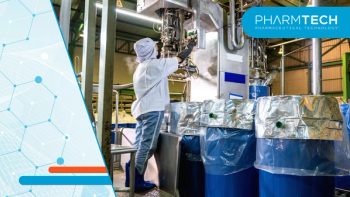
Enereductases (EREDs) and ketoreductases (KREDs) are highly selective enzymes that offer greener alternatives to more traditional asymmetric hydrogenation reactions. Enzyme cascades are a powerful way to enable more environmentally friendly and cost-effective synthetic processes for the manufacture of APIs. Here we report the discovery and development of an ERED/KRED biocatalytic cascade to enable efficient installation of the two stereocenters on a cyclohexyl ring for the synthesis of BMS-986278, a potent small-molecule LPA1 antagonist. A combination of protein engineering and process development optimized the cascade, resulting in orders of magnitude improvement over the original cascade proof-of-concept, and an over four-fold reduction in PMI over the first generation non-biocatalytic campaign for synthesis of the fragment. The synthesis of BMS-986278 was honored as a co-winner of the 2023 Peter J. Dunn award for Green Chemistry & Engineering Impact in the Pharmaceutical Industry, in large part because of the sustainability improvements enabled by this enzymatic cascade.
This week addressed AI accountability, CPHI award winners, NFC anticounterfeiting, first-in-class FDA approvals, and a shelved FDA voucher pilot lead this week’s roundup.
Cole and Jaenisch explain why defending against AI poisoning in pharma manufacturing calls for a data steward role, immutable instruction ledgers, and automation.
Terry Katz, CEO and co-founder of ForgeStop Technology Corporation, explains how the company’s product is worth the investment by protecting products and patients.
The FDA has shelved its National Priority Voucher pilot, leaving sponsors that built CMC and launch-readiness plans around 1- to 2-month reviews facing uncertain timelines.
Regulators will test pharma companies against their own internal AI policies. Jaenisch, Muraru, and Pandey explain how to build defensible, inspection-ready AI practices.
Terry Katz, CEO and co-founder of ForgeStop Technology Corporation, explains how its connected technology can enhance anticounterfeiting and how data are handled within the product.
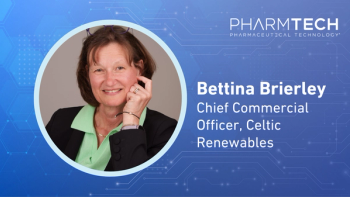
Celtic Renewables won the CPHI Award for Sustainable Pharma Excellence for its green chemicals used in pharmaceutical manufacturing. Bettina Brierley, chief commercial officer, talks about the adoption, capacity, and pricing of biosolvents.