The FDA’s approval of pimicotinib under Project Orbis and the Assessment Aid means teams must plan filings, manufacturing readiness, and batch release across regions at the same time.
The FDA has quietly shelved its National Priority Voucher pilot, leaving sponsors that built CMC packages around one- to two-month reviews facing conventional timelines.
In Conference Coverage….
In our wrap up of PharmTech’s coverage of the latest industry events, Christopher Cole’s recap of AAPS PharmSci 360 found speakers agreeing that AI and new imaging tools can shorten development timelines, but only if teams show regulators transparent, well-documented evidence.
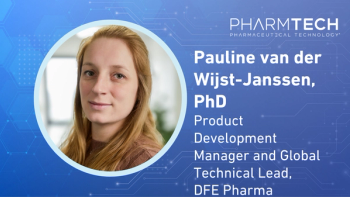
PharmTech also spoke with a few of the 2026 CPHI Pharma Award winners. Pauline van der Wijst-Janssen, PhD, of DFE Pharma, winner of the 2026 CPHI Milan Future Leader Award, says the real question about an excipient isn’t just whether it meets spec, but why it works and how it keeps working. She stressed that moving to continuous manufacturing is more than an equipment swap, because powder feeding and disturbances behave differently in connected processes. She adds that suppliers can share nitrite data to support the marketing authorization holder’s risk assessment.
Bettina Brierley of Celtic Renewables, winner of the CPHI Award for Sustainable Pharma Excellence, describes turning whisky residues and reject potatoes into pharma-grade bio-acetone and bio-butanol at a good manufacturing practice (GMP) demonstration plant that 3 large drugmakers have already audited. Brierley adds that her company’s bio-solvents are drop-in replacements that need no extra regulatory approval, and its first commercial plant will scale output from about 500 to 10,000 tons per year.
Terry Katz of ForgeStop, winner of the CPHI Pharma Award for Drug Delivery, Devices, & Packaging, argues that holograms and QR codes are too easy to copy, while encrypted NFC lets patients and pharmacists verify a drug before it’s taken. Katz says ForgeStop’s connected product technology tags 600 to 700 packs per minute without slowing the line and can run alongside existing serialization as a second source of truth. Katz contends that counterfeiting costs brands more than lost sales, and that falling NFC costs plus extras like electronic product information and diversion alerts now make protection affordable even for drugs that cost a couple of dollars.
In Expert Commentary…
Experts discussed a variety of topics this week on PharmTech.com. Cheryl Barton reports that France’s roughly €7 billion France 2030 health innovation plan keeps the country among Europe’s leading biotech funding hubs, even though the share of companies raising money fell from 37% to 20% in 2025.
AI Pulse Check panelists Richard Jaenisch, Florin Muraru, and Gourav Pandey say their top request for a rumored December regulatory AI playbook is a clear line between AI uses that need full validation and those that can run on lighter controls. The panelists expect regulators to judge companies against their own internal AI policies, and Pandey argues that owning a model gives more control than relying on frontier models that change often.
An expert from WuXi Biologics argues that glove ports matter less than “intervention dependency”: whether foreseeable faults still require an operator to reach through the aseptic barrier. When corrective interventions in robotic aseptic filling become routine, the fix should be redesigning the equipment, not retraining the operators.
Across AI, automation, sustainability, and regulatory review, the lesson is the same: innovation earns its place only when qualified people, transparent data, and plans built to survive shifting policy back it up. For the full stories, visit PharmTech.com.