FDA final guidance defines when companion app output counts as drug labeling and when device-connected or standalone apps belong in prescribing information.
AstraZeneca received approval from FDA for Fasenra Pen, a pre-fillled auto-injector pen that allows for self-administration of its asthma biologic therapy, Fasenra (benralizumab).
FDA has approved AstraZeneca’s asthma biologic therapy, Fasenra (benralizumab), in a pre-filled, single-use auto-injector, the Fasenra Pen, which will allow the option for self-administration at home or in a doctor’s office, AstraZeneca announced in an Oct. 4, 2019 press release.
The approval is supported by data from a Phase III and a Phase I trial. The safety and tolerability of Fasenra in these trials were consistent with the established profile of the medicine.
“Fasenra is the only respiratory biologic that can be given every eight weeks after the initial loading-dose period. Today’s news means we can now offer Fasenra in an even more convenient way, giving US healthcare providers and patients the option of administering Fasenra at home or in a doctor’s office, and making treatment more accessible to patients with severe eosinophilic asthma,” said Mene Pangalos, executive vice-president, BioPharmaceuticals R&D, AstraZeneca, in the press release.
Fasenra self-administration and the Fasenra Pen are also approved in the European Union (EU). Fasenra is currently approved as an add-on maintenance treatment for severe eosinophilic asthma in the United States, EU, Japan, and other countries.
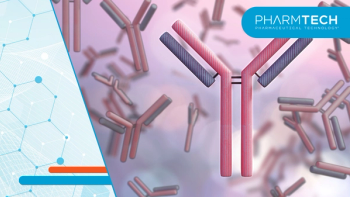
Fasenra is a monoclonal antibody that binds directly to the interleukin-5 (IL-5) receptor alpha on eosinophils and attracts natural killer cells to induce rapid and near-complete depletion of eosinophils via apoptosis (programmed cell death). The drug is AstraZeneca’s first respiratory biologic. Where approved for self-administration, Fasenra will be available both as a fixed 30-mg subcutaneous injection via a pre-filled, single-use syringe or as the Fasenra Pen, both with a thin 29-gauge needle, administered once every four weeks for the first three doses and once every eight weeks thereafter.
Fasenra is also in development for severe nasal polyposis, other eosinophilic diseases, and chronic obstructive pulmonary disease. It was granted orphan drug designation by FDA for treating eosinophilic granulomatosis with polyangiitis in November 2018, hypereosinophilic syndrome in February 2019, and eosinophilic oesophagitis in August 2019.
Fasenra was developed by AstraZeneca and is in-licensed from BioWa, a wholly-owned subsidiary of Japan-based Kyowa Kirin.
Source: