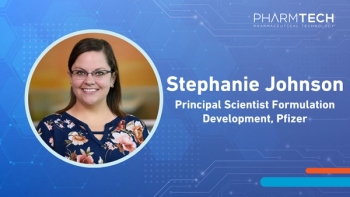
Stephanie Johnson, Pfizer, discusses how platform formulations moved 2 Pfizer protein programs to IND in 8 months by redistributing, not removing risk.
FDA opens applications for its Expedited IND Pilot, pairing sponsors with qualified research institutions to test rolling CMC review ahead of first-in-human trials.
The FDA has finalized the design of its Expedited Investigational New Drug (IND) Pilot and begun accepting applications, giving sponsors until Oct. 30, 2026, to apply.¹ The program pairs drug developers with qualified research institutions (QRIs)—academic medical centers, health networks, contract research organizations, or regulatory advisory firms—that will provide pharmacology/toxicology, clinical, and chemistry, manufacturing, and controls (CMC) input on first-in-human (FIH) IND submissions.¹,²
Under the pilot, the FDA will accept and review individual IND components on a rolling basis during the pre-IND phase rather than waiting for a complete package, a shift the agency says should let issues surface and be resolved earlier, reducing the odds of a clinical hold once the 30-day statutory IND review clock starts.¹ The FDA expects to select 8 to 10 sponsor-QRI pairs for the initial cohort, chosen from applications reviewed by agency scientific staff.¹
“Under the Trump Administration, boosting domestic innovation and ensuring American patients have first access to groundbreaking treatments is a top priority,” said Acting FDA Commissioner Kyle Diamantas, JD, in the agency’s announcement.¹ Michael Davis, MD, PhD, director of FDA’s Center for Drug Evaluation and Research, added that public comment on the proposed design shaped the final program.¹
The pilot is a formal deliverable of HHS’s Operation TrialBlazer, the modernization push FDA launched after then-Commissioner Marty Makary
For CMC and manufacturing teams, the pilot signals that FDA sees pre-IND CMC review, not just clinical protocol design, as a lever worth testing for cycle-time reduction, since QRIs are explicitly tasked with vetting CMC packages before submission.
Manufacturing and quality organizations that partner with a sponsor or that serve as a QRI’s CMC reviewer should expect the pilot to test whether earlier, more collaborative CMC vetting genuinely reduces clinical holds without loosening FDA’s underlying quality expectations; the agency has stressed that it retains full authority over hold decisions throughout the program.¹
The pilot’s emphasis on pre-IND review has also drawn a response from those focused on what happens once a trial is underway. Richard Graham, chairman and co-founder, TruTechnologies, a clinical trial execution platform, said the pilot is a useful test of whether the FDA is willing to apply to itself the same risk-based, proportionate standard it has long asked of sponsors, including under ICH E6(R3), but that the effort needs to reach beyond trial start-up.
“This pilot is an opportunity for the FDA to apply that same principle to its own requirements,” Graham said. “The pilot could help make clearer what is actually required at a given stage of development and reduce work that does not add a commensurate safety benefit. Its attention to IRB review and site activation is welcome. But that thinking cannot stop at trial start-up. Clinical trial execution remains a major source of cost and delay, and proportionality has to extend into trial conduct more broadly.”
Graham added “That will require both a carrot and a stick: a clearer regulatory roadmap for what constitutes meaningful risk and the oversight those risks warrant, along with real accountability for identifying and managing the risks that truly matter. Nonbinding guidance alone is not going to move the needle. Technology exists to support that model. Sponsors can see whether protocol-required work is happening, where exceptions occur, and where attention is needed while there is still time to act. That enables more targeted oversight instead of blanket, retrospective checking. If we want the US to become a more attractive place to run clinical trials, faster regulatory review is only part of the answer. FDA has to create an environment where sponsors can confidently operate in the risk-based, proportionate way it has been asking them to for years.”
Because the initial cohort is capped at 8 to 10 pairs, and the FDA plans to use pilot results to inform a possible future QRI accreditation model, sponsors and CDMOs weighing an application have a narrow window to help shape whether rolling pre-IND CMC review becomes a standard part of FIH development going forward.¹,²
References
1. US Food and Drug Administration. FDA Launches Expedited IND Pilot, Begins Accepting Applications. Press Release. Sept. 15, 2026.
2. US Food and Drug Administration. FDA Expedited Investigational New Drug (IND) Pilot Program. Accessed Sept. 16, 2026.
3. CNBC. FDA Chief Warns U.S. Is Losing Ground to China in Early Drug Development, Calls for Faster Trial Approvals. Published Feb. 18, 2026.