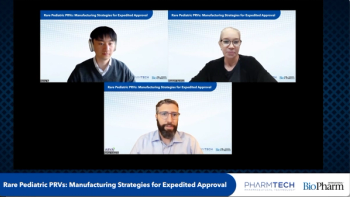
Nate Edwards of Arya Consulting moderates a discussion with Elisabeth Gardiner of Tevard Biosciences and Donny Xu of the RTW Institute about the regulatory and manufacturing hurdles facing rare disease drug developers.
FDA replaces seven fragmented adverse event databases with AEMS, enabling real-time safety signal access for pharmaceutical manufacturers and researchers.
On March 11, the FDA launched a unified platform for analyzing adverse event reports, replacing a fragmented infrastructure that had long-impeded effective postmarket surveillance.¹ Known as the FDA Adverse Event Monitoring System (AEMS), the system consolidates data that were previously spread across seven separate databases.
Adverse event data for drugs, biologics, vaccines, and cosmetics can now be searched and viewed through a single dashboard. "The FDA's previous adverse event reporting systems were outdated and fragmented and made important data difficult to access. These clunky systems also wasted millions of taxpayer dollars and created blind spots in our postmarket surveillance of products ranging from drugs and vaccines to cosmetics,"¹ claimed FDA Commissioner Marty Makary, in a press release. Those blind spots have direct relevance for manufacturers, whose own pharmacovigilance decisions depend on the quality and accessibility of population-level safety signals from the same data pools.
The agency processed approximately 6 million adverse event reports per year under the old structure, at a combined operating cost of around $37 million annually.¹ AEMS is expected to save approximately $120 million over the next five years, a reduction in administrative overhead that signals a longer-term commitment to this infrastructure.
One of the most operationally significant shifts is the move from quarterly to real-time publication of adverse event reports.¹ Previously, manufacturers and researchers working with publicly available safety data were working from information that could be months out of date. Under AEMS, reports will be published as they are received, subject to the agency's obligations around individually identifiable patient and consumer information.
Transparency around adverse event reports submitted by patients, consumers, clinicians, and manufacturers is a critical component of postmarket surveillance.¹ Although these reports carry inherent limitations, they can help identify potential safety signals; patterns or clusters of adverse events that might indicate previously unknown risks. With real-time access, the lag between a signal's emergence in the reported data and its visibility to the broader scientific community is substantially reduced.
The FDA also expects the new system to reduce Freedom of Information Act requests for unreleased adverse event reports, given that the data will no longer sit in queues awaiting quarterly release.¹ For manufacturers who have historically submitted such requests to monitor competitor product safety profiles or track signal development, direct access through AEMS may render that process unnecessary.
Consolidating the FDA's adverse event systems and converting to real-time publication was challenging, but made possible by a highly aggressive schedule," said Chief AI Officer Jeremy Walsh in the press release.¹ "The team executed with perfection and delivered the biggest technical transformation in agency history."
In the coming months, a few remaining product areas not yet on the platform will be migrated into AEMS, with full coverage expected by the end of May 2026.¹ These include: medical devices, human foods, dietary supplements, and tobacco products. Enhanced data analytics tools and application programming interfaces are also planned as part of the rollout, which will expand the options available to manufacturers and researchers for systematic data querying. The legacy systems being retired include the databases previously used for drug and biologic adverse event reports, vaccine adverse event reports, and animal drug and food reports.
The launch of AEMS arrives against a backdrop of heightened scrutiny over adverse event reporting compliance. In a letter dated March 5, the FDA criticized Novo Nordisk for "serious violations" related to reporting of possible side effects linked to semaglutide, the active ingredient in Ozempic and Wegovy — citing three unreported deaths, including one suicide. "FDA relies on the complete, accurate, and timely submission of ADEs to monitor a product's safety profile and uphold FDA's mission to protect and promote public health," the agency wrote. The case underscores why infrastructure improvements alone are insufficient; the quality and timeliness of manufacturer submissions remain equally consequential.
References