Shadow AI and vendor data retention put GMP records and trade secrets at risk. AI Pulse Check panelists outline what pharma AI policies require.
Content Associate
PharmTech
Shadow AI and vendor data retention put GMP records and trade secrets at risk. AI Pulse Check panelists outline what pharma AI policies require.
Hovione's $35M CDC Flex line links spray drying to tablets, designed to eliminate scale-up under FDA Q13 guidance.
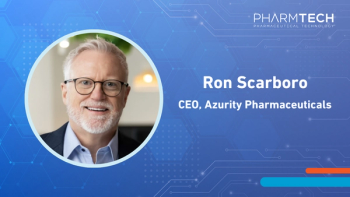
Ron Scarboro, Azurity Pharmaceuticals, claims drug reformulation that removes patient barriers must preserve efficacy, urging early cross-functional team alignment.
Novartis licenses Abogen's mRNA-encoded T-cell engager for autoimmune disease, raising scale-up questions for mRNA-lipid nanoparticle manufacturing.
Ron Scarboro, Azurity Pharmaceuticals, explains why real-world usability belongs at product definition and how post-launch feedback should guide drug formulation.
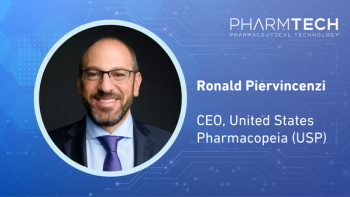
Ronald Piervincenzi, USP, explains why drug supply resilience needs a system approach, from procurement benchmarks to regulatory capacity building.
Ronald Piervincenzi, USP, explains why drug supply resilience needs a system approach, from procurement benchmarks to regulatory capacity building.

FDA approves tavapadon, first D1/D5 agonist, validating AbbVie's $8.7B Cerevel deal and an October five-strength oral tablet launch.
Merck licenses SciBrunch's preclinical KRAS G12D inhibitor for $2.13B, raising tech transfer and scale-up questions for oral cancer drug development.
Ronald Piervincenzi, USP, urges drugmakers and purchasers to act on supply chain resilience to curb drug shortages and shape better policy.
Ronald Piervincenzi, USP, explains why manufacturers should act now and how benchmarking could reward reliable generic drug suppliers.
The FDA approves Lilly's once-weekly insulin efsitora for type 2 diabetes, raising Fc-fusion manufacturing, high-concentration pen, and capacity questions.
The FDA approves Inluriyo-Verzenio combo for ESR1-mutated breast cancer; EMBER-3 data double PFS, with supply chain and diagnostics implications for manufacturers.
Christy Owings, Thermo Fisher, explains clinical trial supply chain risks in Latin America, importer-of-record strategy, AI, and eCOA delays.

Andrea K. Kerrigan, FDA, outlines how validation, data integrity, and QRM determine whether digital tools and AI strengthen or undermine CGMP compliance.

PDA/FDA 2026 session maps the GMP audit lifecycle, root cause to CAPA closure, plus a local vs. above-site decision framework and two case studies.
The recently opened NJ spray drying facility doubles capacity for amorphous solid dispersions, addressing solubility limits in roughly 70% of small-molecule pipelines.

Karthik Iyer, Eli Lilly, detailed an AI system linking GMP findings, audits, and deviations for cited, inspection-ready regulatory intelligence.

Sanofi will transfer 20 mature medicines and three manufacturing sites to Cheplapharm for a 26.4% equity stake, closing by Q3 2027.
Christy Owings, Thermo Fisher, on why early supply chain partnership and site visits prevent costly eCOA and clinical trial delays.
Christy Owings, Thermo Fisher, on how AI complements clinical supply chain expertise, streamlines site logistics, and tracks shifting biotech markets.
Christy Owings, Thermo Fisher, speaks on why importer of record strategy and vetted local partners are key to reliable clinical trial supply chains.
Christy Owings, Thermo Fisher, discusses how customs delays and import complexity risk clinical trial supply chains in Latin America.

The FDA approves zilganersen, the first disease-modifying Alexander disease therapy, offering rare disease developers a trial design and RNA delivery model.

Novartis paused 8 CAR T-cell trials after 3 deaths. Bristol Myers also paused a rival program. What it means for cell therapy developers.
Novartis licenses Alteogen's ALT-B4 enzyme for subcutaneous drug conversion in a deal worth up to $3.2B, signaling formulation industry shift.

Lilly is set to acquire Merida Biosciences for up to $2.875B, gaining a precision autoantibody-degrading platform led by phase 1 candidate MER511.
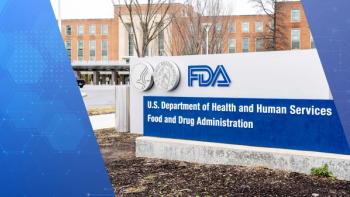
Four FDA approvals in the areas of HIV, diabetes, autoimmune disease, and COVID-19 vaccines came in a flurry in late August 2026.

FDA approves Rasonque (daraxonrasib), the first broad RAS-targeted therapy for metastatic pancreatic cancer, validating RAS(ON) inhibition for future drug development.

Centrix and University of Sussex launch a data analytics partnership to reduce development risk, rework and delays in early-stage pharma programs.
April 10th 2026

August 3rd 2026

September 18th 2026