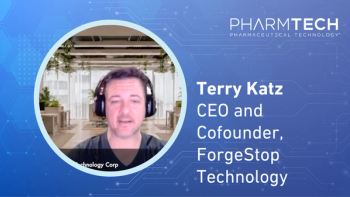
Terry Katz, CEO and cofounder of ForgeStop Technology Corporation, explains the company’s CPHI Award-winning connected product technology and how it helps to combat drug counterfeiting.
Matt Whelihan, associate director of research and development at Prolytix, discusses industry trends—from data-driven approaches built on artificial intelligence (AI) to increasingly complex therapeutic modalities.
Sponsored by Prolytix
Data-driven approaches and increasingly complex therapeutic modalities are reshaping how drug products are developed and tested. Matt Whelihan, associate director of research and development at Prolytix, points to AI, machine learning, and today’s computational power as tools that help developers predict outcomes rather than simply generate empirical data. These approaches could shorten drug product life cycles, but will still require validation. At the same time, the field has moved beyond simple therapeutic proteins to bispecific antibodies, antibodies conjugated to complex molecules, and cell and gene therapies (CGTs), leaving the analytical landscape vastly different than it was even a decade ago.
Many existing assays were designed around small molecules and simple biotherapeutic proteins. Whelihan explains that newer modalities—whose mechanisms of action are difficult to assess—call for an orthogonal approach that combines multiple assay types and technologies. AI can support data processing, trial design, and predictive modeling and may reduce preclinical costs; however, the US Food and Drug Administration (FDA) will not accept data from an AI model without clinical data to back it up. The same validation challenge applies to new approach methodologies, such as organ-on-a-chip systems and cell-based technologies that mimic an animal’s disease state or physiology.
Looking ahead, Whelihan identifies the complexity of new modalities and their delivery mechanisms as the central challenge for analytical and bioanalytical laboratories. CGT, delivered with viral vectors or lipid nanoparticles, add another layer of complexity. The more complex the modality, the more orthogonal methods are needed to establish safety and efficacy before human trials. Even so, with today’s AI tools and human expertise, the industry has the talent to bring many of these new therapies to the clinic.