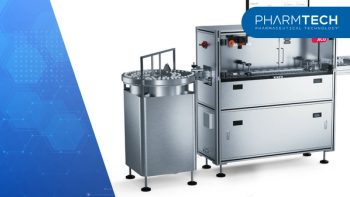
AI-powered empty vial inspection from ACG catches cracks, glass particles, and defects before filling to cut injectable drug loss and support Part 11.
ACG’s call to connect product authentication, packaging security, inspection, and traceability raises practical questions about how manufacturers link security layers that were built to work alone.
Pharmaceutical counterfeiting is rarely defeated by a single feature on packaging. That is the premise behind a November 23, 2026, call from ACG, for the industry to treat anticounterfeiting as one interconnected system rather than a series of standalone measures.1 The company argues that authentication at the dosage-form level, packaging security, automated inspection, and digital traceability should be designed to work together, so that stakeholders can verify product authenticity at multiple points between the production line and the patient.
The scale of the problem helps explain the push. The World Health Organization estimates that at least 1 in 10 medicines in low- and middle-income countries is substandard or falsified, and that countries spend an estimated $30.50 billion each year on such products.2 ACG points to increasingly sophisticated falsification methods as the factor exposing gaps in supply chains that have historically relied on individual security measures applied at separate stages of production and distribution.1
The more pressing question is not whether a layered approach makes sense, but what genuine integration demands of the line, the data infrastructure, and the budget.1
ACG outlines 3 areas in which it sees integration paying off.1 The main places being distinctive, verifiable features embedded within capsules to establish product identity beyond the external pack; visible and covert packaging features combined with tamper-evident technologies; and automated inspection tied to serialization, aggregation, and track-and-trace systems.
Each layer addresses a different point of attack.1 Dosage-form features protect against substitution after a pack has been opened or repackaged. Tamper-evident packaging addresses interference in distribution. Serialization and aggregation create the data trail regulators the US and EU already require.
Terry Katz, CEO, ForgeStop Technology, which won a
Katz’s argument does not undercut a layered model so much as sharpen it.3 If physical and printed features can be imitated well enough to pass a visual check, the value of a multilayer strategy depends on including at least 1 layer that is difficult to clone and can be verified independently of what the eye sees. Encrypted NFC tags, which draw on the same security principles as contactless payment, are one option; forensic markers and covert features verified with dedicated readers are others. Manufacturers auditing their current security portfolio may find it useful to map each existing feature against a simple test: How easily could it be reproduced, and who is able to verify it?
Katz also distinguished between enforcement and authentication.3 Brand protection teams that investigate and remove fakes from the market play an essential role, but relying on that approach alone means “an incident has to happen first.”3 Authentication moves the point of detection earlier, to the pharmacist, physician, or patient, before a product is dispensed or taken.
Integration raises a practical concern: each new security layer is another station, another reject path, and another potential source of downtime.1 ACG’s emphasis on combining automated inspection with serialization and aggregation reflects an industry that has already absorbed 1 major line overhaul for track-and-trace compliance and has little appetite for another.
In the US, that overhaul is nearing completion.4 Enforcement of enhanced, package-level tracing under the Drug Supply Chain Security Act began for wholesale distributors in August 2025. In August 2026, the FDA granted small dispensers, defined as pharmacies with 25 or fewer full-time employees, temporary exemptions from certain requirements through November 27, 2027.5 With that baseline in place, the next round of investment is less about compliance and more about what can be layered on top of it.
Katz said his company’s system was designed around production constraints.6 He said the company “could not slow down production lines at all,” describing radio-frequency reading and writing to packs at speeds of “600, 700 products a minute, no problem.” Because the system reads every individual pack and assigns it a unique identity, it effectively serializes as it goes, which Katz allows it to run alongside existing serialization infrastructure rather than replace it.
The concept of a parallel source of truth is central to ACG’s integration argument.1 A layered system adds protection only if its data streams reconcile. If a capsule-level marker, a serialized carton, and an aggregated case record cannot be linked at the unit level, investigators are left with 3 partial pictures rather than one complete one. Packaging, automation, and IT teams scoping new security layers should therefore treat data interoperability as a design requirement from the outset, not as a postinstallation integration project.
AI will continue to gain traction in pharmaceutical security, analyzing data across manufacturing, packaging, and distribution systems to identify anomalies and suspicious patterns that could signal counterfeiting or diversion earlier.1 With agentic assistance pharma companies will produce more reliable data, rigorous validation, and cybersecurity safeguards with appropriate human oversight.
Those conditions are not trivial.1 Unit-level authentication generates far more data than traditional batch records. Katz explained that a batch record might once have noted a single lot of 50,000 units, unit-level identity allows each item to accumulate its own history, from the warehouse it moved through to cold chain readings and the distributor that received it. He described the resulting data set as “an absolute mountain.”6
That volume is what makes anomaly detection possible.1 Katz said the system can alert brands when products are authenticated in regions where they are not approved for sale, allowing diversion to be caught at the first scan rather than after a market investigation.6
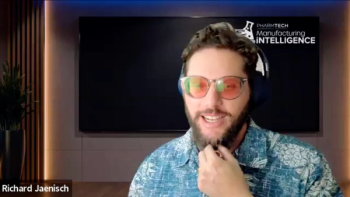
An increased reliance on AI is what continues to make data governance so crucial.7 Richard Jaenisch, senior director of education, outreach, and digital experience at Open Biopharma, framed
Data ownership is a related question as security systems begin to touch patients directly.6 Katz says brands retain ownership of the data his company’s platform generates. Any information a patient submits through a scan experience goes directly to the brand without being viewed by the platform, he says, with the system attaching only batch and serial details to that submission. Clarifying those boundaries with any technology partner, in writing and before deployment, is a reasonable expectation for quality and legal teams.
ACG’s call for collaboration among manufacturers, suppliers, technology providers, and regulators runs into a familiar obstacle: budget.1 Katz recalled that early on, brand protection teams embraced his company’s technology only for finance leaders to judge it not cost-effective.8 The response was to position authentication data as useful to supply chain, marketing, and regulatory functions as well. In that scenario, he says,8 “the cost maybe remains the same, but the value has increased, dramatically.”
He also cautioned against measuring counterfeiting solely as lost sales, noting that patients who receive an ineffective counterfeit “tend to blame the brand themselves.”8 In pharmaceuticals, the downstream consequences extend well beyond reputation. A World Intellectual Property Organization review cites estimates that substandard and falsified medicines may contribute to up to 169,000 child deaths from pneumonia and an additional 116,000 deaths from counterfeit antimalarials each year.9
Electronic product information (ePI) is one area where security infrastructure and regulatory change may converge.10 The EMA and its network partners are working toward harmonized ePI based on a common standard built on Fast Healthcare Interoperability Resources. A reflection paper proposes patient access by scanning a 2-dimensional code printed on medicine packaging.
The decision about how to carry ePI, whether through a printed QR code, a link, or an embedded tag, is also a decision about whether that same carrier can support authentication, recall messaging, and region-specific content.10 Treating ePI and anticounterfeiting as separate projects risks building 2 systems when one could serve both purposes.
Katz acknowledged that adoption will take time, “Pharma’s always notoriously a little bit slow,” he says, pointing to regulatory hurdles and an understandable “risk concern as well about adopting anything new.”8 He noted that the technology has been accepted by regulators in Mexico, where his company does much of its work. Upcoming obligations such as ePI in the EU should be evaluated alongside authentication rather than in isolation.
The goal is an interconnected system in which authentication, inspection, and traceability reinforce one another.1 The work of connecting those layers is likely to fall as much on packaging engineers, quality units, and data teams as on brand protection.
References