


News|Videos|November 6, 2026
PharmTech AI Pulse Check: Why Pharma's AI Compliance Doesn't End at Go-Live
The PharmTech AI Pulse Check panel discusses why MHRA and FDA oversight of pharma AI continues past go-live, and who validates the regulators' own AI.
Advertisement
Episodes in this series

Regulators are shifting from approving pharma AI once to supervising it across its lifecycle, and the latest PharmTech AI Pulse Check examines what that means for company policy. The conversation picks up where the panel's discussion of
Are Regulators Moving Faster Than Industry on AI?
Muraru argues that regulators are moving quite fast, sometimes faster than industry. The UK's MHRA is moving from approving AI once to watching it through its life, a direction he says mirrors
Guidance is already arriving. MHRA has promised draft guidance on AI device updates by December, the EU has a concept paper on AI in clinical development, and GMP
Who Validates the Regulators' AI?
Muraru notes that agencies are also using AI to review trial protocols and spot safety signals, and he asks who validates that AI and how a sponsor learns why it flagged something. Pandey observes that regulators using AI in their workflow should be held responsible for the questions and requests they send, but adds that industry sits on the forefront of the audit. Either way, he says, "if we are using, we are responsible."
International harmonization remains a distant prospect. The closest example so far, the
What Are the Biggest Players Doing Differently?
Jaenisch observes that "the biggest thing I've seen is people throwing money at the problem." Large companies are buying chips and systems and signing agreements that resemble on-prem deployments. After seeing Lilly's future-facing buildings at the ISPE Annual Meeting, he cautions that it will take a few years to understand what an investment that large can do. He also points to workforce pipeline bets, such as the Ivy Tech partnership, as a good lane, and notes that
Jaenisch also sees foundation-model companies acquiring AI-native drug discovery firms and aligning them with pharma companies that hold the actual data, a shift from the "chimpanzees writing Shakespeare" approach of throwing compute at a problem.
Why Does Owning the Model Matter for Validation?
Pandey closes with a compliance point: whoever owns the model has better control over the stack and architecture, both for internal use and for patient-facing devices. That applies to SaaS providers becoming AI-native, too. Owned model features are easier to validate and defend than reliance on front-end models that change weekly.
For quality, regulatory, and manufacturing leaders, the takeaway is to write AI policies that cover the full lifecycle, because inspectors are heading there next.
Advertisement
Related to this article

Jaenisch, Muraru, and Pandey discuss how regulators will audit pharma against its own AI policies and ways QA and regulatory teams can build defensible, inspection-ready AI practices.

Manish Baviskar, Hubot CDMO, on ALCOA++ data integrity, model version change control, continuous monitoring, and human sign-off.
Manish Baviskar, Hubot CDMO, explains which AI skills validation engineers need first and why AI model updates must go through GMP change control.
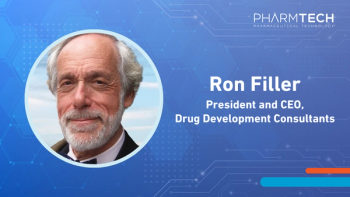
Ron Filler, Drug Development Consultants, explains how USP's 1074 revision brings human-relevant safety science to formulators and excipient makers.
Ron Filler, Drug Development Consultants, explains how USP's 1074 revision brings human-relevant safety science to formulators and excipient makers.
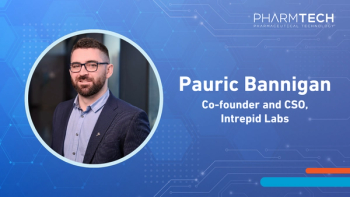
Pauric Bannigan, Intrepid Labs, explains how physics-informed machine learning aids formulation and why regulators still want experimental data.
Pauric Bannigan, Intrepid Labs, explains where AI speeds formulation decisions, why data is the bottleneck, and how active learning trains models with far less data.
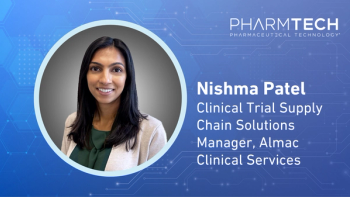
Almac Clinical Services’ clinical supply strategy won the 2026 CPHI Award for Supply Chain Excellence. Nishma Patel, supply chain solutions manager, explains how her team managed the study’s strict −80 °C handling requirement, quality release, and site readiness, and how the Almac Adapt approach can apply beyond this program.
Advertisement
Advertisement
Trending on Pharmaceutical Technology
1
Improving Oral Peptide Delivery Through Structural Modifications
2
Drapeau’s AI Deep Dive: The Price of Acceptance in Regulated AI
3
AAPS PharmSci 360: How USP Is Tackling the Novel Excipient Roadblock
4
Using OEE Monitoring to Justify Expenditure on Aging Production Lines
5