
News|Videos|November 23, 2026
AI Pulse Check: Machine Learning Boosts Yield 12%
The AI Pulse Check Panelists discuss how machine learning lifts pharma yields, but AI batch decisions need Annex 22-ready validation.
Advertisement
Episodes in this series
When a molecule designed by an AI agent arrives in a regulatory dossier, reviewers will eventually ask which model designed it and which data it drew on. In this episode of PharmTech AI Pulse Check, the panelists argue that this question is still mostly ahead of the industry. AI’s proven value in manufacturing today comes from more deterministic machine learning, and scientist agents remain largely a discovery story.
Where Is AI Delivering Measurable Value in Manufacturing Today?
Richard Jaenisch, senior director of education, outreach, and digital experience at Open Biopharma, separates machine learning from generative AI. “So, machine learning here, it’s proven, it works,” he says. He points to gains in chromatography and
What Changes When a Model Drives a Batch Decision?
Florin Muraru, an independent regulatory advisor specializing in EU and US regulatory strategy and AI governance, says optimization insights are easy because they stay outside GMP decisions. Once a model drives a decision on a batch, it becomes a GMP system that needs validation, change control, test data, and a named person to sign. He says this is exactly what draft EU GMP Annex 22 will ask for. The draft annex limits scope to deterministic, frozen-parameter ML, and generative AI is explicitly barred from critical applications. “The companies that move fastest will be the ones that build the quality system around the model early, not only the model itself,” Muraru says.
Gourav Pandey, R&D quality lead at Takeda, adds that small, modality-specific models could strengthen pharma’s AI architecture, provided they carry domain knowledge of both the process and the regulations around it.
Are Scientist Agents Ready?
Cole cites recent news: a Nature paper on an AI-native lab for autonomous biomolecular operations, Ginkgo selling autonomous lab systems to Novo, and UCB and Roche partnering with Cradle and Chai Discovery. “I believe scientific agents are still mostly in the research stage,” Pandey answers. He traces the progress that discovery has made: Transcriptic’s cloud lab, the AI-designed DSP-1181 entering Phase 1, and Insilico Medicine’s rentosertib meeting its Phase 2 primary endpoint. Insilico has since announced the initiation of the Phase 3 clinical trial for Rentosertib.
To plan and direct experiments in process development, Pandey argues, agents need facility and equipment
Jaenisch agrees that digital twins are what will take agents to the next level. He describes tools such as Potato’s as a second scientist working alongside humans that can plug into twins for eventual scale-up. He also points to Chai Discovery’s many partnerships and Illumina’s billion Cell Atlas as collaborations run through an intermediary, which could make the move from discovery to production easier.
Who Owns the Decision When an Agent Runs the Experiment?
For Muraru, the story is still mostly about discovery and that regulatory questions usually come later. “Today, the rules focus on the product and the data, not on how the idea was found,” he says. As agents move closer to development and manufacturing, he expects trust and human accountability to matter more: an agent can run an experiment, but a person must still own the decision. Jaenisch calls human sign-off the theme across anything AI-related. Muraru suggests the industry might instead think of it as putting the AI in the loop.
Advertisement
Related to this article

EU GMP Annex 22: AI Pulse Check panelists say most manufacturers aren’t ready, static AI models likely stay central, and local AI deployment grows.
Cole and Jaenisch explain where pharma should keep manual checks, how to vet AI skills in hires, and why self-taught AI risks GMP.
Cole and Jaenisch explain why defending against AI poisoning in pharma manufacturing calls for a data steward role, immutable instruction ledgers, and automation.
Regulators will test pharma companies against their own internal AI policies. Jaenisch, Muraru, and Pandey explain how to build defensible, inspection-ready AI practices.
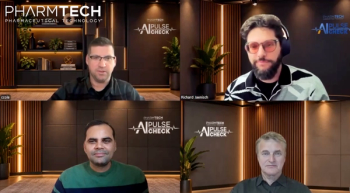
Panelists on the PharmTech AI Pulse Check weigh a December AI playbook, EMA/MHRA moves, PCCP accountability gaps, and MCP-ready regulatory guidance.
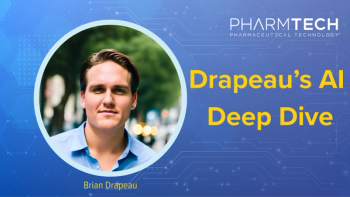
No operator touches a CAR-T batch before demonstrating proficiency. Generative AI users should meet the same standard, and a higher one, because an AI error does not stay inside one batch.
The FDA’s new CBER Safety Council separates post-market biologics safety review from approvals, raising oversight for cell and gene therapy developers.
How confident is the bio/pharma workforce heading into 2027? PharmTech wants to find out, and we need your input.
Advertisement
Advertisement