
ePT--the Electronic Newsletter of Pharmaceutical Technology
Letter to the Editor: Glen Jon Smith
ePT--the Electronic Newsletter of Pharmaceutical Technology
Letter to the Editor: Glen Jon Smith
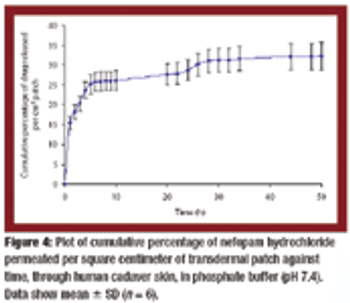
Transdermal matrix-type patches of Nefopam hydrochloride with a combination of pressure-sensitive adhesives were developed. The polymeric composition provided a controlled and sustained release of the drug from the patches and demonstrated favorable physicochemical characteristics.
ePT--the Electronic Newsletter of Pharmaceutical Technology
FDA Recommends Changes for 2006-2007 Flu Vaccine
ePT--the Electronic Newsletter of Pharmaceutical Technology
Drug Sales Up 5.4%...But Growth Rate Slowing
ePT--the Electronic Newsletter of Pharmaceutical Technology
Warning Letter: Southern Meds
ePT--the Electronic Newsletter of Pharmaceutical Technology
Baxter Wins Contract to Develop Cell-Based H5N1 Vaccine
GPhA Seeks Additional ODG Funding, Not User Fees
ePT--the Electronic Newsletter of Pharmaceutical Technology
Industrial Info Resources reports that North American pharmaceutical and biotechnology companies and life science research institutions are planning a $14.7-billion building boom, with more than 320 active capital projects.
ePT--the Electronic Newsletter of Pharmaceutical Technology
Cambrex (East Rutherford, NJ) to produce Geron (Menlo Park, CA) telomerase anti-cancer vaccine. Generex (Toronto, ON.) files IND for synthetic vaccine to stimulate cell-mediated immunity to avian influenza. Dow Agrosciences (Indianapolis, IN) wins USDA approval for veterinary vaccine, the first manufactured via plant cell culture. G-8 nations pledge billons for vaccine production.
ePT--the Electronic Newsletter of Pharmaceutical Technology
The Pharmaceutical Industry has been slow in adopting radio frequency technology (RFID) to help control diversion and counterfeiting, according to a recent study by ABI Research (Oyster Bay, NY, www.abiresearch.com). In fact, only 10 drug products are expected to be shipped with RFID tags or smart chips embedded in the labeling in the coming year.
ePT--the Electronic Newsletter of Pharmaceutical Technology
The US Food and Drug Administration’s $1.95-billion budget request for the 2007 fiscal increases spending on high-priority programs by $70 million, and cuts support for some existing programs by $52 million.
ePT--the Electronic Newsletter of Pharmaceutical Technology
Merck wins approval for rotavirus vaccine as Sanofi ships investigational H5N1 vaccine to NIH and CDC explores new flue diagnostics and novel vaccine-production technology.
ePT--the Electronic Newsletter of Pharmaceutical Technology
ASTM International’s (West Conshohocken, PA, www.astm.org) Committee E55 on Pharmaceutical Application of Process Analytical Technology has established a subcommittee “E55.03 on General Pharmaceutical Standards,” to focus on issues relating to quality within a chemistry, manufacturing, and control framework.
Eggs from Transgenic Hens Express Interferon Beta-1a Protein
Preliminary results from a clinical trial of Sanofi Pasteur's (Lyon, France, www.sanofi.com) H5N1 prepandemic influenza vaccine indicate the vaccine is safe and was well-tolerated in 300 healthy volunteers. This study is the first trial of an H5N1 prepandemic influenza vaccine candidate that compared vaccines with and without adjuvants.
ePT--the Electronic Newsletter of Pharmaceutical Technology
Cell-Grown Vaccine Protects Against Avian Flu Virus
ePT--the Electronic Newsletter of Pharmaceutical Technology
Non-Injectable Insulins Win Approval: Pfizer in the US, Generex in South America

Pharmaceutical Technology Europe
The European Science Foundation (ESF) has published the conclusions of its 2-year Forward Look Study on Nanomedicine. Defined as a billionth of a metre, a nanometer is 1000 times smaller than the width of a human hair. Nanomedicine uses nanoscale technology to diagnose and treat disease. The scope of the study included defining the field of nanomedicine, reviewing what has been achieved so far, determining Europe's strengths and weaknesses, and drawing up plans to ensure continued growth.

Pharmaceutical Technology Europe
Small- and medium-sized enterprises (SMEs) will gain administrative and procedural assistance from the EMEA. The agency's SME office was launched in December 2005 and follows the new Commission Regulation, which aims to promote the development of medicinal products in SMEs.
FDA Unveils New Prescription Drug Information Format
ePT--the Electronic Newsletter of Pharmaceutical Technology
AAIPharma Moves Ahead with Reorganization Plan
FDA Eases Phase I Manufacturing Requirements
ePT--the Electronic Newsletter of Pharmaceutical Technology
Warning: Brazilian Diet Pills Found to Contain Active Drug Ingredients
ePT--the Electronic Newsletter of Pharmaceutical Technology
Pfizer Combats Counterfeiters with RFID
FDA Issues Dispute–Resolution Guidance
Novartis Considers Acquiring Berna Biotech
ePT--the Electronic Newsletter of Pharmaceutical Technology
Schering-Plough Meets FDA Deadline for CGMP Improvements
ePT--the Electronic Newsletter of Pharmaceutical Technology
Sanofi Pasteur and BD Team Up to Produce Microneedle Vaccines
Hubert J.P. Schoemaker Dead at 55
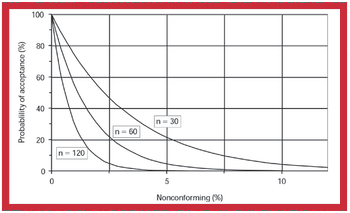
The benefits of zero tolerance as a test criterion have been oversold. A critical examination of zero tolerance reveals that many of the supposed benefits are not attainable. More important, inappropriate application of this criterion can have a deleterious effect on the assessment, control, and improvement of the quality of pharmaceutical products.