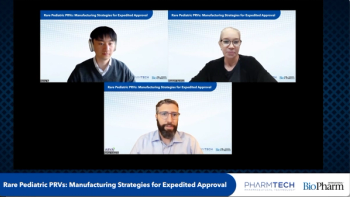
Nate Edwards of Arya Consulting moderates a discussion with Elisabeth Gardiner of Tevard Biosciences and Donny Xu of the RTW Institute about the regulatory and manufacturing hurdles facing rare disease drug developers.
The collaboration will initially focus on advanced stages of solid cancers such as colorectal, pancreatic, lung, and breast, but may expand to other cancer types in the future.
The
Indivumed, of Hamburg, Germany, is no stranger to cancer-centered collaborations; in August 2021, the company
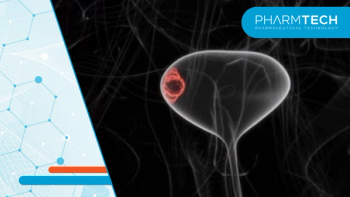
URMC’s role will be to collect and process high-quality biosamples and clinical patient data, with the collaboration initially focusing on advanced stages of solid cancers with high medical need, including colorectal, pancreatic, lung, and breast cancers, with aspirations for future expansion (1, Figure).
“We are thrilled to deepen our collaboration with URMC, significantly enhancing our ability to identify novel cancer therapeutics in a truly patient-centered approach,” said
“We have worked with Indivumed successfully in the past and our familiarity with their tissue and multi-omics data approach will provide an excellent foundation,”
Bio/pharmaceutical companies and academia are being joined by government entities in select sectors of the fight against cancer. In November 2025, the United Kingdom National Nuclear Laboratory and Medicines Discovery Catapult announced they were co-leading a project to
At the same time, the concept of patient-centric care is receiving increased attention and emphasis; in Pharmaceutical Technology® and BioPharm International®’s October 2025 Trends in Formulation eBook, Laura Owens and Yeli Zhang, PhD, of Roquette
“Patient-centric drug development is essential to improve patient outcomes, experience, and engagement,” Owens and Zhang wrote (4). “By focusing on patients’ needs, experiences, and preferences, drug developers can create treatments that are optimally effective and tolerated. This leads to improved adherence to treatment regimens and better overall health outcomes when compared with not taking these factors into consideration.”
The Trends in Formulation eBook can be accessed in its entirety
1. Indivumed.
2. Veraxa.
3. UKNNL.
4. Owens, L.; Zhang, Y.